
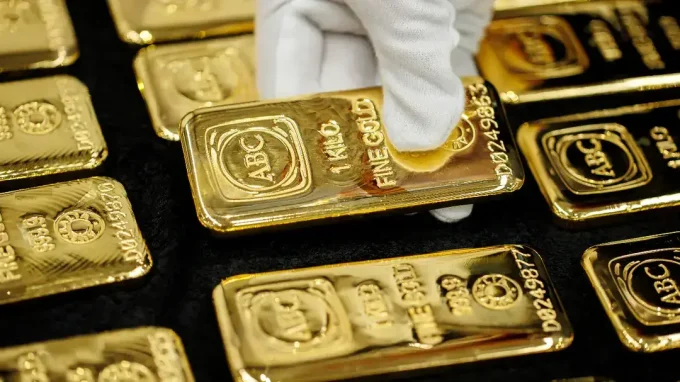
Investing.com – prices turned lower on Monday, pressured by a firmer U.S. dollar, as dimming prospects for an imminent deal to reopen the Strait of Hormuz maintained lingering inflation fears. Get premium commodity market insights with InvestingPro — now 55% off
By 09:51 ET (13:51 GMT), had fallen by 0.4% to $4,325.60 an ounce, while gold futures dipped 0.4% to $4,384.15 an ounce.
Iran and the U.S. seem to be at loggerheads once again, with Tehran issuing tough demands to reopen the Strait of Hormuz and President Donald Trump arguing that Washington’s economic pressure will bring eventually the Iranians to the negotiating table.
Against this backdrop, hopes were all but dashed for an agreement to unblock the Strait of Hormuz, a vital waterway used by a fifth of the world’s oil and liquefied natural gas flows before the outbreak of the Iran war in late February. Iran has effectively shuttered the conduit for months, pushing up energy prices and threatening the health of the global economy.
More U.S. inflation data is due out later this week, which could provide further insight into the impact of the war on price gains. This, in turn, may sway the outlook for Federal Reserve interest rates, a critical factor that can heavily influence gold prices.
On Friday, prices hit their highest since June 17 after economic indicators showed the U.S. economy unexpectedly shed jobs in July and employment gains in the preceding two months were revised sharply lower. The weaker labor-market data prompted markets to scale back expectations for a September Fed rate hike.
In theory, raising rates can help to quell energy-driven inflation, albeit at the risk of denting the jobs picture and broader economy.
A lower interest-rate environment tends to support gold because it can decrease the opportunity cost of holding the non-yielding asset.
At the same time, the U.S. dollar has been a relative safe-haven for investors during the crisis, buoyed by projections that the American economy, as a major energy exporter, can ride out ructions caused by the Iran war. The , a tracker of the currency against a basket of its global peers, was last higher by 0.2% at 99.72.
Gold’s appeal can be dented by a stronger dollar, as it may make the yellow metal more expensive for overseas buyers.
Still, gold has climbed by more than 5% over the last month and began August on solid footing, underpinned in part by shifting interest-rate expectations. Heavy buying by crypto giant has also aided bullion, as has an uptick in demand from central banks in the second quarter.
Analysts at ING noted that the People’s Bank of China increased its gold reserves by around 20 tonnes in its largest monthly addition since October 2023.
(Ayushman Ojha contributed reporting)









Leave a comment