

Key Takeaways
- China added nearly 20 tonnes of gold in July, its largest monthly purchase since October 2023.
- The purchase extended China’s gold-buying streak to 21 months and lifted its holdings to a record 2,366 tonnes.
- The purchases do not indicate direct Chinese demand for Bitcoin, as mainland authorities maintain strict crypto restrictions.
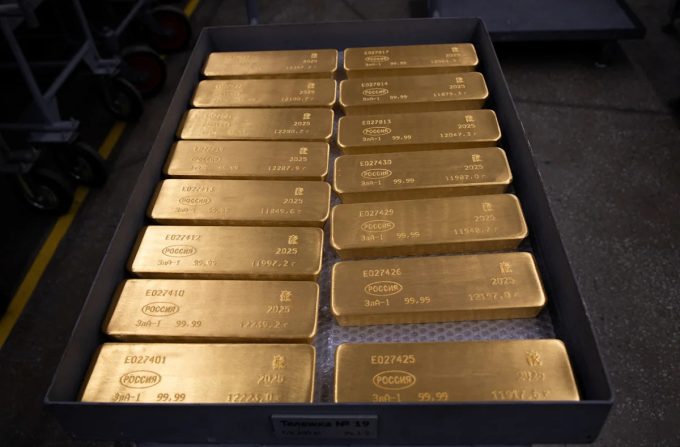
China’s central bank added nearly 20 tonnes of gold to its reserves in July, marking its largest monthly purchase since October 2023 and extending an accumulation streak that now spans 21 consecutive months.
The People’s Bank of China increased its holdings by 640,000 troy ounces, lifting total reserves to approximately 76.08 million ounces, or a record 2,366 tonnes. China has added about 60 tonnes since the beginning of 2026, including 10 tonnes in May and 15 tonnes in June.
The accelerating purchases underline Beijing’s appetite for scarce reserve assets as governments seek greater protection from currency, geopolitical and counterparty risks.
The strategy also reinforces the macroeconomic argument behind Bitcoin’s “digital gold” narrative, although China continues to favor physical bullion over decentralized cryptocurrencies.
China Accelerates Gold Accumulation
The July purchase represents the fifth consecutive month in which the PBOC increased the pace of its gold acquisitions. The central bank added roughly 5 tonnes in March before expanding its monthly purchases through the second quarter.
China’s sustained buying reflects a wider effort to diversify its foreign exchange reserves and reduce its reliance on dollar-denominated assets. Gold provides governments with a liquid reserve instrument that no foreign issuer controls and that carries no direct counterparty risk.
Geopolitical tensions and uncertainty surrounding the international monetary system have strengthened that appeal. Other central banks have also increased their exposure to bullion, supporting gold demand even as prices remain historically elevated.
China’s official figures may not capture the full scale of its activity because the country can purchase gold through state-owned institutions or other channels.
However, the published data alone show that Beijing continues to treat the metal as a core strategic asset rather than a short-term trade.
Hong Kong Challenges Western Gold Infrastructure
China has also reportedly transferred more of its gold reserves from London to Hong Kong, supporting the city’s effort to become a major bullion trading and pricing center.
Hong Kong launched a trial of its central gold clearing and settlement system in July. The infrastructure aims to connect trading, storage, clearing and settlement while reducing Asia’s dependence on established Western gold centers.
Moving physical reserves closer to China gives Beijing greater control over custody and improves access during periods of market or geopolitical stress.
It could also increase Hong Kong’s influence over Asian gold pricing and create an alternative to London’s long-established bullion infrastructure.
The initiative reflects a broader trend toward regional financial systems that allow countries to settle and store strategic assets outside Western-controlled networks.
Gold Strategy Supports Bitcoin’s Scarcity Case
China’s purchases do not represent direct demand for Bitcoin. Mainland authorities maintain strict restrictions on cryptocurrency trading, while the central bank continues to prioritize assets it can hold and control directly.
Nevertheless, the motivation behind China’s gold strategy overlaps with several arguments Bitcoin advocates make for the cryptocurrency. Both assets offer limited supply, global liquidity, and reduced dependence on a single sovereign issuer.
Central-bank demand for gold shows that scarcity and monetary neutrality remain valuable during periods of geopolitical fragmentation. Bitcoin supporters argue that the cryptocurrency extends those properties into a digital, portable, and independently verifiable asset.
Bitcoin still lacks gold’s history, central-bank adoption, and lower volatility. Those differences explain why governments continue to choose bullion for official reserves.
However, as China accumulates gold and builds alternative market infrastructure, the move could strengthen investor interest in scarce assets more broadly.
That environment may support Bitcoin’s digital-gold narrative even if Beijing keeps the cryptocurrency outside its reserves.
The information provided in this article is for informational purposes only. It is not intended to be, nor should it be construed as, financial advice. We do not make any warranties regarding the completeness, reliability, or accuracy of this information. All investments involve risk, and past performance does not guarantee future results. We recommend consulting a financial advisor before making any investment decisions.

Giuseppe Ciccomascolo began his career as an investigative journalist in Italy, where he contributed to both local and national newspapers, focusing on various financial sectors.
Upon relocating to London, he worked as an analyst for Fitch’s CapitalStructure and later as a Senior Reporter for Alliance News. In 2017, Giuseppe transitioned to covering cryptocurrency-related news, producing documentaries and articles on Bitcoin and other emerging digital currencies. He also played a pivotal role in establishing the academy for a cryptocurrency exchange website. Crypto remained his primary area of interest throughout his tenure as a writer for ThirdFloor.












Leave a comment