
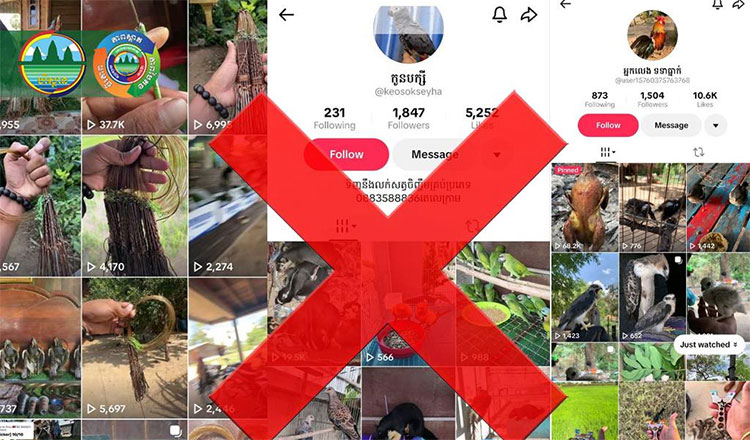
Synopsis: The Ministry of Environment calls on authorities to enforce legislation against natural resource crimes on the internet, warning that digital trading faces the same legal penalties as direct trafficking.
The Ministry of Environment has called on the public and social media content creators to stop producing or sharing content that promotes wildlife trading, consumption or capture, warning that such activities are illegal and pose risks to public health and biodiversity.
Ministry spokesman Khvay Atitya made the appeal on Friday, urging social media users to refrain from posting images designed to attract attention or promote the sale, consumption or preparation of dishes made from wildlife and rare plants.
He said individuals had previously used wildlife content on social media to deceive the public or gain support, while such posts could encourage activities that harm natural resources.
Atitya called on all levels of government to enforce the law against individuals involved in online natural resource crimes and wildlife trafficking, saying that online trading is subject to the law in the same way as direct trading.
“Activities promoting wildlife should be related to ‘loving wildlife does not mean putting them in cages’, while eating wildlife meat provides no benefits and only poses serious risks to health,” he said.
He called for cooperation from journalists, content creators, artists, monks and social media influencers to help raise public awareness of the importance of forests, wildlife and biodiversity.
The ministry said that although Cambodia does not have a law governing online wildlife trafficking, activities involving the advertising, sale, purchase or transport of wildlife through platforms including Facebook, TikTok and Telegram are offences punishable under existing legislation.
Under the Environmental and Natural Resources Code, Article 380 (11) and Article 141 prohibit wildlife trading, while Article 851 provides penalties for third-degree natural resource offences, including imprisonment of five to 10 years and fines.
The ministry added that evidence, equipment and proceeds generated from wildlife trading are subject to confiscation as state property.
An undercover investigation by Earth League International identified Cambodia as a consumer market and transit hub in a regional wildlife-trafficking network.
The report said trafficking involved protected species, with products sold through shops, restaurants, hotels, casinos and online marketplaces. ELI added that wildlife trafficking overlaps with other organised crimes, including drug trafficking, timber smuggling and online scam operations.
Environment Minister Eang Sophalleth has highlighted the ministry’s efforts to combine environmental education with enforcement of environmental laws.











Leave a comment