
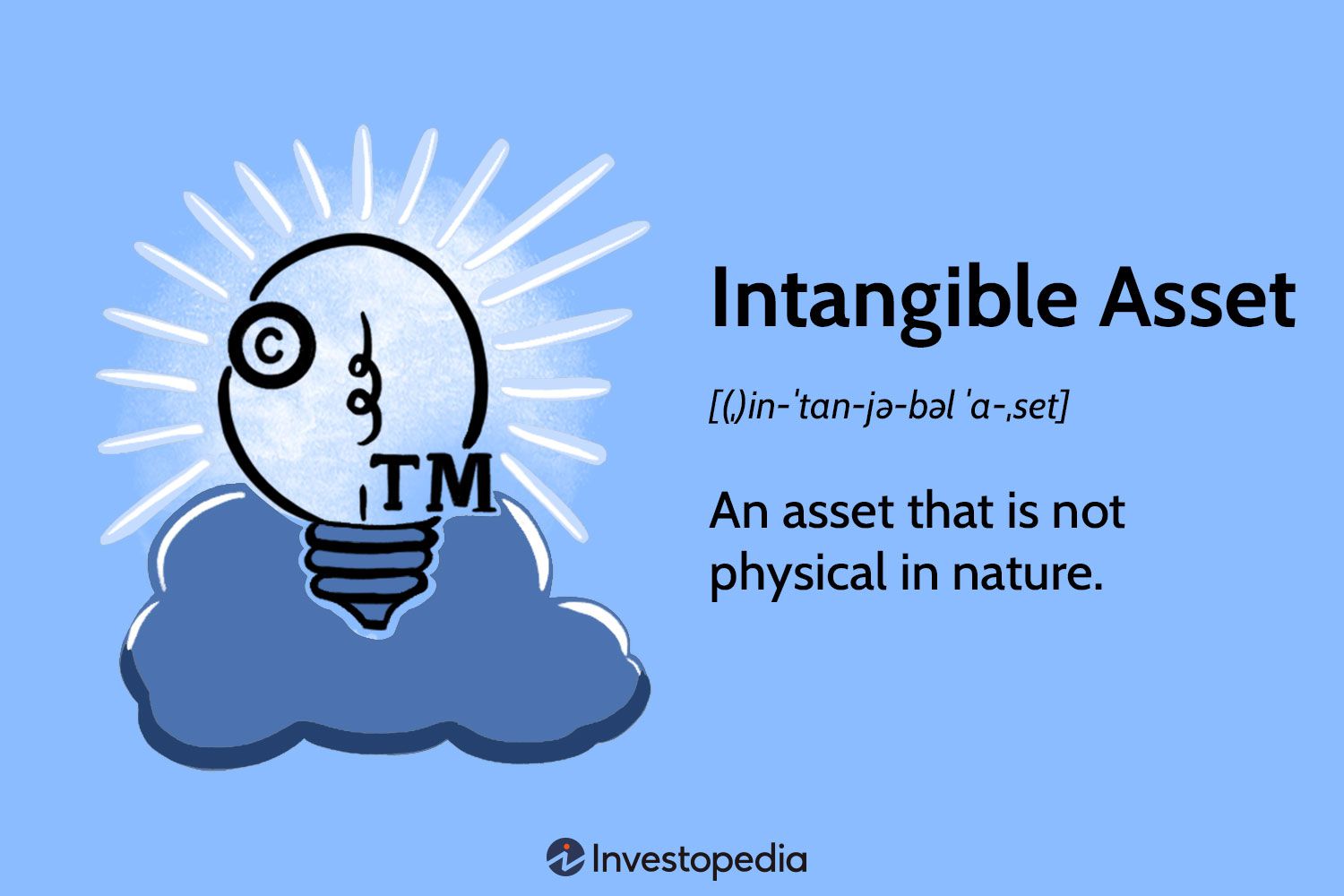
What Is an Intangible Asset?
Intangible assets are non-physical but hold significant value for businesses through intellectual property, patents, and goodwill. Unlike tangible assets like buildings or office furniture that are easy to see and touch, intangible assets add value and competitive advantage in less obvious ways. These assets can either be indefinite, such as a strong brand name that persists over time, or definite, with a limited lifespan like a patent with an expiration date.
Key Takeaways
- Intangible assets lack physical form and can include items such as patents, goodwill, and intellectual property, which are crucial to a company’s long-term success.
- These assets are generally long-term and can be classified as either indefinite, like a brand name, or definite, such as a legal agreement.
- Valuing intangible assets is complex due to their lack of physical presence and recorded book value, but they are crucial, contributing to brand recognition and overall business value.
- Internally developed intangible assets typically do not appear on a company’s balance sheet unless they have a defined value and lifespan.
- Unauthorized use of intangible assets, like intellectual property, constitutes infringement and can result in legal issues.
Investopedia / Jessica Olah
Exploring Types of Intangible Assets
Intangible assets are often long-term and can gain value over time, like brand names that contribute to a company’s success. Companies can create or acquire these assets, such as client mailing lists or patents, and may deduct related expenses like application and legal fees.
An indefinite intangible asset lasts as long as the holder operates, like a brand name. A definite intangible asset has a set period, like using another company’s patent under a legal agreement.
Types of intangible assets include:
- Brand: A brand sets a business apart from its competition and is commonly represented by a logo, symbol, or name. Companies use marketing, design techniques, and advertising to create their brand. The Nike swoosh or the red Coca-Cola label are two easily recognized branding techniques. Brands contribute to a company’s brand equity and help keep customers loyal.
- Goodwill: When one company purchases another, the intangible assets associated with that transaction are considered goodwill. When a company acquires another business, any amount that exceeds the fair value of the target’s net assets represents its goodwill. The amount above the target’s book value results in positive goodwill. Anything below book value is negative goodwill or badwill.
- Intellectual Property: A type of intangible asset that is legally protected and cannot be used by another business or individual unless authorized by the owner. Common forms of intellectual property include copyrights, digital assets, franchises, patents, trademarks, and trade secrets.
Important
Unauthorized use of intellectual property, such as imitating a brand name or logo, is called infringement.
Valuing Intangible Assets: Methods and Challenges
Companies like Coca-Cola (KO) owe much of their success to brand recognition, an intangible asset that significantly boosts sales despite being non-physical.
Intangible assets don’t have a recorded book value. Therefore, when a company is bought, the purchase price often exceeds the asset’s book value, and the premium is recorded as an intangible asset.
The purchasing company records the premium paid as an intangible asset on its balance sheet.There are three common ways that businesses can value their intangible assets, according to the American Institute of Certified Public Accountants (AICPA):
- Market Approach: This valuation compares similar intangible assets in the marketplace. It may prove difficult because of the limited details available about assets held by other companies.
- Income Approach: Companies can use this method when their intangible assets have a cash flow stream. Some income approaches include the relief from royalty method, which estimates possible royalty payments derived from the use of the asset or the avoided loss of income.
- Cost Approach: This method relies on substitution and doesn’t account for future benefits based on time or amount.
Comparing Intangible and Tangible Assets
Tangible assets can be current or fixed. Current assets can be easily used and converted to cash such as inventory. Fixed assets are tangible assets with a lifespan of one year or more. Plant, property, and equipment (PP&E) are considered fixed.
Common tangible assets include property, equipment, furniture, inventory, and vehicles. Financial securities, such as stocks and bonds, are also considered tangible assets because they derive value from contractual claims.
Tangible assets are easier to value than intangible ones. Owners can have them appraised to determine fair market value (FMV) or sell them for cash, often using replacement cost for valuation.
What Are the Challenges in Valuing Intangible Assets
Predicting an intangible asset’s future benefits, lifespan, or maintenance costs is tough. Its useful life can be identifiable or not. Most intangible assets are considered long-term assets with a useful life of more than one year.
How Is Brand Equity an Intangible Asset?
Brand equity, an intangible asset, is the extra value a company earns from a recognized product over a generic one, often built through marketing campaigns.
How Are Intangible Assets Disclosed on a Company’s Balance Sheet?
Internally developed intangible assets aren’t listed on a balance sheet. Those with identifiable value and lifespan appear as long-term assets with specified value and amortization schedules.
The Bottom Line
Businesses can have both tangible and intangible assets. Even though intangible assets can’t be seen and held, they provide value for companies as brand names, logos, or mailing lists. Intangible assets can be difficult to value.












Leave a comment