
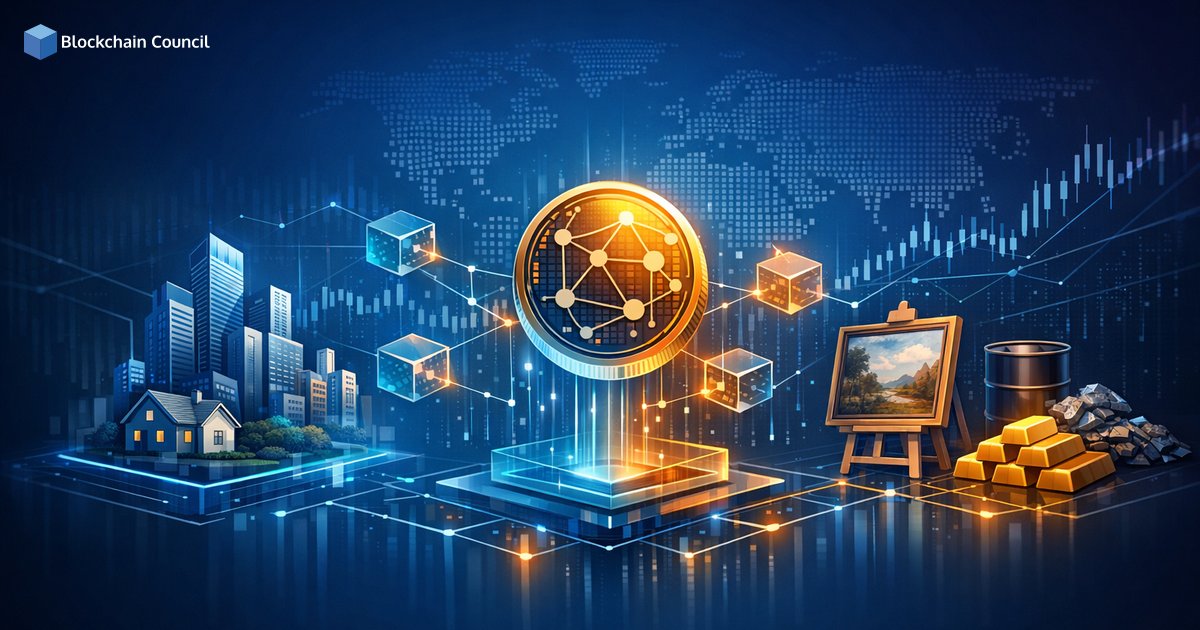
Tokenizing real-world assets (RWA) is rapidly moving from concept to implementation as blockchain systems connect on-chain tokens to off-chain value such as property, fine art, and commodities. Industry research from Chainlink and Ethereum.org describes RWAs as blockchain-based tokens that represent existing physical and traditional financial assets, with the potential to reshape how ownership, settlement, and market access work across the global economy.
While the tokenized RWA market remains small relative to total global assets, it is expanding quickly. Chainlink summarizes DeFiLlama data showing roughly 5 billion USD of RWA total value locked in DeFi as of December 2023, and widely cited forecasts from major consultancies project tokenized assets could reach around 16 trillion USD by 2030. This momentum is supported by growing ecosystem infrastructure, including analytics platforms like RWA.xyz and specialized compliance and custody providers.
What is tokenizing real-world assets (RWA)?
Tokenizing real-world assets (RWA) is the process of converting ownership or economic rights in an off-chain asset into an on-chain token. The token can represent many forms of value, including:
- Real estate (property equity, revenue share, or debt claims)
- Art and collectibles (fractional interests or rights linked to custody)
- Commodities (for example, gold backed by vaulted bullion)
- Traditional securities (stocks, bonds, treasuries, private credit)
Token standards typically align with the nature of the asset:
- Fungible tokens (often ERC-20) for divisible interests such as fund shares or fractional real estate.
- Non-fungible tokens (often ERC-721 or ERC-1155) for unique assets such as specific artworks or individual claims.
A critical principle highlighted by Ethereum.org is that RWA tokens do not have intrinsic value. They mirror the value and enforceability of the underlying asset and the legal structure connecting the token to real-world rights.
Why tokenization is gaining traction: key benefits
Across research from Venly, Ethereum.org, and Chainlink, the value proposition of RWA tokenization is consistent: reduce friction, broaden access, and make assets more programmable.
1) Liquidity and fractional ownership
Tokenization can split large, illiquid assets into smaller units, enabling fractional participation in asset classes that were previously difficult to access. This is particularly relevant for high-ticket assets like real estate and blue-chip art, where traditional ownership often requires significant capital and complex administration.
2) Operational efficiency and automation
By using smart contracts for issuance, transfers, distributions, and lifecycle events, tokenization can reduce manual reconciliation, paperwork, and intermediary overhead. Programmable settlement can also shorten settlement cycles and improve back-office efficiency for enterprises.
3) Transparency and auditability
On-chain ownership records create an immutable transaction history. Chainlink also emphasizes that better transparency and auditable management can improve how markets measure leverage and risk exposure, which can help reduce systemic risk when properly implemented.
4) Cost reduction and global accessibility
Digitized issuance and automated compliance can reduce administrative costs. Tokenized instruments can also be distributed globally, subject to jurisdictional restrictions and KYC-AML requirements.
5) Programmability and innovation
Smart contracts allow features such as automated rental distributions, coupon payments, redemption logic, and compliance rules like whitelisting and jurisdiction gating. This programmability is a significant driver behind DeFi and traditional finance convergence.
How RWA tokenization works: process and architecture
Although implementations vary by asset class, Chainlink outlines a practical, repeatable lifecycle for tokenizing a real-world asset.
Step 1: Identify the asset and legal structure
Tokenization begins with defining what token holders actually own or are entitled to. Common approaches include:
- Direct claims to an asset (rare, often difficult to structure legally)
- Shares in an SPV that holds the asset (common for real estate and art)
- Debt claims (tokenized notes, mortgages, or receivables)
- Revenue-share rights (for example, rental income streams)
Step 2: Custody and verification
Physical assets require custody, insurance, and verification. For commodities, this typically means audited vault storage. For art, it means secure storage and authenticity verification. For real estate, it typically means holding the deed via a corporate entity and maintaining proper records and reporting.
Step 3: Token design and smart contracts
Issuers choose the token standard and encode rules for:
- Transfer restrictions (whitelists, lockups, jurisdiction rules)
- Compliance checks (KYC-AML, investor eligibility)
- Economic logic (distributions, interest, redemptions)
Step 4: On-chain issuance and distribution
Tokens are minted and distributed via regulated platforms, approved marketplaces, or permissioned DeFi environments. In securities-like models, distribution is generally limited to verified participants.
Step 5: Ongoing lifecycle management
Tokenized assets require ongoing reporting and event handling, including corporate actions, redemptions, defaults, and reserve attestations.
Why oracles and interoperability matter
RWAs depend on accurate off-chain data. Chainlink highlights the role of oracle networks for price feeds, proof-of-reserves signals, and cross-chain messaging. Interoperability is also central to the long-term vision of tokenized markets operating across multiple blockchains while maintaining compliance and asset backing.
Real estate tokenization: turning illiquid property into programmable ownership
Real estate is a leading RWA category because traditional property investment is illiquid, document-heavy, and geographically constrained.
Common real estate tokenization models
- Equity tokens backed by an SPV: tokens represent shares in a company that owns the property.
- Debt tokens: tokens represent property-backed loans or mortgages with coupon-like payments.
- Revenue share tokens: tokens represent rights to rental or operating income.
Example: RealT
Ethereum.org cites RealT as an example of tokenized rental properties, where each property is held by an LLC and token holders receive rental income distributions in stablecoins. Ethereum.org also reports that RealT has distributed more than 15 million USD in net rental income to investors. This model illustrates how tokenization can combine legal structuring, property operations, and on-chain distribution rails.
Key benefits for real estate
- Lower minimums through fractional participation.
- Potentially faster secondary transfers via compliant marketplaces compared to traditional closing processes.
- Improved transparency via on-chain records and periodic reporting.
Challenges to address
- Legal enforceability varies by jurisdiction, especially for models that attempt to map tokens directly to title.
- Securities classification is common when tokens represent investment returns or shares, triggering licensing and disclosure requirements.
Art and collectibles tokenization: fractional exposure with custody and rights management
Art tokenization targets an asset class known for high unit prices, limited liquidity, and complex provenance requirements.
How art tokenization is structured
- Securitized shares of artworks: an entity acquires an artwork and sells fractional interests.
- NFT-linked rights: NFTs can represent claims or co-ownership structures tied to custody agreements.
Example: Masterworks
Ethereum.org highlights Masterworks, which buys artworks, securitizes each piece, and sells shares to investors. This model aims to broaden access to fine art exposure while delegating storage, insurance, and administrative complexity to the platform structure.
Benefits and constraints
- Benefits: access to blue-chip art markets, diversification, and fractional participation.
- Constraints: subjective valuation, thin price discovery, and dependence on enforceable legal rights alongside robust custody and authenticity processes.
Commodities tokenization: gold as a blueprint for reserve-backed tokens
Commodities, especially precious metals, are well-suited to tokenization because they are standardized, fungible, and already rely on custody and warehouse systems.
Tokenized gold structures
Ethereum.org points to tokenized gold as a canonical RWA example. Common designs include tokens fully backed by vaulted bullion, where each token represents a fixed quantity such as one troy ounce. Strong implementations typically include:
- Proof-of-reserves signals and audits or attestations
- Redemption rights that allow conversion to physical gold (subject to provider rules)
- DeFi integration for collateral, lending, or portfolio positioning
Beyond precious metals
Tokenization is also expanding into industrial metals, agricultural commodities, carbon credits, and energy-related assets. The primary limiting factors are legal classification, logistics, and the credibility of custody and reserve reporting.
Regulation and risk: what enterprises and developers must get right
Regulation is a primary determinant of whether RWA tokenization scales beyond pilots. Legal analyses emphasize that tokens referencing real-world assets may be treated as asset-referenced tokens, e-money tokens, or securities and financial instruments depending on structure and jurisdiction.
Key regulatory and operational issues
- Enforceability: whether a token holder has a legally recognized claim in court.
- Investor protection and KYC-AML: many platforms use permissioned models and whitelists.
- Custody and counterparty risk: token holders rely on issuers, custodians, trustees, and auditors.
- Oracle and data integrity: failures can break the on-chain to off-chain linkage for pricing and status events.
- Liquidity illusions: 24-7 tradability does not guarantee deep secondary markets.
Ethereum.org notes that jurisdictions such as Switzerland, Singapore, UAE, and Hong Kong have been early movers with frameworks and sandboxes for tokenized instruments. The EU is rolling out MiCA as part of broader digital asset regulation, while the US remains highly sensitive to securities law analysis and enforcement posture, pushing many projects toward securities-compliant designs.
Future outlook: where tokenized RWAs are heading
Based on market data, infrastructure development, and public institutional interest, several trends are worth tracking:
- Institutional growth in tokenized cash and fixed income, including tokenized treasuries tracked by platforms like RWA.xyz.
- Maturation of real estate tokenization with more robust compliance, reporting, and property management integration.
- Expansion beyond art into broader cultural assets such as royalties and IP-based revenue streams.
- Standardization and interoperability supported by cross-chain messaging and oracle-based infrastructure, a direction Chainlink explicitly emphasizes.
Conclusion
Tokenizing real-world assets (RWA) is transforming how ownership and economic rights can be issued, traded, and managed across real estate, art, and commodities. The strongest opportunities appear where markets are illiquid and operationally complex, but the biggest constraints remain legal enforceability, custody and issuer risk, and reliable on-chain reporting about off-chain reality.
For professionals and teams building in this area, success requires more than smart contracts. It demands an end-to-end architecture that integrates compliance, custody, audits, oracle design, and lifecycle operations. Those looking to build structured expertise in this field can explore Blockchain Council certifications in blockchain, smart contracts, and security – including Certified Blockchain Expert, Certified Ethereum Developer, and Certified Smart Contract Developer – as foundations for RWA platform design and governance.











Leave a comment