
-
By Chen Cheng-hui
/ Staff reporter
The manufacturing sector’s fixed-asset purchases, excluding land, increased for the second straight quarter, as firms in the advanced semiconductor processing, memory, packaging and testing, and artificial intelligence (AI) server segments continued to expand production, the Ministry of Economic Affairs said in a report yesterday.
Fixed assets include machinery, equipment, buildings and construction projects, as well as furniture, fixtures and vehicles.
Purchases rose 53.7 percent year-on-year to NT$956.3 billion (US$30.31 billion) in the second quarter, the ministry said in a report.
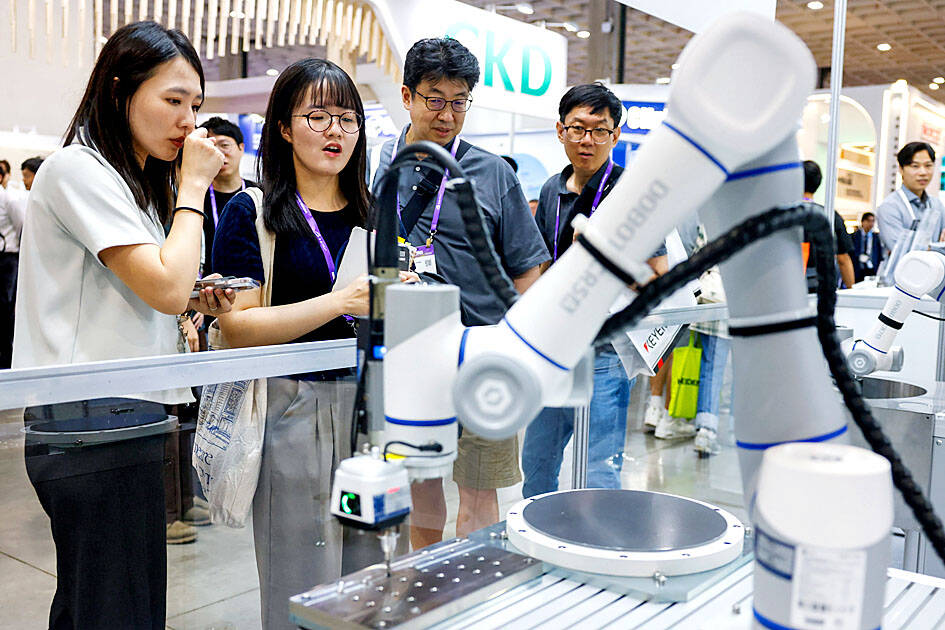
Photo: Ann Wang, Reuters
Last quarter’s figure was up 36.4 percent from the previous quarter, it said.
Meanwhile, total sales by the manufacturing sector, including overseas production, hit NT$1.1 trillion in the second quarter, increasing 24.2 percent annually and up 13.2 percent from a quarter earlier, the report said.
Last quarter, the electronic components industry posted the largest purchases in fixed assets, at NT$775.1 billion. The amount is a 71.5 percent increase from a year earlier and accounted for 81.1 percent of total purchases by local manufacturers in the quarter, it said.
The computer and optoelectronics industry ranked second in purchases, with firms spending NT$25.8 billion, up 29 percent year-on-year, it said.
The oil and coal, metal, power equipment and machinery equipment industries also reported their purchases increased 5.9, 5.3, 26.2 and 6.8 percent respectively, it said.
The chemical materials and fertilizer and the base metal industries decreased purchases by 12 and 34.3 percent respectively during the quarter, it added.
Overall, the manufacturing sector’s fixed-asset purchases in the first half of the year totaled NT$1.66 trillion, up 34.4 percent from the same period last year, the report said.
Total sales were NT$2.08 trillion, up 21.9 percent annually, it said.
For the second half of the year, driven by continued global AI infrastructure development and high capital expenditures by major cloud service providers, domestic semiconductor, server, related supply chain companies and some traditional industries should continue to expand production capacity, the ministry said.
Furthermore, the continued net zero transition and energy infrastructure investment trends are also expected to sustain investment momentum in the manufacturing sector, it said.
However, as geopolitical and trade policy uncertainties continue to affect global economic growth momentum, manufacturers should remain cautious in making investments and expanding production, the ministry added.








Leave a comment