
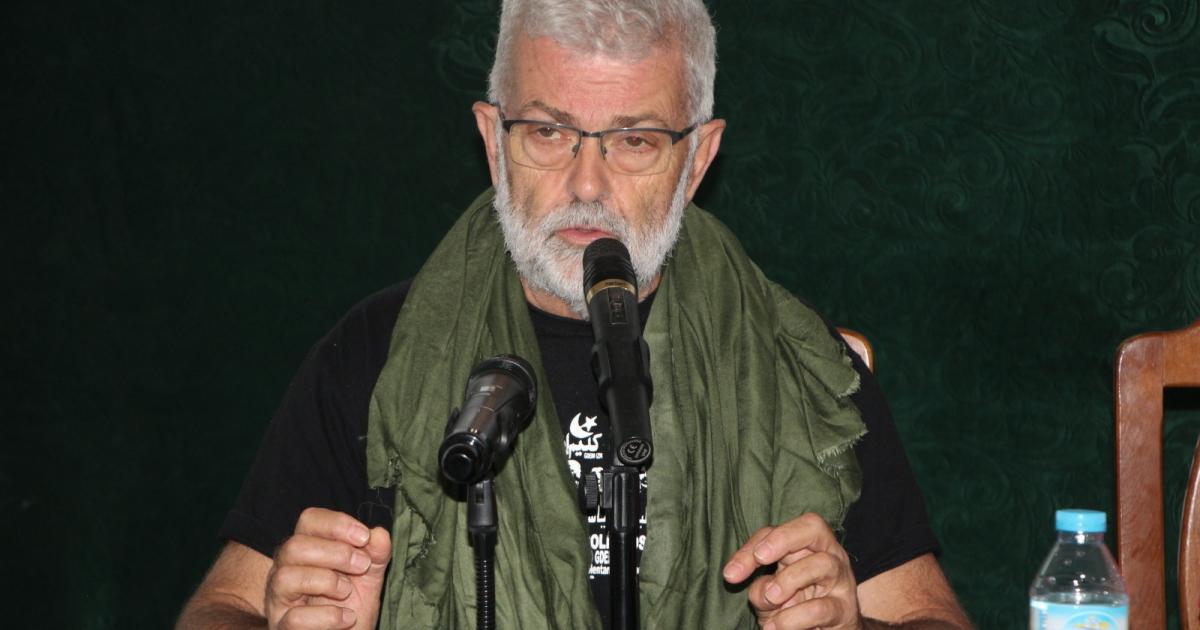
Chahid El Hafed (Sahrawi Refugee Camps) 25 July 2026 (SPS) – Canarian activist and expert on illicit trade with occupied territories, Anselmo Fariña, presented on Saturday at the headquarters of the Presidency of the Sahrawi Republic the field and technical mechanisms used to document and monitor the illegal exploitation of Western Sahara’s natural resources. He delivered his presentation during the international Conference on “The Legal Battle and the Sahrawi People’s Permanent Sovereignty over Their Natural Resources”
Fariña delivered a presentation entitled “Monitoring and Tracking the Exploitation and Plunder of Natural Resources: Documentation Tools, Databases, and Legal Evidentiary Mechanisms,” in which he emphasized the importance of digital tracking technologies and modern databases in strengthening the Sahrawi legal case before international courts and other international forums.
The Canarian expert explained that the monitoring team’s work, coordinated from the Canary Islands, is based on the daily tracking of all vessels entering and leaving the occupied Sahrawi ports, particularly the ports of El Aaiun and Dajla (Dakhla).
He noted that the monitoring of illegally exported Sahrawi sand has become one of the principal areas of work for activists in the Canary Islands, alongside efforts to track the exploitation of other looted natural resources.
Fariña revealed that, in response to growing pressure from international solidarity movements, particularly following the detention of the NM Cherry Blossom in South Africa while carrying a shipment of looted Sahrawi phosphate destined for New Zealand, some vessels have resorted to deceptive practices by falsifying data transmitted to international maritime tracking systems in an attempt to conceal their true routes.
However, he stressed that the vigilance of activists in solidarity with the Sahrawi people has enabled them to uncover these practices and identify the vessels’ actual destinations.
The researcher stressed that monitoring and field documentation serve two fundamental purposes: building robust legal cases by providing compelling evidence against those involved in the plunder of Sahrawi resources, and mobilizing international public opinion while alerting human rights organizations and other international bodies to disrupt and prevent the illicit trade in the Territory’s natural wealth.
Concluding his presentation, Anselmo Fariña emphasized that the effectiveness of this monitoring system depends on sustained and close coordination between field monitoring teams and Sahrawi national organizations, working in partnership with international solidarity networks and human rights organizations to safeguard Western Sahara’s natural resources and uphold the Sahrawi people’s sovereign rights over them. (SPS)
090/500/60 (SPS)











Leave a comment