

Key Takeaways
- To rank in the top 10% of U.S. households, you need at least $210,000 in income or $1.8 million in net worth.
- Top 10% net worth varies sharply by age, from about $372,000 under 35 to nearly $3 million for ages 55 to 64.
- Even top earners can feel squeezed: nearly one in three households making $200,000 or more say they’re struggling.
Get personalized, AI-powered answers built on 27+ years of trusted expertise.
How much does it take to count as one of America’s top earners? More than many households bring in—but the answer depends a lot on your age and where you live.
To be in the top 10% of U.S. households, you’d need at least $210,000 in annual income or at least $1.8 million in net worth, according to a November 2025 report from Visa. That income threshold is 24% higher than it was in 2019.
But national benchmarks can hide a lot. A $210,000 income may stretch much further in Cleveland than in San Francisco, where housing alone can eat up more than half a paycheck.
Age matters, too. Americans under 35 need about $372,000 in net worth to rank in the top 10% of their age group, according to Federal Reserve data. For people ages 55 to 64, the threshold rises to about $2.96 million. That means a 30-year-old with $400,000 in net worth may be well ahead of peers, while a 55-year-old with the same amount may be further behind than they think.
| Net Worth by Age: What Does It Take to Be in the Top 10%? | |
|---|---|
| Age Range | Top 10% Net Worth |
| 18-34 | $372,120 |
| 35-44 | $1,042,300 |
| 45-54 | $1,956,000 |
| 55-64 | $2,960,900 |
| 65-74 | $2,997,300 |
| 75-99 | $2,681,400 |
| Net Worth by Location: What Does It Take to Be in the Top 10%? | |
|---|---|
| Region | Top 10% Net Worth |
| Midwest | $1.7M+ |
| Northeast | $1.9M+ |
| South | $1.8M+ |
| West | $2M+ |
Why Top Earners May Not Feel Wealthy
But crossing into the top 10% doesn’t necessarily mean feeling rich. Nearly one in three households earning $200,000 or more per year said they felt financially “stretched,” “struggling,” or “drowning,” according to the 2025 Harris Poll. Another 64% of six-figure earners said they were in “survival mode.”
That can make a top-tier income feel less comfortable than it looks on paper. The U.S. median household income was $83,730 in 2024, according to the Census Bureau, putting the $210,000 threshold at about 2.5 times the typical household income.
How People Actually Build Top 10% Wealth
The path to the top 10% usually takes decades of steady saving and investing. Vanguard’s How America Saves 2026 report tracked 4.6 million retirement plan participants and found that 69% now use professionally managed allocations, such as target-date funds or managed accounts.
The report also found that 45% of workers increased their savings rate in 2025, the highest share in the 25 years Vanguard has published the report. The broader lesson: automation and consistent investing can help build wealth over time, often more reliably than trying to time the market.
Important
Homeownership remains a major wealth builder for many households, largely because home equity can grow over time as owners pay down their mortgage and property values rise.
Fidelity’s retirement guidelines suggest having three times your salary saved by age 40 and 10 times your salary by retirement. That implies saving 15% of your income starting in your 20s, which can be difficult for workers balancing rent, debt payments, and other costs early in their careers.
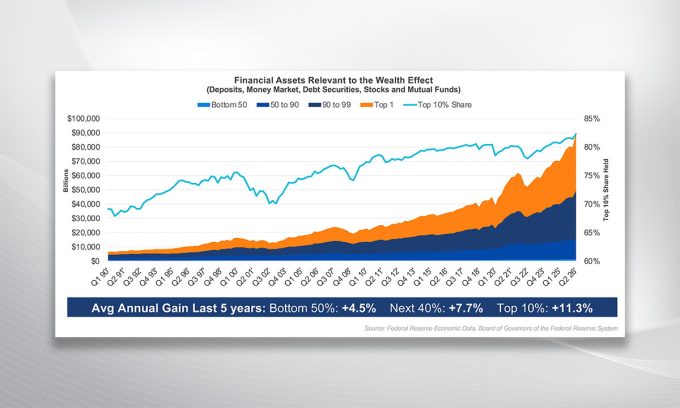
Federal Reserve data shows the top 10% typically hold wealth in retirement accounts, taxable investments, and real estate. They’re also less likely to carry debt that drags on cash flow, such as credit card balances or auto loans. Avoiding major financial mistakes can help protect the gains that steady saving and investing create over time.
The Bottom Line
Reaching the top 10% by income or net worth doesn’t guarantee you’ll feel wealthy. And comparing yourself with national averages can give you a distorted picture if you don’t factor in your age, location, and cost of living.
A better measure is whether you’re consistently saving, reducing costly debt, and building equity in assets that can grow over time. The gap between where you are and these benchmarks matters less than whether your finances are moving in the right direction.












Leave a comment