
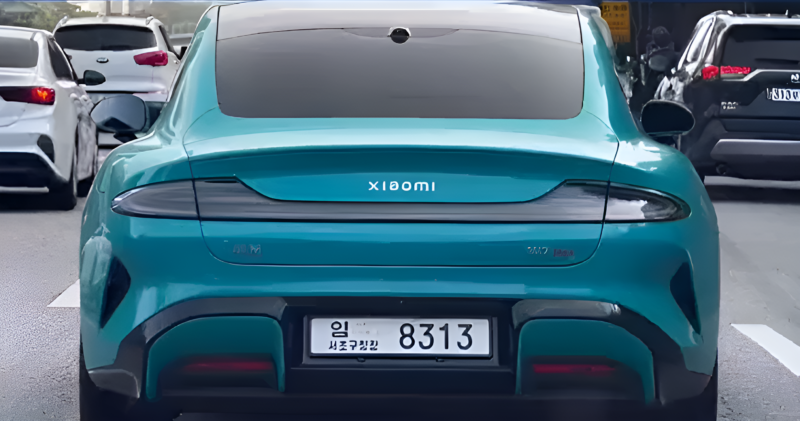
Hyundai Motor has added the Xiaomi SU7 electric vehicle to its internal research fleet in South Korea, according to a report by Korean tech outlet Bloter published on July 17. The cars are being used for evaluation at Hyundai’s Namyang R&D Centre in Hwaseong and the company’s headquarters in Seoul.
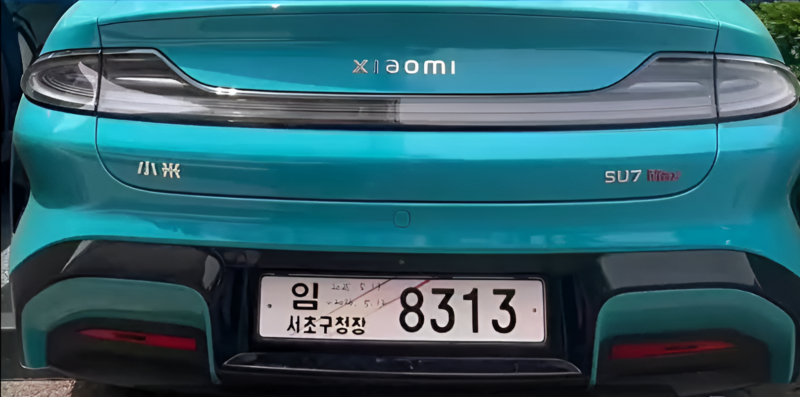
A Xiaomi SU7 Max was seen on July 16 being transported to Hyundai’s Yangjae office in Seoul. The vehicle carried a temporary license plate issued by the Seocho District Office, and Bloter confirmed that Hyundai received formal approval for temporary operation for research purposes.
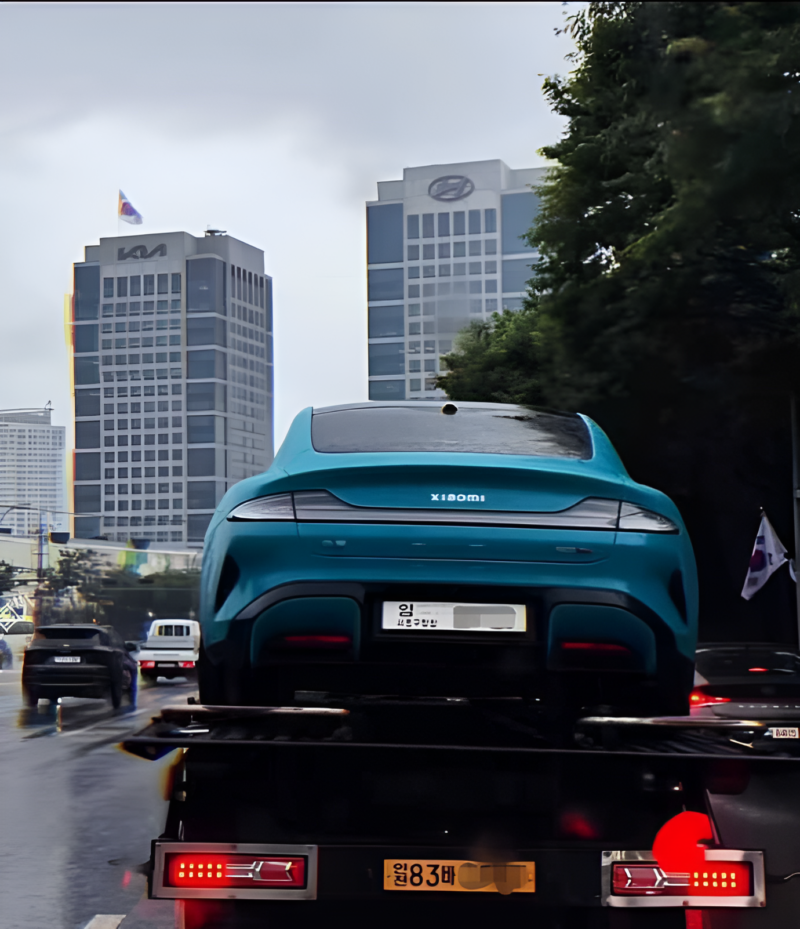
This marks an expansion of Hyundai’s practice of benchmarking overseas EVs, now including models from Chinese automakers such as Xiaomi. The SU7 is not officially sold in South Korea, but Hyundai has reportedly imported multiple units for in-house evaluation.
The decision to analyse the SU7 comes amid increasing global attention to Chinese EV manufacturers. At a company meeting earlier this year, Hyundai Motor Group Executive Chair Euisun Chung highlighted the need to remain competitive not only with Tesla but also with rapidly expanding players like BYD. “There are unavoidable challenges ahead,” Chung said, urging preparation for shifts in the EV landscape.
Hyundai’s investment in physical assets has grown significantly. As reported by Bloter, the company’s tangible assets increased from 38.9 trillion won (approximately 28.1 billion USD) in 2023 to 44.8 trillion won (approximately 32.4 billion USD) in Q1 2025. Capital spending on these assets reached 2.08 trillion won (approx. 1.5 billion USD) in the first quarter alone, up 12% year-on-year. Though Hyundai has not itemised its spending on imported EVs, the SU7 appears to be part of this broader R&D investment.
Hyundai plans to use insights from vehicles like the SU7 to guide future development, particularly in user interface and infotainment design. The SU7’s HyperOS operating system has drawn comparisons to Hyundai’s own BlueLink Connect system, according to Bloter, and could serve as a reference point for upcoming digital cockpit designs.
Hyundai has allocated 24.3 trillion won (approx. 17.6 billion USD) for investment in 2025, nearly half of which is earmarked for research and development.

Most important news in your inbox.
Recaps
· scheduled
All you need, in one email.
Instant alerts
· real-time
Ping me when an article goes live.
of 27 topics selected













Leave a comment