
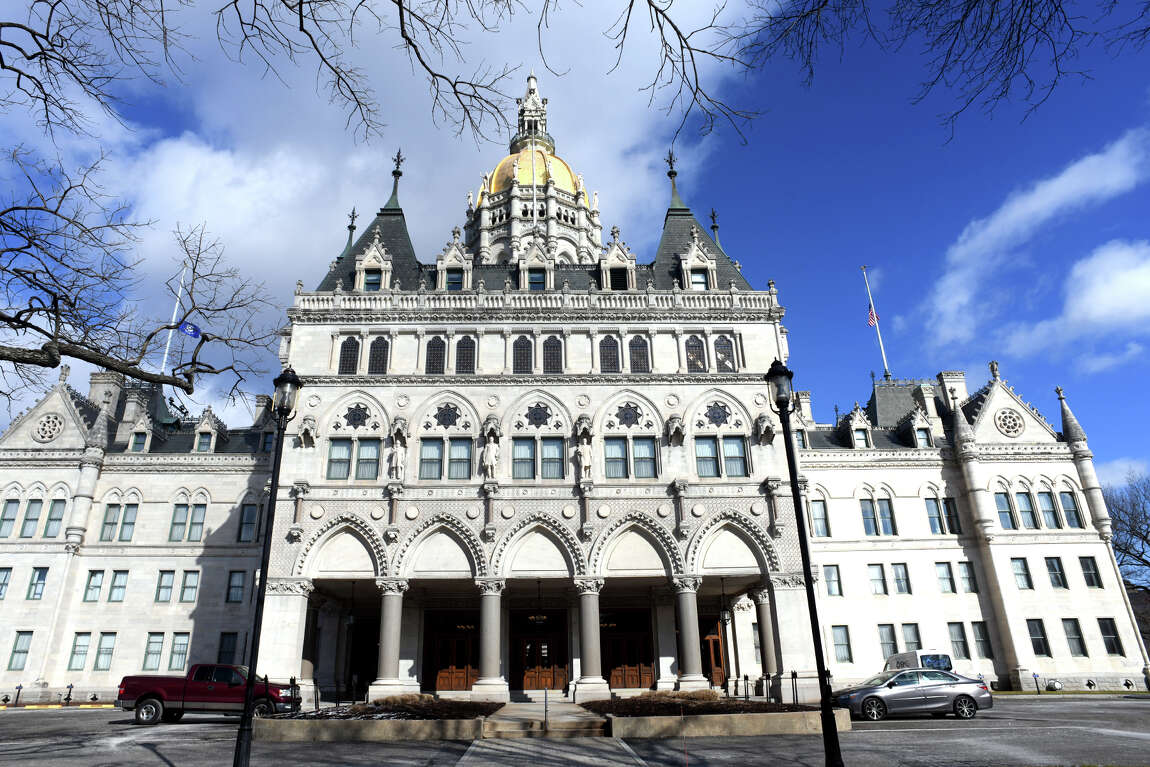

A new state audit found Connecticut’s Department of Education has not conducted a complete inventory of its property and equipment in over a decade.
The State Department of Education has not conducted an inventory of its assets since 2015, a new state audit found.

“There is less assurance that the department secured and accounted for its assets, leaving state property susceptible to loss, theft or fraud,” auditors wrote in their report.
Article continues below this ad
Auditors also faulted the agency for overpaying and underpaying employees for accrued vacation or sick time, submitting required reports past the deadline and failing to maintain related boards and commissions, including not publishing meeting notices.
The audit covered the fiscal years 2023 and 2024.
Matthew Cerrone, a spokesman for the education department, said the agency has already taken corrective action in response to the audit.
“The CSDE takes the findings and recommendations in this audit seriously,” Cerrone said in an email response to a request for comment on the new audit.
Article continues below this ad
“As reflected in the agency’s responses throughout the report, a number of the corrective actions associated with the findings were already underway or completed prior to the report’s release,” Cerrone said. “The CSDE is committed to strengthening internal controls and oversight to ensure continued compliance.”
In responses included with the audit, the education department agreed with some findings and disagreed with others.
Referring to the inventory criticism, the agency said, “Due in part to staffing challenges, the inventory process was not completed. We plan to conduct a full inventory within the next six months.”
Article continues below this ad
The State Department of Education is responsible for the general supervision and control of the state’s educational system and administration of state and federal grants, which are paid to local and regional educational agencies. The mission of the State Department of Education is to provide leadership that promotes an educational system supporting all learners in reaching their full potential.
Lack of inventory work
Auditors noted that the state requires agencies to conduct a complete physical inventory of all property by the end of each fiscal year to ensure accurate property records. The education department has not conducted “a complete physical inventory since the fiscal year ending June 30, 2015,” auditors said.
“A lack of management oversight contributed to this condition,” auditors said.
Article continues below this ad
The findings have been reported in audits covering fiscal years 2009 through 2022.
“The State Department of Education should comply with the Office of the State Comptroller’s requirements to perform an annual physical inventory,” auditors said.
In responses included in the audit, the education department agreed with the findings and pledged to improve its practices.
“During this process, we will assess any training needs and coordinate with the Office of the State Comptroller to ensure staff receive training as necessary,” the agency said.
Article continues below this ad
Inaccurate payments
Auditors said a review of five employees’ accrued vacation and sick leave payments, totaling $201,917, revealed the education department overpaid $2,786 to three employees and underpaid $5,098 to one employee. The auditors also found:
- Four of five employees’ vacation and sick leave payments were calculated with the July 1, 2022, COLA increase instead of the rate on their last day of active employment.
- One of five employees inaccurately received payment for 60 and 105 days of accrued vacation and sick time instead of 63 and 165 days, respectively.
“The department inaccurately dispersed funds when it overpaid employees for accumulated leave upon retirement,” auditors said. “A former employee did not receive their full accrual payment. The condition appears to be due to computation errors.”
Article continues below this ad
The findings have not been reported in a previous audit.
“The State Department of Education should strengthen internal controls to ensure the accuracy of employee separation payments in accordance with collective bargaining unit contracts,” auditors said. “The department should recover any overpayments and issue payments to underpaid employees.”
In its response, the education department agreed with the findings.
“The delay was due to an unprecedented volume of activity in June and July 2022, including the processing of over 6,000 SEBAC retroactive payments, lump sum payments, termination payments, and numerous transactions associated with the successful transition of CTECS to an independent agency.” the agency said.
Article continues below this ad
“As a result, July 1st retirement payouts were processed for the pay period ending July 14, 2022, rather than the period ending June 30, 2022,” the education department said. “This resulted in calculations at a higher rate, including the July 1, 2022, COLA increases. Going forward, all retirement payouts will align with the pay plan(s) in effect as of the employee’s official separation date. The agency will seek to recover any overpayments and reissue payments for underpaid employees.”
Late submitting reports
Auditors said a review of reporting requirements found the education department:
- Did not maintain evidence that it submitted 49 required reports to their intended recipients. Of the 49 reports, 10 reports were available and appeared complete.
- Submitted 13 reports between 13 days to over a year late.
Article continues below this ad
“The intended report recipients may not have the current information to make informed decisions regarding the department and its operations,” auditors said. “A lack of management oversight appeared to contribute to the condition.”
The findings have been previously reported during audits covering the fiscal years 2018 through 2022.
“The State Department of Education should implement internal controls to ensure that it prepares and promptly submits all statutorily mandated reports,” auditors said. “If the department believes that certain reporting requirements are no longer practical or relevant, it should seek statutory repeal.”
In its response, the agency partly agreed with the findings.
Article continues below this ad
“The department disagrees with the audit’s reported number of nontransmitted legislative reports and maintains records of 35 legislative reports completed during the audit period,” the department said. “Of these, 25 were transmitted via email to the appropriate legislative recipients.”
The education department said it has hired a coordinator of systemic implementation, whose responsibilities include tracking and monitoring all statutorily required reports.
“Prior to this hire, staffing shortages impacted our ability to meet the demands associated with timely reporting,” auditors said.
The agency also pointed out that many of the reports were presented in detail to the State Board of Education and posted on the department’s website, ensuring public accessibility.
Article continues below this ad
“It is important to note that the timelines for certain required reports do not always align with the academic year, which presents challenges in compiling data and information on an annual basis as mandated by statute,” the education department said.
In response, auditors said, “For the reporting due during the audited period, we did not receive evidence of email submission of the reports mentioned in the response. If the department feels that it is difficult to meet certain reporting deadlines, it should seek legislative changes.”
Posts for boards, commissions
Auditors said a review of 14 boards, commissions, councils, committees and the State Board of Education found:
Article continues below this ad
- Six were inactive.
- Nine did not post regular meeting schedules with the secretary of the state.
- Eight did not post all meeting schedules and agendas on the secretary of the state’s state agency public meeting calendar.
- Five did not post all minutes on the agency website.
“Interested parties may not be informed about or be able to attend or participate at meetings,” auditors said. “A lack of management oversight appeared to contribute to the condition.”
The findings had not been reported in a previous audit.
“The State Department of Education should work with its related boards, commissions, councils and committees to ensure compliance,” auditors said.
Article continues below this ad
In its response, the department partly disagreed with some of the findings.
“Finding No. 12 claims the State Department of Education is responsible for overseeing 14 councils, commissions and committees, including the State Board of Education,” the agency noted. “It asserts the department must publish or file meeting schedules, agendas and minutes for these groups. … The finding states some materials were not published due to inadequate administrative oversight and urges the department to ensure future compliance.”
But, the education department said, state statutes require that each public agency — not the parent department or board — publish and file its meeting materials.
“Thus, the department or State Board of Education is not responsible for publishing these materials for each council, commission or committee,” the agency said. “Conn. Gen. Stat. § 4-5 designates the State Board as the ‘department head,’ with the department acting as its administrative arm per § 10-3a. The State Board itself is responsible for publishing its meeting information.”
Article continues below this ad
The department noted for the other 13 entities, the statutes do not require the education department to publish or file materials on their behalf.
“Instead, each council, commission or committee must comply with publication and filing requirements independently,” the department said. “While the department may assist administratively, it is not mandated to oversee these duties. Going forward, the department will support these entities and ensure they understand their FOIA responsibilities regarding publication and filing.”
In response, auditors said, “Since these entities are generally established within the department or provide secretarial and administrative assistance, the State Department of Education appears to serve as the lead agency.”
Article continues below this ad













Leave a comment