
Key Takeaways
- Operating expenses, or OpEx, are essential costs that businesses incur for daily operational activities necessary to generate revenue, including rent, salaries, and marketing.
- The IRS allows businesses to deduct operating expenses from their taxes, provided they are ordinary and necessary for profit-generating operations, which distinguishes them from capital expenses.
- Effective management of operating expenses can lead to competitive advantages and increased profitability, though it’s crucial to balance cost reduction with operational quality.
- Unlike fixed costs such as rent, variable operating expenses fluctuate with production levels, impacting a business’s ability to manage its financial health flexibly.
- Operating expenses differ from non-operating expenses, which are unrelated to core business activities, and capital expenses, which are associated with acquiring or upgrading assets over time.
Get personalized, AI-powered answers built on 27+ years of trusted expertise.
Crea Taylor / Investopedia
What Is an Operating Expense?
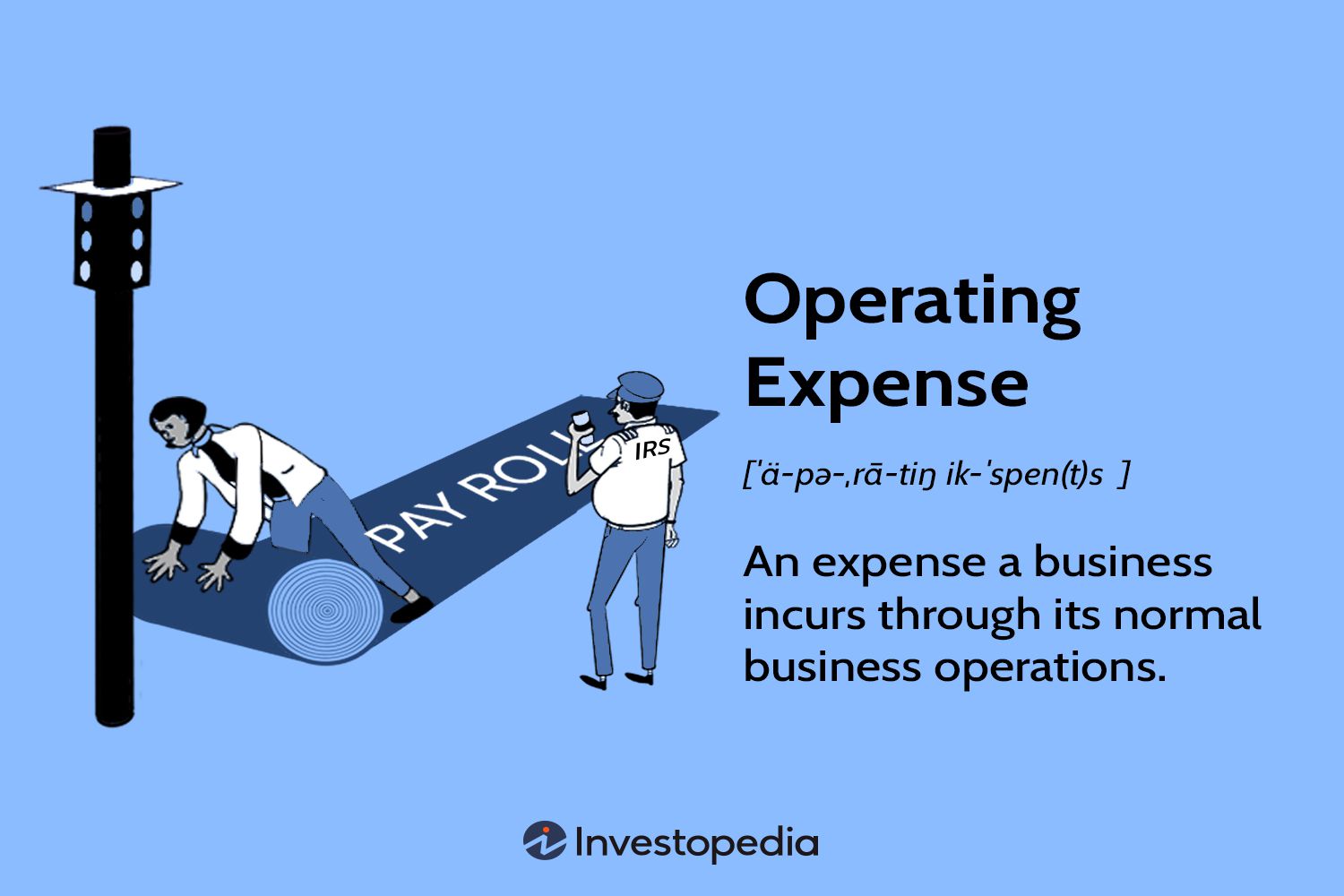
An operating expense is an expenditure that a business incurs as a result of performing its normal business operations. Operating expenses differ from capital expenses, which are involved with acquiring or upgrading assets over time, and non-operating expenses, which aren’t related to core business activities.
Operating expenses are often abbreviated as OpEx and include equipment, insurance, inventory costs, marketing, payroll, rent, research and development (R&D) funds, salaries, and utilities.
Businesses can deduct OpEx from their taxes if it’s ordinary and necessary for profit-generating operations. If operating expenses are effectively managed, businesses can gain competitive advantages and increase profits. But they have to balance cost reduction with operational quality.
Companies manage OpEx better when their leaders understand the difference between fixed and variable costs. Fixed costs (insurance, rent, etc.) don’t change with production levels, while variable costs fluctuate with product or service production and sales levels.
Operating expenses are important in a business’s operational efficiency and profitability.
Deep Dive Into Operating Expenses
Key Operational Activities Impacting OpEx
Operating expenses are the costs of day-to-day activities required to run a business and generate revenue. These differ from costs related to investments and borrowing.
Operating expenses can differ according to what a company does. In fact, some activities (and expenses) might be considered operational in one industry but not so in another. It’s important to understand the distinction due to the tax deductibility of operating expenses. Some common types of operating expenses include:
- Rent
- Salaries and wages
- Accounting and legal fees
- Bank charges
- Sales and marketing fees
- Office supplies
- Repairs
- Utilities expenses
- Cost of goods sold (COGS)
Strategies for Managing Operating Expenses Successfully
Management must learn how to reduce operating expenses without harming the firm’s competitive ability.
While operating expenses are necessary, firms can reduce them to gain a competitive edge and boost earnings. However, excessive cuts might harm operational quality. Balancing these factors is challenging but rewarding.
An income statement tracks the income and expenses of a company over a certain period to provide an image of its profitability. Income statements typically categorize expenses into six groups: cost of goods sold (COGS); selling, general, and administrative (SG&A) costs; depreciation and amortization; other operating expenses; interest expenses; and income taxes.
The first four of the above-listed costs are usually counted as operating costs. Interest expenses and income taxes are not.
Breaking Down Fixed and Variable Costs in OpEx
Operating expenses can be fixed, like rent and insurance, not changing with production levels, or variable, depending on production and sales levels of products or services.
A company can better manage its operating expenses when its managers understand the difference between its fixed and variable costs.
Comparing Operating and Non-Operating Expenses
A non-operating expense is an expense incurred by a business that is unrelated to the business’s core operations. The most common types of non-operating expenses are interest charges or other costs of borrowing and losses on the disposal of assets. Accountants sometimes remove non-operating expenses to examine the performance of the business, ignoring the effects of financing and other irrelevant issues.
The Internal Revenue Service (IRS) allows businesses to deduct operating expenses if the business operates to earn profits. However, the IRS and most accounting principles distinguish between operating expenses and capital expenditures.
Practical Example of Operating Expenses
Here’s a look at a simple income statement that shows the operating expenses for a company.
Source: Harvard Business School Online
Differentiating OpEx From CapEx
Abbreviated as CapEx, capital expenditures are purchases that a business makes as an investment. Capital expenditures include costs related to acquiring, maintaining, or upgrading tangible and intangible assets. Tangible business assets include real estate, factory equipment, computers, office furniture, and other physical capital assets. Intangible assets include intellectual property, copyrights, patents, and trademarks.
The IRS treats capital expenses differently from operating expenses. According to the IRS, operating expenses must be ordinary (common and accepted in the business trade) and necessary (helpful and appropriate in the business trade). In general, businesses are allowed to write off operating expenses for the year in which the expenses were incurred. Alternatively, businesses must capitalize capital expenses/costs.
For example, if a business spends $100,000 on payroll, it can write off the entirety of that expense the year it is incurred, but if a business spends $100,000 buying a large piece of factory equipment or a vehicle, it must capitalize the expense or write it off over time. The IRS has guidelines related to how businesses must capitalize assets, and there are different classes for different types of assets.
What Is a Non-Operating Expense?
A non-operating expense is a cost that is unrelated to the business’s core operations. The most common types of non-operating expenses are interest charges or other costs of borrowing and losses on the disposal of assets. Accountants sometimes remove non-operating expenses to examine the performance of the business, ignoring the effects of financing and other irrelevant issues.
What Are Capital Expenses?
CapEx includes costs related to acquiring or upgrading capital assets such as property, plant, and equipment. These expenses, unlike operating expenses, can be capitalized for tax purposes. The IRS has guidelines related to how businesses must capitalize assets, and there are different classes for different types of assets.
What Is the Tax Treatment for Operating Expenses?
The IRS allows businesses to deduct operating expenses if the business operates to earn profits. According to the IRS, operating expenses must be ordinary (common and accepted in the business trade) and necessary (helpful and appropriate in the business trade). In general, businesses are allowed to write off operating expenses for the year in which the expenses were incurred.
The Bottom Line
Operating expenses (OpEx) result from a company’s daily core activities to generate income. These include categories such as marketing, payroll, and rent.
Operating expenses differ from capital expenses (CapEx) and non-operating expenses in a business’s financial structure. CapEx is purchases related to acquiring, maintaining, or upgrading an asset, while non-operating expenses are those unrelated to a business’s core operations.
Operating expenses offer tax advantages for businesses because the IRS allows them to be deductible as long as the company operates to earn a profit and expenses are commonly known and necessary.
OpEx must be managed efficiently to maintain competitiveness without compromising business integrity or quality. This includes effective budget management between fixed costs (such as rent) that don’t change and variable costs that fluctuate with production or sales levels.














Leave a comment