
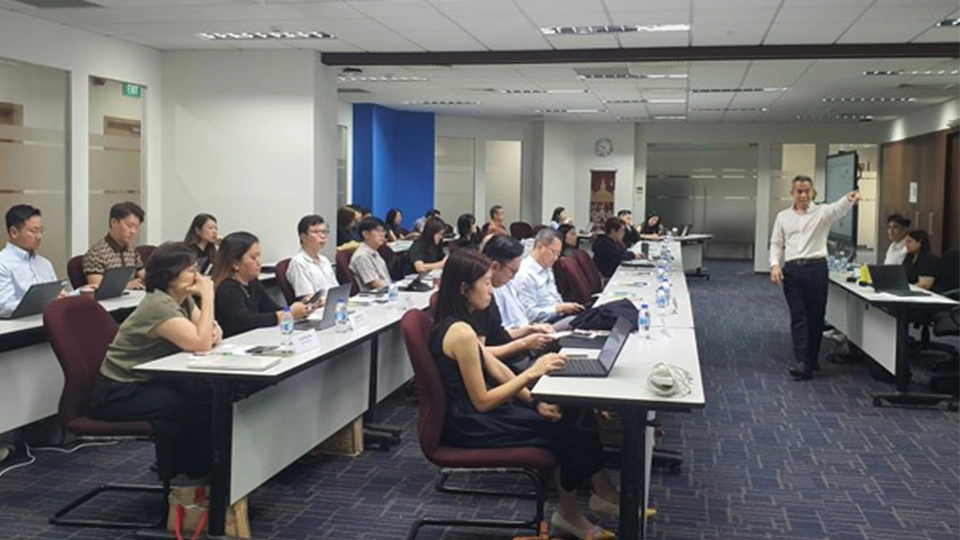
Singapore. The World Intellectual Property Organization (WIPO), through WIPO Singapore Office, together with the Intellectual Property Office of Singapore (IPOS) and Singapore Business Federation (SBF), conducted the second phase of the FIND Program to help businesses better identify, manage and communicate the value of their intangible assets.
Through two interactive workshop sessions, facilitated by EY-Parthenon and led by Mr Andre Toh and Mr Guo Zhiyong, participating companies explored how intangible assets and capabilities, including technology, customer relationships, contracts, brands and human capital, can contribute to business strategy, competitive advantage and long-term value creation. The Program also introduced practical approaches for communicating these sources of value to investors, financial institutions and other stakeholders.
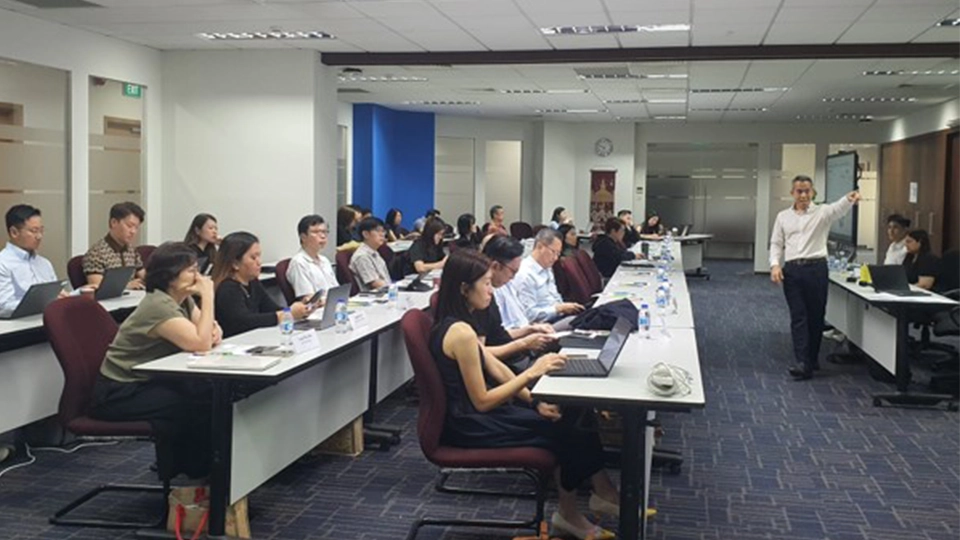
Mr. Zhiyong Guo, facilitator from EY-Parthenon, introduces the Intangibles Disclosure Framework and discusses how intangible assets contribute to business value and strategy.
Connecting Intangibles to Business Strategy
The workshops introduced participants to the Intangibles Disclosure Framework (IDF), a voluntary framework designed to support more consistent communication of how companies create, develop and manage value through intangible assets.
Using the framework’s four pillars of Strategy, Identification, Measurement and Management (SIMM), participants examined how intangible assets support corporate strategy, identified the intangible resources most important to their businesses, and considered how these resources contribute to revenue generation, customer outcomes and future growth.
Case-study exercises encouraged participants to move beyond simply listing intellectual property rights and instead consider the broader range of intangible assets and capabilities on which a business may depend. Participants assessed, for example, the importance of proprietary technology and know-how, recurring customer relationships and contracts, specialized expertise and brand-related assets to a company’s business model and competitive position.
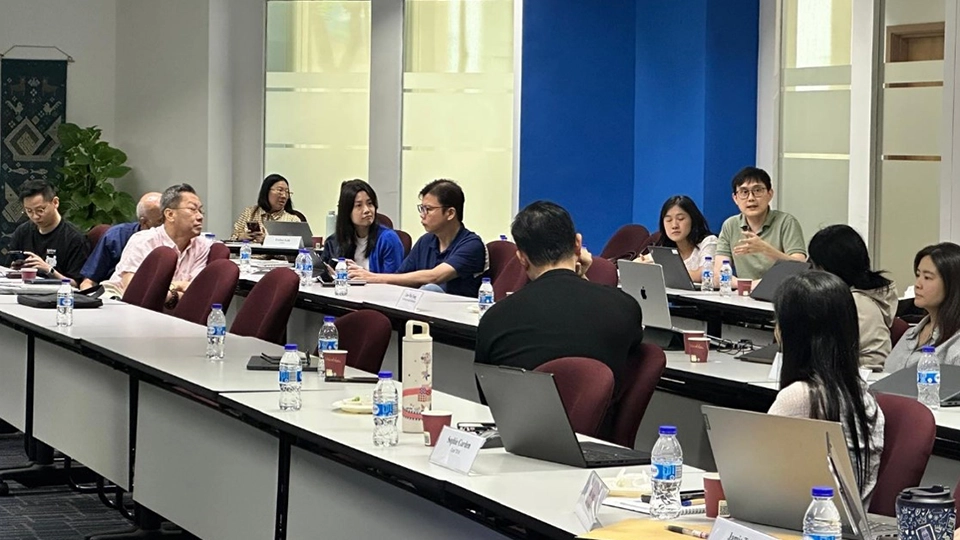
Participants work through a discussion with IPOS.
Measuring Performance and Managing Risks and Opportunities
The second session focused on how companies can move from identifying intangible assets to measuring their performance and managing the associated risks and opportunities.
Participants considered relevant performance indicators and how historical trends can provide evidence of whether an intangible asset is strengthening and contributing to business performance. The workshop also introduced approaches to monetary valuation, while emphasizing that valuation is an optional component of the IDF and that the appropriate methodology depends on factors such as the nature of the asset, its stage of development and the information available.
Discussions also explored the governance of intangible assets, including how companies can identify and assess risks and opportunities, assign responsibilities across business functions and integrate intangible-related considerations into broader enterprise risk management.
The sessions highlighted that the value of intangibles is not always fully reflected in financial statements, particularly where assets such as know-how, customer relationships and internally developed capabilities have been generated within the business. Clearer information on how these assets contribute to future economic benefits can therefore complement traditional financial reporting and support more informed conversations with investors and financiers.
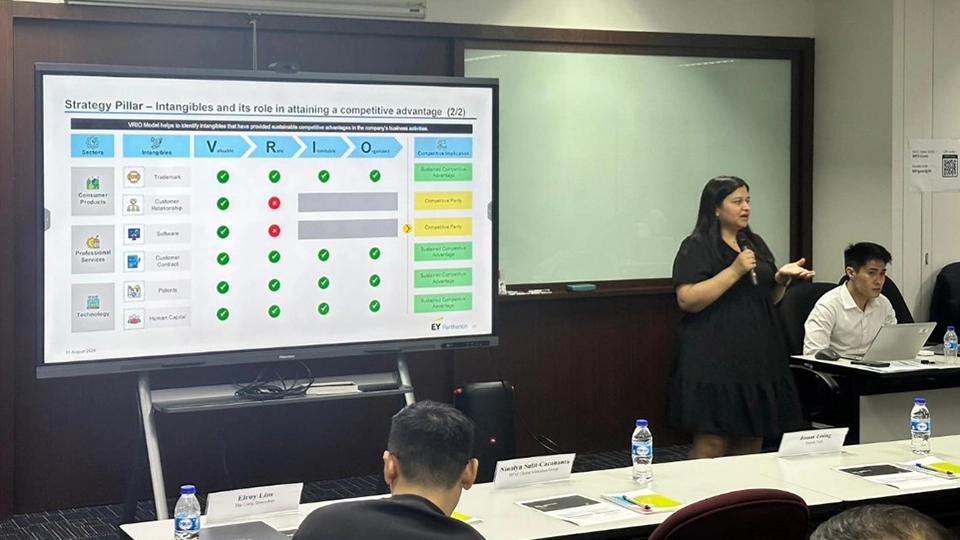
EY-Parthenon facilitator, Ms. Prajakta of EY-Parthenon facilitates a session on how intangible assets can support competitive advantage under the Strategy pillar of the Intangibles Disclosure Framework.
Putting the Framework into Practice
A central feature of the FIND Program is the application of the framework to participants’ own businesses.
Building on the case studies and facilitated discussions, participating companies would develop their own IDF reports, applying the four SIMM pillars to their business strategies and intangible assets. The reports are intended to provide companies with a structured view of how their intangibles support business performance and can serve as an internal management tool as well as a basis for future communication with investors, financiers and other stakeholders.
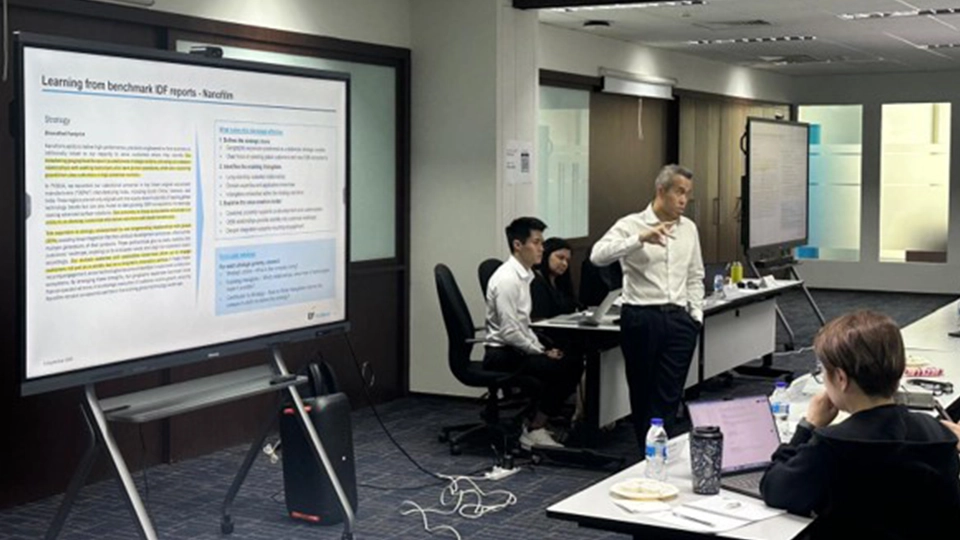
Mr. Zhiyong Guo, facilitator from EY-Parthenon, shares his perspective during the discussion on Nanofilm’s IDF report.
By helping businesses make their intangible assets more visible, understandable and strategically managed, the FIND Program supports wider efforts to strengthen the environment for intangible asset commercialization, valuation and financing.









Leave a comment