
Korea’s patent share falls to 4.6%, the US to 21.8%, as China advances in robot AI and core technologies
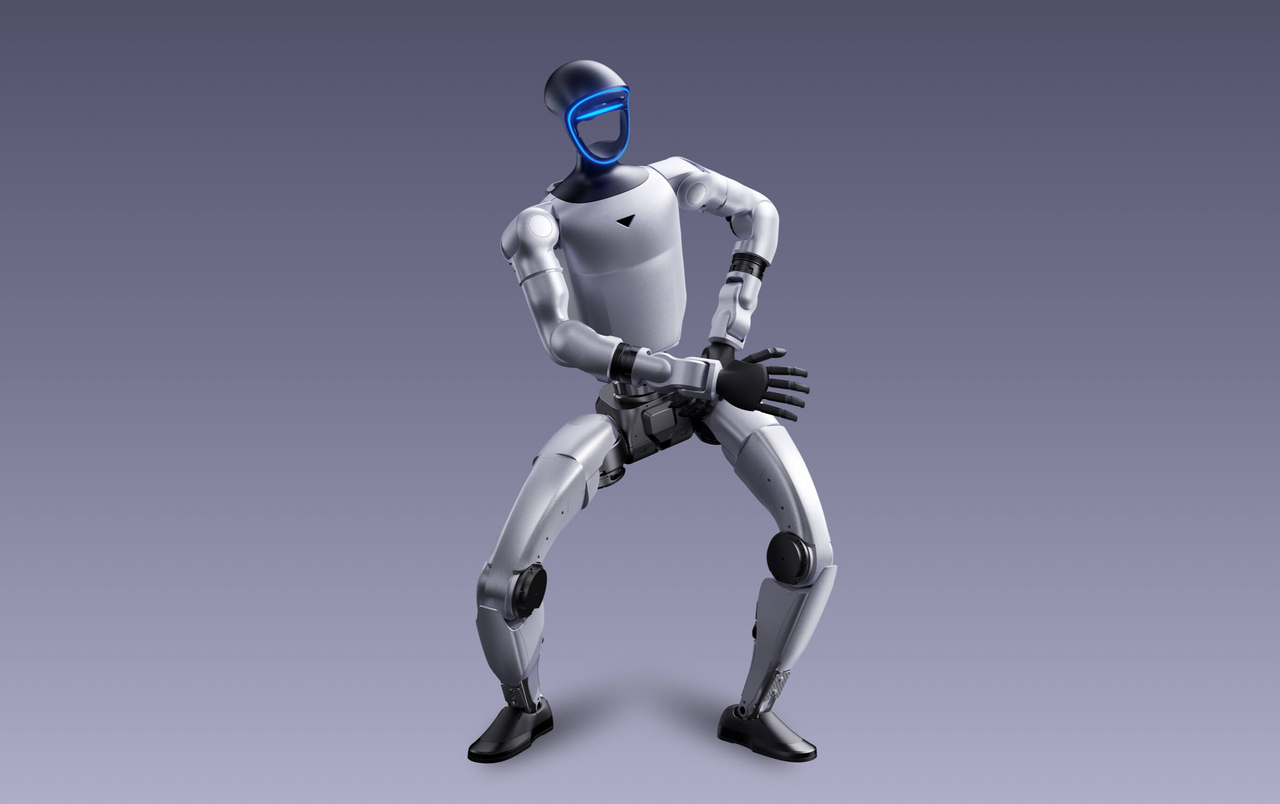
China’s widening lead in humanoid robot patents is raising the stakes for South Korea’s push to compete in the fast-growing industry.
Across the world’s five major intellectual property offices, known as IP5, China accounted for 60.8 percent of humanoid robot patents as of the first half of 2026, according to Intellectual Property Office data obtained by Rep. Lee Jeong-heon’s office. The US held 21.8 percent and Korea 4.6 percent.
China’s share rose from 51.8 percent in 2024, while Korea’s fell from 6.3 percent and the US share declined from 27.3 percent.
Figures for applications filed in the first half of this year show China submitted 1,584, compared with 113 from the US and 35 from Korea. In 2025, China filed 2,573 applications, against 640 from the US and 97 from Korea.
The office cautioned that recent application counts remain provisional because of the standard 18-month delay before publication.
China also leads in robot foundation models, or RFMs — AI models trained on large amounts of data from multiple sources that help robots learn and perform new tasks without being programmed for each one. It accounts for 66.3 percent of IP5 patents in the field, followed by the US at 14.1 percent and Korea at 8.8 percent.
Patent volumes alone do not establish technological superiority. But separate assessments by the Korea Institute of S&T Evaluation and Planning also suggest Korea is falling behind China in core robotics capabilities.
Using the US as a benchmark of 100, the institute scored Korea at 85 and China at 79 in advanced autonomous manipulation technology in 2022. By 2024, China’s score had risen to 90, while Korea’s had fallen to 80.
The pattern was similar in human-robot interaction. Korea led China 85 to 84 in 2022, but trailed 80 to 90 in 2024.
Lee warned that weaker core capabilities and growing foreign patent holdings could leave Korean robot makers dependent on overseas technology and exposed to substantial royalty costs.
He urged the Science Ministry to “overhaul national R&D investments and intellectual property strategy,” saying that “even a one- to two-year delay in AI and robotics innovation could result in an irreversible technological gap.”
China’s supply chain advantage
Industry sources attribute part of China’s advantage to its tightly integrated supply chain, drawing parallels with its electric vehicle industry. Capabilities spanning components, robot assembly and AI software help Chinese manufacturers reduce costs and accelerate development.
Korean companies, meanwhile, face gaps in domestic production of key hardware and in the data needed to train robots to perform physical tasks.
“As humanoids require complex joints and actuators, it is critical to secure an in-house supply of critical hardware,” an industry source said. “Korean manufacturers face the dual challenge of boosting component performance while establishing affordable, mass-production supply chains.”
The source pointed to Hyundai Motor Group’s efforts to draw on its supplier network to localize components and work with technology companies such as Nvidia to develop robot training data.
hyejin2@heraldcorp.com










Leave a comment