
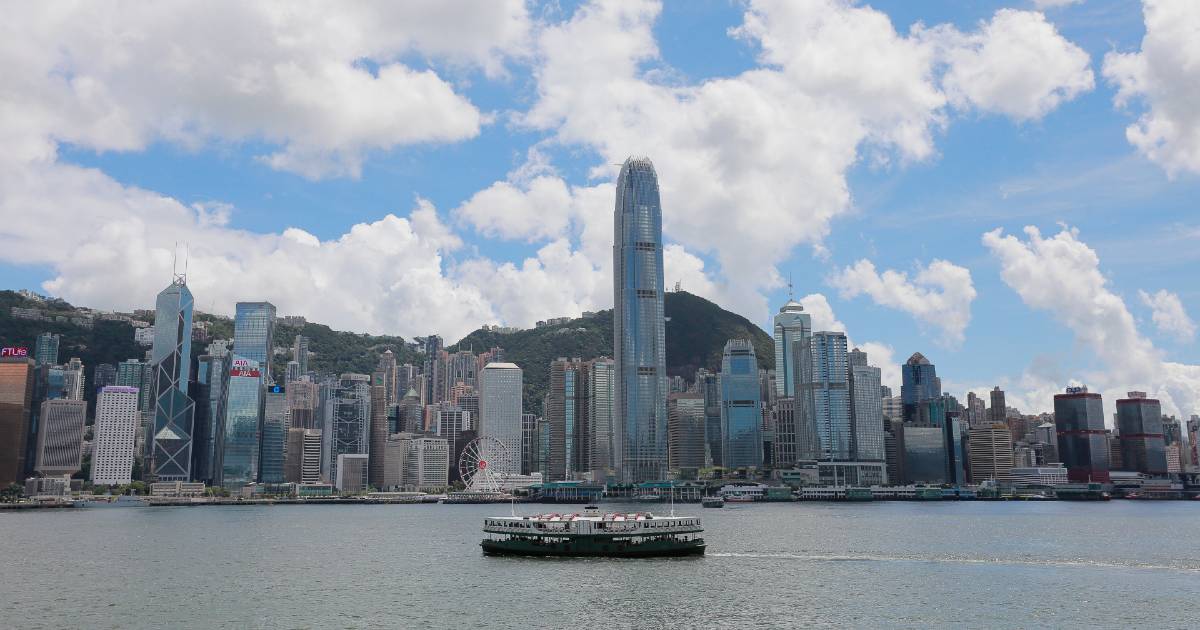
Hong Kong could surpass London as the world’s top gold trading centre because of strong Asian demand, especially in the Greater Bay Area (GBA) and government policy, a top precious metals trader said.
In 2013, Padraig Seif founded Precious Metals Asia in Hong Kong, a physical bullion trading house which has grown into a multi-billion-dollar business with a global client base. He is also a lawyer with Boase, Cohen and Collins Solicitors and Notaries.
He was speaking on Thursday evening to an audience at the Refinery Club in Quarry Bay on the merits of owning physical gold.
“Hong Kong is the centre of trade in precious metals in Asia,” he said. “The GBA is the world’s largest conglomeration of jewellery production. Chow Tai Fook is the world’s largest jewellery and watch group.”
In the year that ended March 31 2026, Chow Tai Fuk had sales of HK$94.4 billion, 80 per cent from the mainland and the rest from Hong Kong and Macau.
“The highest demand in the world comes from Asia, especially India and China,” Seif said. “Demand is here, the market is here. It is also government policy to make Hong Kong number one in the world and it has done a great deal of work in this regard.”
In July 2026, the government announced the launch of a central clearing and settlement system for gold, together with a Delivery Connect with the Shanghai Gold Exchange.
In a press release on September 16, the government said: “Hong Kong is committed to building a commodity trading ecosystem, with gold trading as an entry point. We have a comprehensive plan to build a gold ecosystem in the Asian time zone and align with major international gold trading centres in the long run. The trial operation of Hong Kong’s gold central clearing and settlement system has commenced, and we are also working at full steam to implement a series of measures to promote physical delivery, develop investment products, derivative products and risk management tools, provide tax concessions, and deepen connectivity with the Mainland gold market, thereby enhancing Hong Kong’s status as an international gold trading, clearing and reserve hub.”
Cheung Tak-hei, chairman of the Hong Kong Gold Exchange, has proposed construction of a storage facility in the Northern Metropolis with a capacity of 1,000 tonnes of gold. “The gold delivery warehouse at Hong Kong Airport has a capacity of only 150 tonnes and is being expanded to 250 tonnes, but this remains insufficient,” said Cheung. “We suggest building a warehouse in the Northern Metropolis. Its proximity to Shenzhen and position facing vast Mainland demand would facilitate logistics and reduce costs.”
Seif said that Hong Kong had dozens of warehouses where precious metals were stored. They could not be identified as such from the outside.
To overtake London, Hong Kong has work to do, said Seif. “We need to have a universal standard.” This means having gold accredited by the London Bullion Market Association (LBMA), set up in 1987. It is the international trade association which set standards. Gold with a LBMA stamp is accepted around the world.
“Many local producers are not LBMA-accredited,” Seif said. “London also has the time advantage, being between Europe and North America.”
China is the world’s biggest producer and consumer of gold. According to the World Gold Council, it produced 384 tonnes in 2025. In the first eight months of 2026, China spent US$158.8 billion to import more than 1,000 tonnes of gold, a record sum for such a period. It was bought by both the central bank and local investors eager to diversify their investments at a time of worsening geopolitical tensions.
Asked how much gold people should own, Seif said: “for an investor with assets of US$300,000 – US$500,000, I recommend US$30,000 – US$50,000. Currently, there is huge misallocation of capital into AI. Where will the return come from? Will people be prepared to pay for AI, when they do not pay for Google or Facebook?”
He set out the advantages of holding physical gold. “It is independent of issuers and governments. You can take it with you. Currencies come and go. My German grandfather, who lived from 1917 to 2001, lived through seven currencies. Over the last century, France has had four currencies and China five.”
He said that governments could freeze or confiscate assets. “As we learnt in Covid, they can lock you up or close the borders. Or your property and businesses could be destroyed by war,” he said.
The European Union is considering whether to confiscate the US$300 billion of assets held by the Central Bank of Russia in Belgium. Such assets were previously considered privileged.
“I am lobbying the government to allow contributions by the MPF to a physical gold fund. When you leave at the airport, you could pick it up.
“Gold is the future.”











Leave a comment