
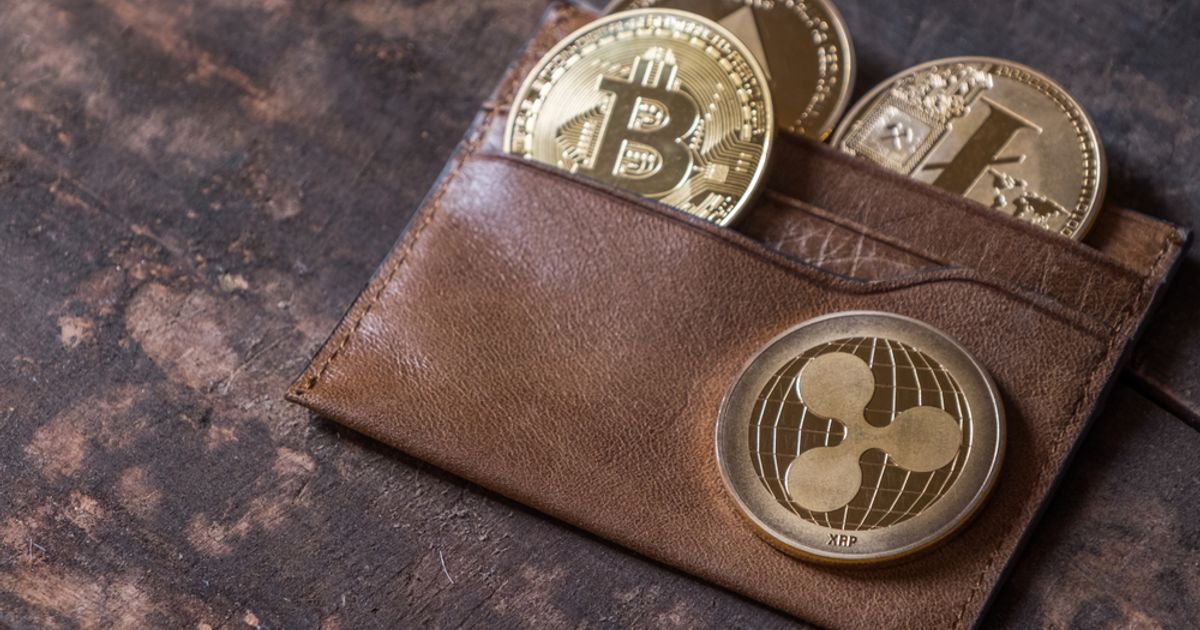
Bitcoin and the crypto market built its reputation on a simple promise: buy and hold it, and eventually you’ll be rewarded but right now, that belief is being tested. Following one of its biggest declines in recent years, roughly half of all Bitcoin holders are now sitting on a loss.
Think about it, millions of people who were told crypto was the future are now watching their investment trade below what they paid. While it’s easy to believe this when you’re making money, it’s much harder when you’re losing it. If enough investors begin questioning the story, panic can quickly replace conviction and if that happens, this may be the precursor to a larger sell-off.
Adding to the concern, last week Bitcoin just suffered its worst weekly decline since the collapse of FTX in 2022. The difference this time is there was no major scandal, no fraud, and no exchange failure, the market simply sold off. That alone should make investors stop and think.
For years, crypto supporters argued it was digital gold: a place to store wealth when inflation rises, governments print money, or uncertainty takes hold. Yet during the latest bout of geopolitical tension, gold moved higher while Bitcoin fell sharply.
Even billionaire investor Mark Cuban, once one of Bitcoin’s strongest supporters, recently revealed he had sold most of his holdings after becoming disappointed with how Bitcoin recently behaved. His argument was simple: when the hour of truth came, the bitcoin price didn’t act the way it was sold.
Then there’s another challenge. Much of the speculative capital that once flowed into cryptocurrency is now flowing into artificial intelligence. Investors can buy companies building AI software, data centres, semiconductors and the infrastructure powering the next technology revolution. The excitement, momentum and speculation that once fuelled crypto is increasingly being redirected elsewhere. History shows that money loves a new story and right now that is AI.
None of this means Bitcoin is finished given it has survived brutal crashes before and recovered every time. Long-term believers will argue this is simply another chapter in a highly volatile journey, but the questions are becoming harder to ignore. If Bitcoin doesn’t rise when inflation rises, doesn’t hold up during periods of uncertainty, and falls when investors become nervous, what role does it play in a portfolio? That’s the debate investors are having right now.
Bitcoin may recover again as it has surprised critics many times before but for the first time in a long time, the market is no longer asking how high can Bitcoin go. It’s asking whether the original story still holds true.
What are the best and worst-performing sectors this week?
The best-performing sectors include Consumer Staples, up over 6%, followed by Consumer Discretionary, up over 5% and Healthcare, up over 3%. The worst-performing sectors include Information Technology, down over 4%, followed by Materials, down over 3% and Financials, down just under 0.5%.
The best-performing stocks in the ASX top 100 include Steadfast Group, up over 30%, followed by CSL Ltd, up over 9% and Coles Group, up over 8%. The worst-performing stocks include Greatland Resources, down over 12%, followed by Capricorn Metals, down over 11% and Newmont Corporation, down over 10%.
What’s next for the Australian stock market?
This week, the All Ordinaries Index once again showed remarkable resilience, with buyers defending the market despite worsening global conditions driven by the escalating US-Iran conflict. By Thursday’s close, the All Ordinaries was down just over 0.2%. To put that into perspective, the S&P 500 fell almost 2.5% over the same period. That divergence matters.
It is relatively uncommon for US markets to suffer a meaningful decline while Australian equities largely hold their ground. On its own, that is a positive sign, but what makes this week’s action even more significant is where buyers chose to step in.
Wind back to the week ending May 22, and as the market sold off, buyers aggressively entered around 8,706 points. This week, as global uncertainty intensified, buyers once again appeared around the same level, defending the market near 8,711. That tells us something important.
The line in the sand has now been drawn around 8,700. As long as the market remains above that level, the bullish thesis remains intact. A decisive break below 8,700 would hand control back to the bears and open the door for a move toward 8,600, or potentially lower.
Looking beneath the surface, sector performance is also sending a message. Consumer Staples and Consumer Discretionary led the market this week, followed by Healthcare and Real Estate. In simple terms, investors are becoming more defensive.
When capital starts rotating into defensive sectors, it often comes at the expense of higher-growth areas such as Technology and Materials. That is worth paying attention to given Technology has surged more than 20 per cent in recent weeks, while Materials recently pushed to fresh highs.
For investors who have enjoyed the strong rally in those sectors, now may be the time to start thinking about the most important part of investing and trading that few people focus on: it’s not how to buy well but how to sell well.
Good luck and good trading.
Dale Gillham is the Chief Analyst at Wealth Within and the international bestselling author of How to Beat the Managed Funds by 20%. He is also the author of the award-winning book Accelerate Your Wealth—It’s Your Money, Your Choice, which is available in all good bookstores and online at www.wealthwithin.com.au.













Leave a comment