
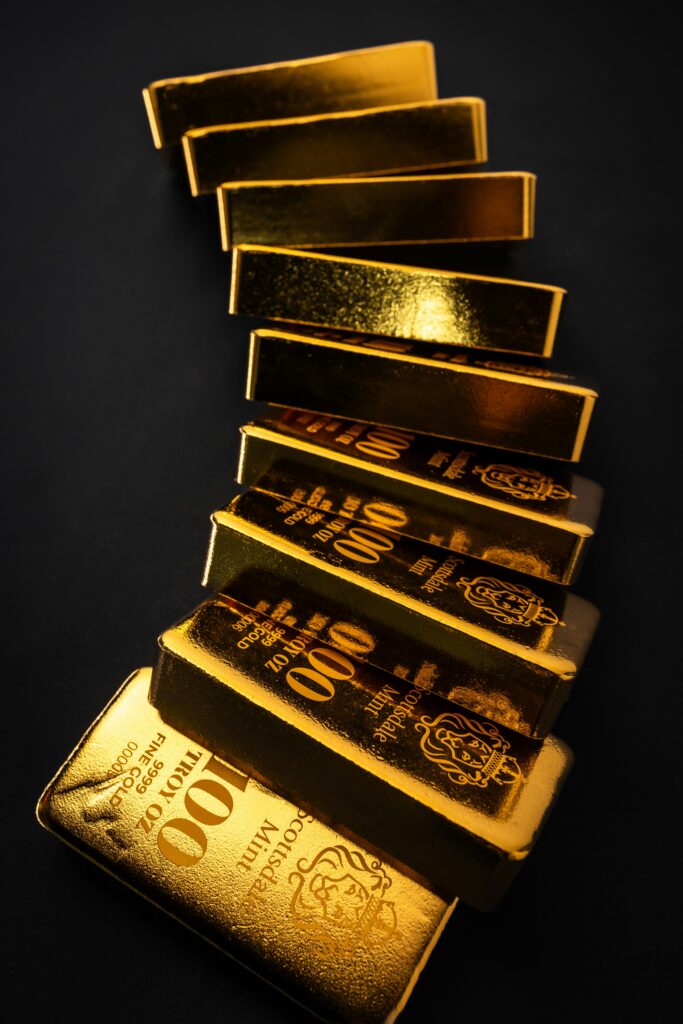

Gold-backed tokens and gold futures both move with the price of gold, but they aren’t the same product. A token such as PAXG or XAUT is a claim tied to physical bullion in a vault, with no expiration date. A gold futures contract, like CME’s benchmark GC, is a standardized derivative that expires on a set date and usually needs only a margin deposit, not full payment upfront. The right pick depends less on where gold is headed and more on whether you want spot-like ownership or leveraged, expiring exposure.
Gold-Backed Tokens vs Gold Futures: What Is the Main Difference?
A gold-backed token gives exposure through physical gold held in an issuer/custodian structure. A gold futures position is a standardized contract to transact gold at a future date, normally requiring margin rather than the full notional value.
| Factor | Gold-Backed Tokens | Gold Futures |
|---|---|---|
| Example | PAXG, XAUT | COMEX GC, MGC, 1OZ |
| Exposure | Physical gold backing | Derivative contract |
| Gold ownership/claim | Yes, per issuer terms | Not physical ownership; delivery possible |
| Expiration | None | Yes |
| Leverage | Not inherent | Inherent via margin |
| Shorting | Needs borrowing/derivatives | Straightforward long or short |
| Trading access | Often 24/7 on crypto venues | Near round-the-clock, trading days |
| Position maintenance | Hold the token | Monitor margin and roll/expiry |
| Key added risk | Issuer/custodian/blockchain | Leverage/margin/basis/expiry |
PAXG and XAUT both tie one token to one fine troy ounce of physical gold. On the futures side, contract size varies: the benchmark COMEX GC contract represents 100 troy ounces, while CME’s Micro Gold and 1-ounce contracts lower the entry point considerably.
Join The European Business Briefing
New subscribers this quarter are entered into a draw to win a Rolex Submariner. Join 40,000+ founders, investors and executives who read EBM every day.
How Do Gold-Backed Tokens Track the Spot Price of Gold?
Tokens track gold because they’re issued against physical bullion, and their creation/redemption process links the token’s market price to the metal’s value through arbitrage.
Paxos states PAXG is backed by allocated physical gold, one fine troy ounce per token, with holders owning fractional interests in specific bars. XAUT similarly represents one fine troy ounce meeting LBMA Good Delivery standards. The label “gold-backed” matters less than the specifics, reserve attestations, allocation arrangements, and redemption terms determine how solid that backing really is.
Even so, price can drift from underlying gold value due to exchange liquidity, bid-ask spreads, redemption friction, blockchain network conditions, and geographic or KYC restrictions. Tether has acknowledged that liquidity and redemption costs can push XAUT to a premium or discount versus physical gold.
The benefit is fractional, transferable, expiration-free exposure. The trade-off: the holder now depends on an issuer, a custodian, and blockchain infrastructure sitting between them and the metal.
How Do Gold Futures Track Gold — and Why Can Prices Differ From Spot?
Gold futures don’t simply mirror today’s spot price. Their price can also reflect the cost of carrying gold to the contract’s expiration, including financing, storage, and insurance.
This gap is called the basis. Futures above spot means contango; below spot means backwardation. Physical commodities like gold often trade in contango partly due to carrying costs, so a PAXG chart and a GC contract shouldn’t be expected to match exactly, day to day.
Two other mechanics matter. Margin lets a trader control a much larger notional position than the cash posted, with positions marked to market daily. Expiration means exposure past a contract’s date requires closing, rolling, or managing the position, COMEX GC is physically deliverable, so anyone not taking delivery must act before broker and exchange deadlines.
The benefit is efficient hedging, leverage, and easy long or short access. The trade-off: leverage magnifies losses, can trigger margin calls, and can produce losses beyond the original deposit.
Gold Tokens vs Gold Futures: Which Has Lower Costs and Better Liquidity?
Neither structure is inherently cheaper, the cost centers differ. Token costs mostly come from trading, blockchain transfers, and issuer redemption. Futures costs mostly come from spreads, commissions, margin, and rolling.
Token costs
Trading fee, bid-ask spread, blockchain withdrawal fee, issuer creation/redemption fee, physical redemption costs, and any intermediary custody fee. Paxos applies creation and destruction fees on direct transactions; Tether Gold states a 25-basis-point fee on direct purchases and redemptions, plus applicable charges. Owning the token doesn’t guarantee cheap physical redemption, Paxos’s terms currently require roughly 430 PAXG plus fees to redeem a full London Good Delivery bar.
Futures costs
Broker commission, exchange/clearing fees, bid-ask spread, capital tied up as margin, roll costs, and delivery/storage expenses if held into delivery.
For either product, judge liquidity by actual order-book depth and expected slippage at your position size, not a general claim that a market is “liquid.”
Read more: How to Verify Authentic Gold Before Buying
What Are the Biggest Risks of Gold-Backed Tokens and Gold Futures?
Both products carry gold-price risk. Beyond that, each adds a different second layer: infrastructure and custody risk for tokens, leverage and contract-management risk for futures.
| Risk | Gold Token | Gold Futures |
|---|---|---|
| Gold price falls | Yes | Yes |
| Issuer/custodian failure | Directly relevant | Different structure |
| Smart-contract/network risk | Yes | No |
| Exchange/custody risk | If held on a CEX | Broker/FCM exposure |
| Premium/discount to spot | Yes | Basis risk instead |
| Margin call | No, if unleveraged | Yes |
| Liquidation from leverage | Only if separately leveraged | Yes |
| Expiration/roll risk | No | Yes |
| Physical-redemption complexity | Yes | Only if held into delivery |
For tokens, watch issuer and custodian reliance, reserve verification quality, smart-contract or network issues, lost keys in self-custody, and KYC or geographic redemption restrictions. PAXG’s terms, for instance, include eligibility and redemption conditions; not every holder can freely exchange any amount for physical bars.
For futures, watch leverage, daily mark-to-market, margin calls, forced position reductions, and mistimed rolls or expirations. Neither product is “safe” purely because gold backs it, the CFTC has warned that gold itself can be volatile, and leverage can substantially amplify the outcome.
Gold-Backed Tokens or Gold Futures: Which Is Better for Your Goal?
Choose based on how you intend to use gold exposure, not on which product sounds more modern.
Tokens may fit better if you want: spot-like, long-only exposure with no expiration; small or fractional positions; assets transferable between wallets; 24/7 crypto-venue access; a potential on-chain asset or collateral; simpler buy-and-hold management without rolling contracts.
Futures may fit better if you want: short-term directional trading; capital-efficient exposure; a straightforward way to go short; portfolio or commercial hedging; standardized, centrally cleared contracts.
A quick decision framework:
- Long-term, crypto-native investor → a physically backed token is usually the simpler fit.
- Professional hedger → futures are typically better structurally suited.
- Active trader wanting leverage or short exposure → futures.
- Investor who wants metal in hand → neither product fully substitutes for directly held bullion.
- DeFi user → a token can be useful, but assess protocol risk separately from the gold exposure.
One clarification worth repeating: plain gold tokens and futures don’t generate yield on their own. If a platform offers yield on PAXG or XAUT, that return comes from lending or another strategy layered on top, evaluate its risks separately. Also note that some crypto exchanges list spot markets for gold-backed tokens alongside perpetual contracts referencing their prices. For example, traders can trade PAXGUSDT futures on MEXC through a PAXG/USDT perpetual contract. This type of crypto perpetual is not the same as a regulated commodity futures contract such as COMEX GC: it has different settlement mechanics, market structure, counterparty exposure, and risk considerations, even though both may informally be described as “gold futures.”
Frequently Asked Questions
Are gold-backed tokens the same as gold futures?
No. Tokens link digital units to physical gold reserves; futures are derivative contracts with maturity dates, margin requirements, and potential physical delivery.
Which tracks the spot price of gold more closely?
Physically backed tokens are structurally designed for spot-like exposure. Futures can trade above or below spot because of basis and cost-of-carry factors like storage and financing.
Do gold futures expire?
Yes. Futures have defined contract maturities, so traders must close, settle, or roll positions to maintain exposure.
Can gold-backed tokens be redeemed for physical gold?
Potentially, but issuer-specific minimums, KYC checks, geographic restrictions, fees, and delivery requirements apply. Being “physically backed” doesn’t mean any holder can instantly swap one token for one coin.
Conclusion
Gold-backed tokens and gold futures both track gold, but they solve different problems. Tokens suit investors who want simple, expiration-free, spot-like exposure with digital portability. Futures suit traders and hedgers who need leverage, short access, or standardized, centrally cleared contracts. Match the product to your goal, holding period, need for leverage, comfort with issuer versus margin risk, rather than whichever feels more familiar. Tax, availability, and regulatory treatment vary by jurisdiction, so confirm current terms with the issuer, broker, or exchange before committing capital.













Leave a comment