
Key Takeaways
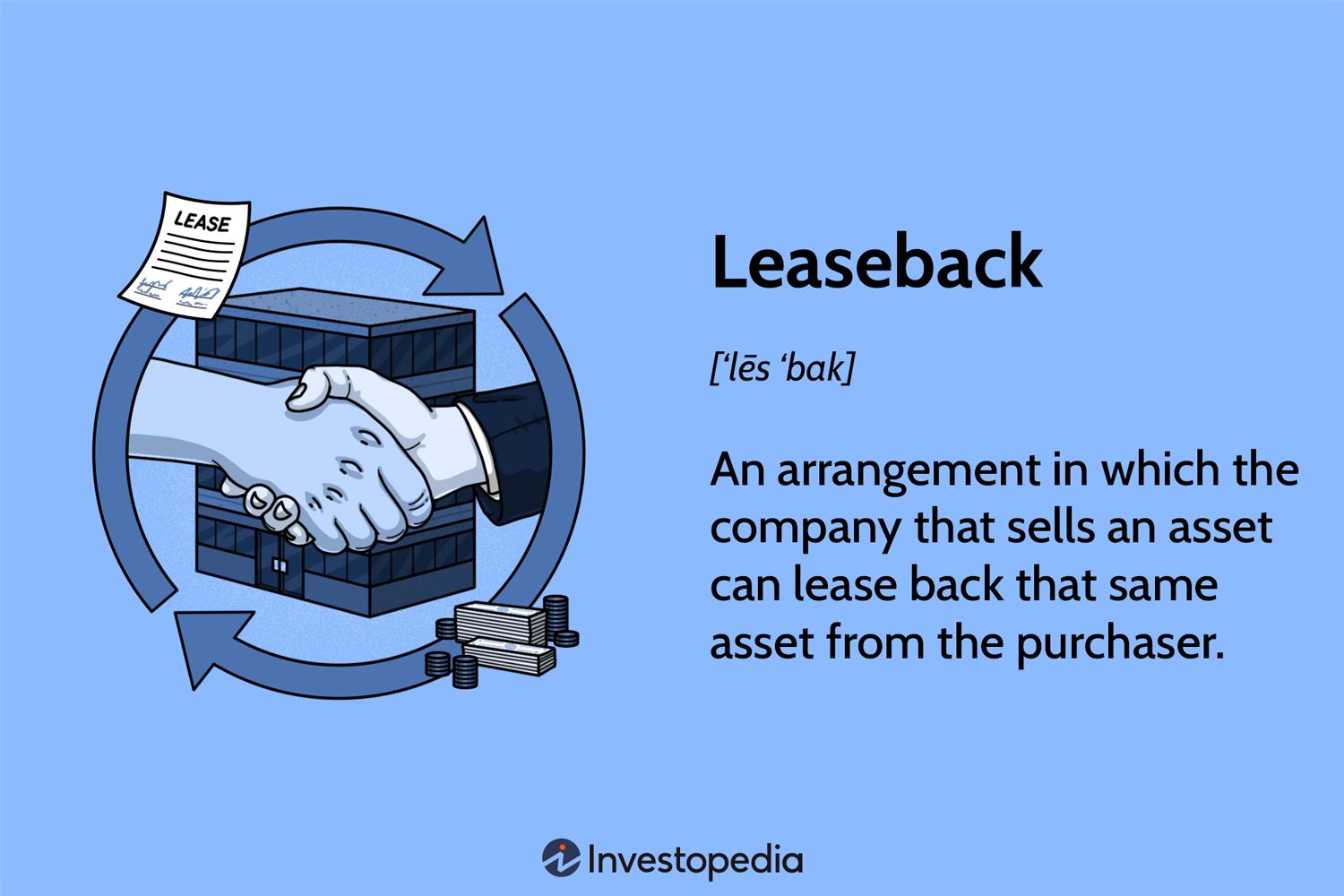
- A sale-leaseback allows a company to sell an asset to raise capital while continuing to use the asset by leasing it back.
- Companies in industries like real estate and transportation frequently use leasebacks to access immediate liquidity without incurring debt.
- Leasebacks can improve a company’s balance sheet by increasing cash and reducing liabilities compared to traditional debt financing.
- Unlike taking on debt, a leaseback provides financial flexibility without increasing a company’s debt burden, appealing to firms needing operational assets.
- Sale-leasebacks can be structured to benefit both sellers and buyers, but it’s important to consider potential tax and business implications.
What Is a Leaseback?
A leaseback, or sale-leaseback, is a unique financial arrangement where a company sells an asset and then leases it back from the buyer. This innovative transaction allows the seller, who becomes the lessee, to unlock the capital tied up in assets such as buildings, land, or expensive equipment while continuing to use them as before.
Companies in sectors with high-cost fixed assets, such as real estate, aerospace, and construction, often employ this strategy to raise capital without assuming additional debt. Unlike traditional financing methods, sale-leasebacks provide a hybrid solution that improves balance sheet health by converting assets into cash and enabling uninterrupted business operations.
How Leasebacks Operate in Business
In sale-leaseback agreements, an asset that is previously owned by the seller is sold to someone else and then leased back to the first owner for a long duration. This way, a business owner can still use an important asset without owning it.
Another way of thinking of a leaseback is like a corporate version of a pawnshop transaction. A company goes to the pawnshop with a valuable asset and exchanges it for a fresh infusion of cash. Unlike a pawnshop transaction, there’s no expectation to buy the asset back.
Important
A sale-leaseback enables a company to sell an asset to raise capital, then lets the company lease that asset back from the purchaser. This allows the company to have both the cash and the asset needed to operate its business.
Industries and Motivations Behind Leaseback Use
The most common users of sale-leasebacks are builders or companies with high-cost fixed assets—like property, land, or large, expensive equipment. Thus, leasebacks are common in the building, transportation, real estate, and aerospace industries.
Companies use leasebacks when they need to utilize the cash they invested in an asset for other purposes, but they still need the asset itself to operate their business. Sale-leasebacks are an attractive alternative for raising capital. When a company needs to raise cash, it typically takes out a loan (incurring debt) or effects an equity financing (issuing stock).
A loan must be repaid and shows up on the company’s balance sheet as a debt. A leaseback can actually improve a company’s balance sheet health. Liabilities decrease by avoiding debt, while current assets increase with cash and the lease agreement.
Although equity does not need to be paid back, shareholders have a claim on a company’s earnings based on their portion of its stock.
Important
A sale-leaseback is neither debt nor equity financing. It is more like a hybrid debt product. With a leaseback, a company does not increase its debt load but rather gains access to needed capital through the sale of assets.
Real-World Leaseback Scenario
There are numerous examples of sale-leasebacks in corporate finance. However, a classic easy-to-understand example lies in the safe deposit vaults that commercial banks give us to store our valuables. At the outset, a bank owns all of the physical vaults in its basements. The bank sells the vaults to a leasing company at market price, which is substantially higher than the book value. Subsequently, the leasing company will offer back these vaults to the same banks to rent on a long-term basis. The banks, in turn, sub-lease these vaults to us, its customers.
More Benefits of Leasebacks
Sale-leaseback transactions may be structured in various ways that can benefit both the seller/lessee and the buyer/lessor. However, all parties must consider the business and tax implications, as well as the risks involved in this type of arrangement.
Potential Benefits to Seller/Lessee…
- Can provide additional tax deductions
- Enables a company to expand its business
- Can help to improve the balance sheet
- Limits the volatility risks of owning the asset











Leave a comment