
Africa must fundamentally rethink how it manages and taxes its vast natural resource wealth to ensure that extractive revenues are used to build long-term resilience rather than merely financing short-term government spending, a tax justice expert has warned.
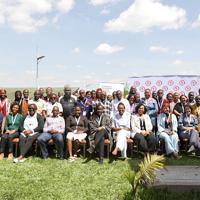
Ms. Gloria Majiga of the Tax Justice Network Africa (TJNA), who facilitated the training on Tuesday, June 16, during the second day of the International Tax Justice Academy (ITJA) Intermediate Course for civil society actors and media practitioners in Nairobi, said the continent risks undermining its future if resource wealth continues to be treated as a short-term budgetary lifeline rather than a strategic development tool.
“This is about more than meeting today’s needs. It is about ensuring intergenerational equity and using resources in ways that benefit both current and future generations,” Majiga said.
She stressed that extractive revenues must be deliberately invested in building resilient economies, strengthening infrastructure, expanding education, and supporting climate adaptation efforts, rather than being absorbed into routine government expenditure.
In her view, Africa’s development model must move decisively away from traditional extraction-led growth toward a system that prioritizes sustainability, climate responsibility, and structural transformation.
“In the African context, this model requires that we shift altogether to a very new way of doing things from how we’ve done it in the past,” she said.
Majiga acknowledged that industrialization remains central to Africa’s development ambitions, but warned that it must be pursued in ways that reduce environmental harm and protect future generations.
“As countries industrialize, they must look at how to reduce emissions from the industrialization process and ensure that development today does not compromise the needs of future generations,” she noted.
She argued that taxation policy in the extractive sector should no longer be narrowly understood as a mechanism for collecting royalties and corporate income taxes. Instead, it should be integrated into broader climate and development strategies.
“Taxation is a tool that can help drive sustainable development and support climate action, both on the continent and globally,” she said.
Majiga emphasized that revenues from Africa’s mining and extractive industries must be strategically deployed to transform economies and reduce dependency on volatile commodity cycles. She said governments should prioritize investments that strengthen long-term productivity and resilience, including infrastructure development, education systems, and climate adaptation programmes.
She warned that failing to do so risks locking African countries into cycles of resource dependence without meaningful structural transformation.
A significant portion of her warning focused on governance weaknesses in Africa’s extractive sector, which she said continue to undermine the continent’s ability to fully benefit from its natural resources. She described the sector as highly lucrative but structurally vulnerable to corruption, weak oversight, and information asymmetry between governments and multinational companies.
“Natural resource governance is not just about collecting revenues. It is about ensuring that resources contribute to development rather than benefiting only a few actors,” she said.
Majiga noted that the underground nature of mineral wealth makes valuation particularly complex, increasing the risk of underpricing and revenue loss.
“Unlike agriculture, where inputs and outputs can be estimated, minerals are hidden underground, and their full value is often unknown. This creates opportunities for individuals and companies to make enormous profits with little transparency,” she explained.
She warned that the lack of transparency often leaves governments unable to determine whether they are receiving fair value for their resources, adding that “there is a very high risk that countries can lose out on the value of their resources if there is insufficient information, transparency, and oversight.”
Majiga outlined governance vulnerabilities across the entire mining value chain, from licensing and exploration to production, taxation, and mine closure. She said opaque licensing processes, political interference, and non-disclosed agreements remain major sources of corruption risk.
“We often hear that governments have signed mining agreements, but the public has never seen them. This lack of transparency creates opportunities for corruption,” she said.
At the production stage, she pointed to risks such as weak environmental oversight, manipulation of production data, and unfair distribution of benefits. She also highlighted the disproportionate burden placed on mining-affected communities, which often bear environmental and social costs without receiving equitable returns.
“Mining-affected communities often bear the greatest environmental and social costs, yet they do not always receive a fair share of the benefits,” Majiga said.
She explained that resource governance is shaped by a layered legal system beginning with constitutional provisions on state ownership of resources, followed by laws on mining, taxation, environment, labour, and land. However, she warned that the lack of transparency in mining contracts remains a serious governance gap.
“Contracts are often negotiated behind closed doors, and this lack of disclosure creates significant risks because the public does not know the basis upon which certain decisions are made,” she said.
She highlighted international frameworks such as the Extractive Industries Transparency Initiative (EITI) and the Open Government Partnership (OGP) as critical tools for promoting accountability, noting that EITI provides a platform where governments, companies, and civil society can work together to improve transparency and reconcile information on revenues and payments.
Majiga defined fiscal regimes as the legal and financial systems that determine how resource revenues are shared between governments and investors, including royalties, corporate taxes, resource rent taxes, windfall taxes, export duties, and production-sharing agreements. “The primary objective of these fiscal regimes is domestic revenue mobilization—ensuring that governments receive a fair share of the wealth generated from their natural resources,” she said. She stressed that such systems must remain transparent, predictable, and equitable to ensure stability and fairness for both governments and investors.
She further noted that taxation applies across every stage of extractive operations, from exploration and development to production and rehabilitation. During exploration, companies often deduct costs incurred in locating mineral deposits, while production phases generate royalties and profit-based taxes. Additional fiscal considerations arise during processing and mine closure. “At every stage of the production cycle, there are tax implications that governments must understand and monitor carefully,” Majiga said, cautioning against poorly designed tax incentives such as exemptions and holidays that can significantly reduce public revenue if not carefully evaluated.
Majiga also raised concern over illicit financial flows (IFFs), which she said remain a major obstacle to Africa’s development financing efforts. She cited export undervaluation, profit shifting, and weak regulatory enforcement as key drivers of revenue loss. “If a company deliberately undervalues its exports, it pays taxes based on the lower declared value, depriving governments of significant revenues,” she explained.
She added that capacity constraints within many African tax administrations further weaken enforcement efforts, particularly when dealing with multinational corporations with advanced technical expertise. “The asymmetry of information between governments and multinational companies remains one of the greatest challenges,” she said.
To address these challenges, Majiga called for stronger institutions, improved transparency, better training for tax authorities, and expanded access to information for citizens. She also underscored the role of civil society and the media in translating complex fiscal and governance issues into accessible information for the public. “Information is the currency of democracy. It is only valuable if people can access it, understand it, and use it to hold decision-makers accountable,” she said.
She further called for enhanced international cooperation, including reforms in global tax governance and efforts to curb illicit financial flows through mechanisms such as the proposed United Nations Tax Convention. She concluded that Africa’s challenge is not simply to raise more revenue, but to ensure that its natural resource wealth is transformed into a foundation for sustainable prosperity. “The future debate is not simply about raising revenue. It is about how taxation and governance can transform natural resource wealth into long-term, sustainable development for Africa,” she said.











Leave a comment