

The American Civil Liberties Union (ACLU) of Puerto Rico has reiterated its strong opposition to House Bill 25 (PC 25), warning that the proposed measure to redefine the island’s maritime-terrestrial zone disproportionately favors private development at the expense of the public interest and constitutional environmental protections.
During a recent public hearing, the organization urged lawmakers to reject the bill, arguing that it directly contradicts Puerto Rico’s constitutional mandate to conserve its natural resources.
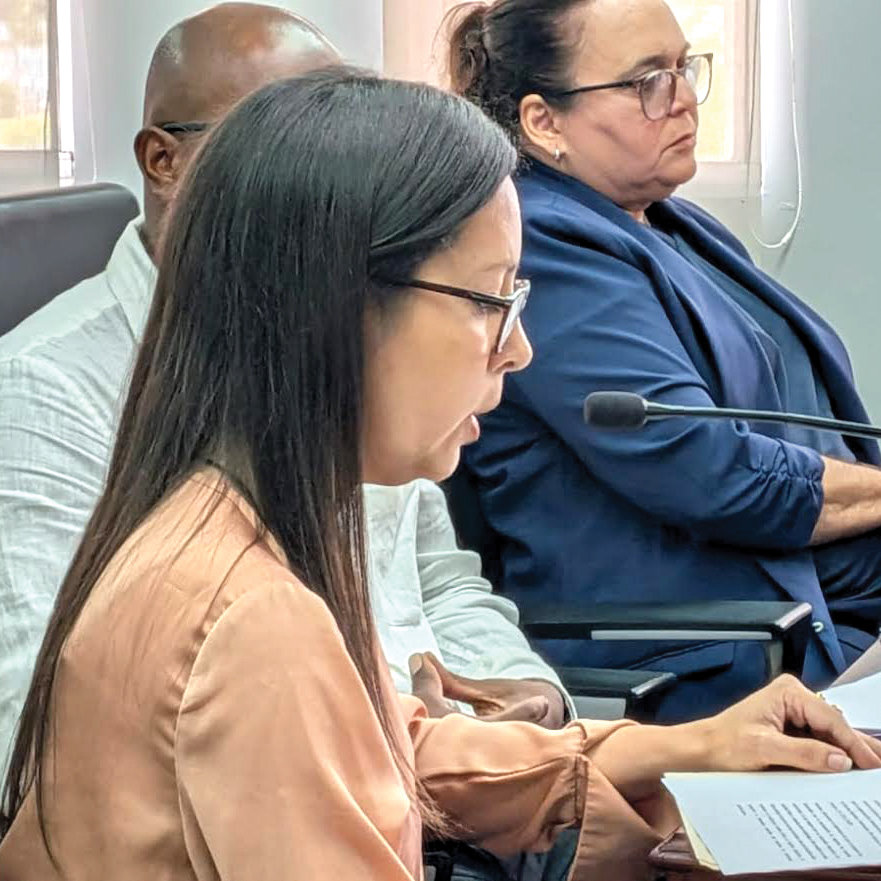
“The bill weakens coastal protections, facilitates private claims on land that previously fell clearly under public domain, and completely ignores climate change and rising sea levels,” said Lolimar Escudero Rodríguez, public policy attorney for the ACLU of Puerto Rico.
House Bill 25 was originally introduced on Jan. 2, 2025, at the start of the current legislative term. Despite early pushback and analysis submitted by the ACLU, the island House of Representatives approved the measure on Jan. 27 of this year.
The bill is currently under review by the Senate Committee on Tourism, Natural Resources, and the Environment. Following revisions to the text, the ACLU reviewed the amended bill but concluded that its core issues remain unaddressed. The organization has since submitted multiple explanatory memoranda — most recently on May 14 — and testified during a public hearing on May 19 to maintain its firm stance against the legislation.
“Extending the reach of private ownership inland into the maritime-terrestrial zone, thereby reducing public space, is incompatible with our constitutional principle of the most effective conservation, development, and use of our natural resources,” Escudero Rodríguez stated in the memorandum. “Instead, it directly stifles it.”
The ACLU emphasized that Puerto Rico is already facing an unprecedented environmental crisis, marked by accelerated coastal erosion, rising sea levels, extreme wave events, and the loss of critical habitats such as mangroves and sand dunes. These ecosystems serve as vital natural barriers during severe weather events, such as Hurricane Maria in 2017.
According to the ACLU, PC 25 fails to offer a science-based legislative approach that harmonizes coastal boundaries with current environmental realities.
“The bill attempts to address property rights by amending the definition of a natural resource that is protected by constitutional rank,” the ACLU’s analysis notes.
Critics warn that redefining the maritime-terrestrial zone will significantly shrink areas designated for public use and degrade ecologically sensitive regions.
The ACLU specifically highlighted that the measure would reduce environmental safeguards in critical areas such as the mangroves of La Parguera, which are essential for Puerto Rico’s biodiversity and ecological stability.













Leave a comment