
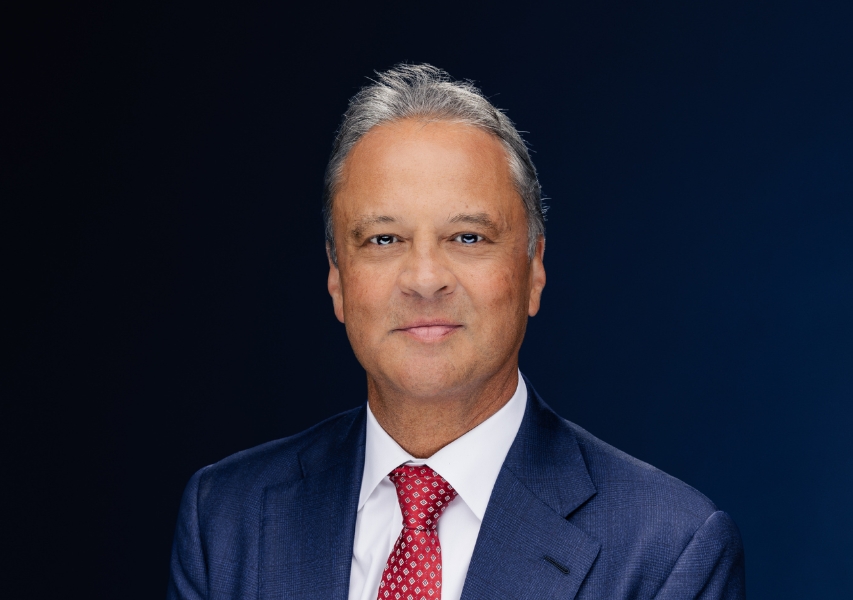
John Pearce, chief investment officer of UniSuper, says the Australian pension fund cut exposure to U.S. equities too aggressively after “Liberation Day,” acknowledging that the move underestimated the resilience of American markets and the continuing strength of the technology rally.
“The death of U.S. exceptionalism — it might happen one day, but it’s not happening today,” said Pearce in an exclusive interview with Markets Group on April 26th. “We took that exposure lower. That turned out to be a mistake.”
UniSuper’s underweight position to the U.S. has since been redressed, with the fund currently holding a benchmark weight.
Pearce said UniSuper had instead been increasing allocations to China while reducing exposure to India, noting that Chinese equities remained attractive on a relative-value basis despite years of investor skepticism. “On a relative value basis, it’s still very cheap,” he said. “And really positive things are happening in China.”
He pointed to China’s position in the energy transition and broader industrial buildout, describing the country as “way ahead of the rest of the world” in several areas despite restrictions on access to advanced semiconductors. Japan remains another preferred market for the fund, although Pearce acknowledged the trade market had become increasingly crowded. “We like Japan, but so does everyone,” he said.
Closer to home, UniSuper has also been increasing exposure to Australian resources companies, citing strong balance sheets and resilient commodity prices. Despite growing debate over overheating in AI-linked assets, Pearce said the fund was maintaining a structural overweight to technology, a position it has held for more than a decade. “It’s very hard to stand in the way of momentum,” he said. “Staying defensive, staying in cash — it’s almost a bet against humanity.”
Pearce argued that continued spending by hyper scalers on AI infrastructure remained rational as long as technological advances continued to justify investment at scale. UniSuper has also been broadening its technology exposure toward China and Australian-listed companies linked to data-center development.
The fund is avoiding direct project-level investment in data centers, preferring listed and platform-style investments instead.
On the use of AI within UniSuper itself, Pearce adopted a notably restrained tone, warning that many claims about adoption across the industry amounted to little more than automation. The fund’s private markets team has incorporated AI tools into workflows, while the fixed income desk is using them to identify anomalies in credit markets. But Pearce said the broader effort remained experimental.
UniSuper has also been extending duration in its Australian bond program, as yields around 5% had restored some diversification benefits to its fixed income portfolio. The fund continues to hold relatively high cash levels and maintains a comparatively conservative allocation to unlisted assets. About 18% of UniSuper’s balanced fund is invested in unlisted assets, below the levels of many domestic peers.
Pearce said the approach gave the fund flexibility to deploy capital during market stress, including the COVID-19 sell-off and volatility after “Liberation Day.” He added that UniSuper was unlikely to materially increase its allocation to illiquid assets beyond about 20%, with any future expansion likely to focus on private equity and infrastructure-adjacent opportunities in the US.
On private credit, Pearce rejected suggestions that the sector broadly exhibited bubble-like characteristics, noting that spreads remained relatively wide. His main concern centered instead on the industry’s exposure to software companies, which could eventually face disruption from AI technologies.
“While AI might be a threat to those software companies sometime in the future, we’re not seeing any change to the operating performance of the underlying companies,” he said.
Pearce also argued that investors may be underestimating the durability of the global decarbonization trend despite weaker sentiment toward renewable-related assets in recent years.
“That supercycle is absolutely not going away,” he said.
When discussing recruitment and retention, Pearce said technical skills had almost become commoditized across the investment industry, placing greater emphasis on curiosity and genuine interest in markets.
“If they’re giving me answers that tell me investment is just a job and they could be doing any other job that pays well, that’s not really the person that I’m interested in,” he said.
UniSuper ties 40% of at-risk remuneration to the performance of the fund’s balanced option and encourages collaboration across listed and unlisted teams. “That makes it pretty interesting,” Pearce said. “It’s much more of a team effort.”












Leave a comment