Moneywise and Yahoo Finance LLC may earn commission or revenue through links in the content below.
Imagine checking a long-forgotten account and discovering it’s worth multiple millions of dollars. That’s what happened to Sarah, a 50-year-old mom from Seattle.
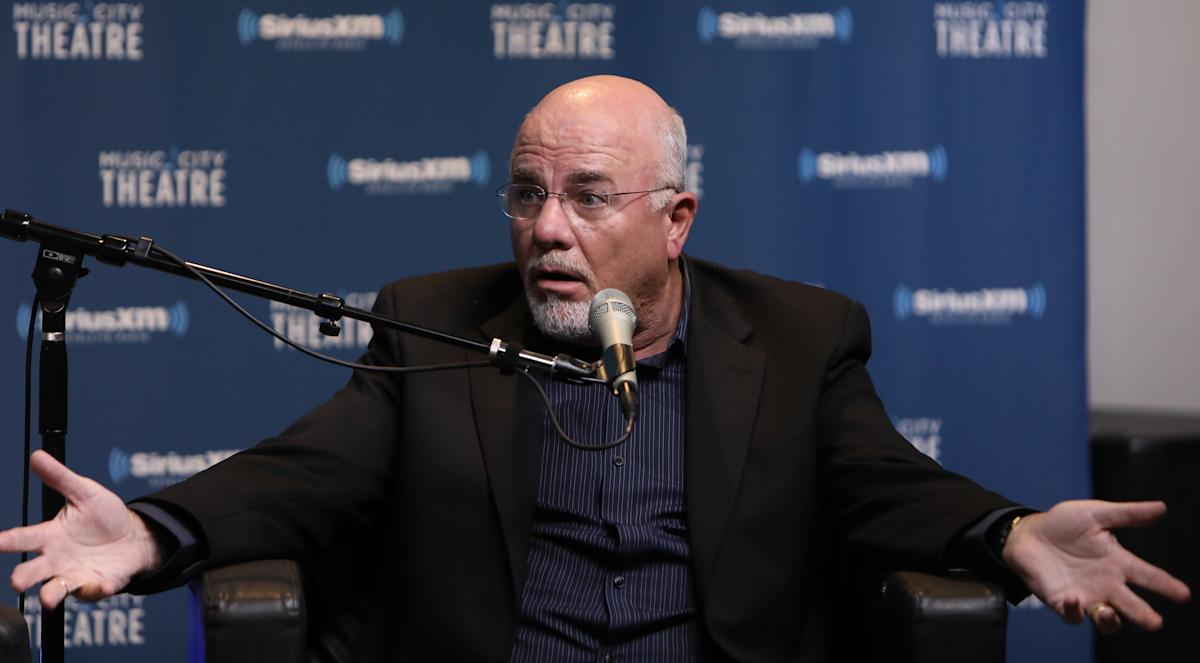
Sarah, who says she’s been homeschooling her children for 20 years, checked in on her employee benefits account from when she worked for a tech giant. That’s when she called into The Ramsey Show (1) to ask for advice.
Top Picks
Sarah’s account had gone from worth barely anything to roughly $18 million at its current market price, she told Dave Ramsey. Although she didn’t reveal which company it was, some online commenters speculated that it could be Nvidia, the tech giant that has surged tremendously over the past two years.
Regardless, this sudden multimillionaire said she had “no idea” what to do with her unexpected windfall. Ramsey offered some advice.
Diversify and withdraw in a tax-conscious way
Having so much of your net worth tied up in a single stock is “scary and unwise,” Ramsey said. He recommended that Sarah offload some of the shares and invest her money elsewhere. However, given the magnitude of the fortune, selling even a fraction of the account would likely push Sarah into the top tax bracket.
According to the Internal Revenue Service (2), the highest possible federal capital gains tax rate for someone in this bracket is typically 20% — although there are some exceptions.
Depending on where you live, you may also face state taxes on your capital gains from selling long-term investments. For Sarah, in Washington state (3), that’s another 7%.
While Ramsey suggested speaking with an expert tax planner or investment advisor to minimize her tax bill, he was crystal clear on the urgency of the situation. He insisted that Sarah diversify away from a single stock as soon as possible.
“If I’m you, even if it costs me some money, I would rather have the safety than I would the extra 20%,” Ramsey told her.
Read More: Here’s the average income of Americans by age in 2026. Are you falling behind?
Get in touch with an expert
Consulting a financial planner, per Ramsey’s recommendation, can help you optimize your portfolio so that your net worth isn’t dependent on just one stock or asset.
If you have a portfolio of $250,000 or more, platforms like WiserAdvisor can connect you with vetted professionals who specialize in this kind of planning.
Simply answer a few questions about your savings, retirement timeline and overall investment portfolio.
From there, WiserAdvisor reviews its network to match you — for free — with up to three vetted, reputable advisors aligned with your specific needs.
You can then schedule no-obligation consultations with your matches to determine who is the best fit for your long-term goals.
WiserAdvisor is a matching service and does not provide financial advice directly. All matched advisors are third parties, and specific financial results are not guaranteed.
Beyond the importance of diversification, Sarah’s story could offer another lesson for investors: the value of holding instead of folding.
Time in the market is better than timing the market
An often-repeated tenet of investing is that “time in the market beats timing the market.” This principle was popularized by investing experts such as Warren Buffett and is based on the fact that most investors struggle to find the right stock at the right time and at the right price.
By focusing on a longer timeline, rather than optimizing around short-term gains, investors can take advantage of the market’s tendency to go up in the long-term.
When investors try to time the market, they can end up buying at a peak and selling in a valley. Investing consistently can help your portfolio better manage the ebbs and flows of the market over time, delivering compound returns.
Buffett once said in an interview with Public Broadcasting Service (PBS) (4), “I don’t try and guess when to get in and out of the market.”
Rather, Buffett’s investing philosophy is best captured by a quote from his 1989 Letter to Shareholders for Berkshire Hathaway (5): “It’s far better to buy a wonderful company at a fair price than a fair company at a wonderful price.”
In Sarah’s case, this type of “set and forget” approach seems to have panned out. But in case of a market downturn, she’d risk losing millions.
Instead, a safer approach for many could be to invest regularly in an array of stocks or low-cost index funds, which can offer better diversification and wealth preservation. Having a baseline of safe investments in something like an index fund tracking the S&P 500 can give you more security to build out the rest of your portfolio — whether stocks or otherwise.
Focus on quality, not quantity
Another Buffett ethos is that you should invest in stocks that are priced based on solid fundamentals. Chasing market trends can cost you — big time, according to a Fidelity report using Bloomberg data (6).
If you invested $10,000 in the S&P 500 in January 1988 and kept your money in for all of the booms and busts, it would be worth $522,576 today. Meanwhile, if you were buying and selling stock during that period of time and inadvertently missed just the best five days in the market, you’d be down a whopping 37%, with $330,060 to your name instead.
This is why investing with confidence and commitment can be so important. However, gathering the investment knowledge to do so on your own can take significant time and effort.
That’s where platforms like Moby can help you find top-tier stocks, delivered straight to you for review. The platform offers expert research and recommendations to help you identify strong, long-term investments backed by advice from former hedge fund analysts.
In four years, and across almost 400 stock picks, their recommendations have beaten the S&P 500 by almost 12% on average. They also offer a 30-day money-back guarantee.
Moby’s team spends hundreds of hours sifting through financial news and data to provide you with stock and crypto reports delivered straight to you. Their research can keep you up-to-the-minute on market shifts and help you reduce the guesswork behind choosing stocks and ETFs.
Plus, their reports are easy to understand for beginners, so you can become a smarter investor in just five minutes.
Diversifying outside the stock market
Not only is the bulk of Sarah’s wealth tied up in a single stock, but it’s also stuck in the market itself. She’s not just at the whim of the company performing well. She’s also reliant on the market’s consistency as a whole.
And according to Goldman Sachs CEO David Solomon (7), “It’s likely there’ll be a 10 to 20% drawdown in equity markets sometime in the next 12 to 24 months.”
If that turns out to be true, diversification isn’t just ‘smart’ — it’s essential.
However, there are plenty of different assets worth considering outside of stocks. And they are becoming easier to leverage through new platforms and investing opportunities.
Consider adding real estate to your portfolio
According to the U.S. Census Bureau (8), monthly rental costs increased in 20% of American counties between 2020 and 2024, compared to the previous five years (9). While that might be frustrating news for renters, there are also ways to benefit from this increase — if you see it as an investment opportunity.
For example, mogul is a real estate investment platform offering fractional ownership in blue-chip rental properties, which gives investors monthly rental income, real-time appreciation and tax benefits — without the need for a hefty down payment or 3 a.m. tenant calls.
Founded by former Goldman Sachs real estate investors, the team hand-picks the top 1% of single-family rental homes nationwide for you. Simply put, you can invest in institutional quality offerings for a fraction of the usual cost.
Each property undergoes a vetting process, requiring a minimum 12% return even in downside scenarios. Across the board, the platform features an average annual IRR of 18.8%. Their cash-on-cash yields, meanwhile, average between 10 to 12% annually. Offerings often sell out in under three hours, with investments typically ranging between $15,000 and $40,000 per property.
Another option for those, like Sarah, with capital to burn would be to target specialized real estate verticals.
Accredited investors can now tap into this opportunity through platforms such as Lightstone DIRECT, which gives accredited investors access to single-asset multifamily and industrial deals.
Lightstone DIRECT’s direct-to-investor model ensures a high degree of alignment between individual investors and a vertically-integrated, institutional owner-operator — a sophisticated and streamlined option for individual investors looking to diversify into private-market real estate.
With Lightstone DIRECT, accredited individuals can access the same multifamily and industrial assets Lightstone pursues with its own capital, with minimum investments starting at $100,000.
You May Also Like
Join 250,000+ readers and get Moneywise’s best stories and exclusive interviews first — clear insights curated and delivered weekly. Subscribe now.
Article Sources
We rely only on vetted sources and credible third-party reporting. For details, see our editorial ethics and guidelines.
YouTube (1); Internal Revenue Service (2); Washington State Department of Revenue (3); PBS (4); Berkshire Hathaway (5); Fidelity Investments (6); CNBC (7); U.S. Census Bureau (8)
This article provides information only and should not be construed as advice. It is provided without warranty of any kind.













Leave a comment