
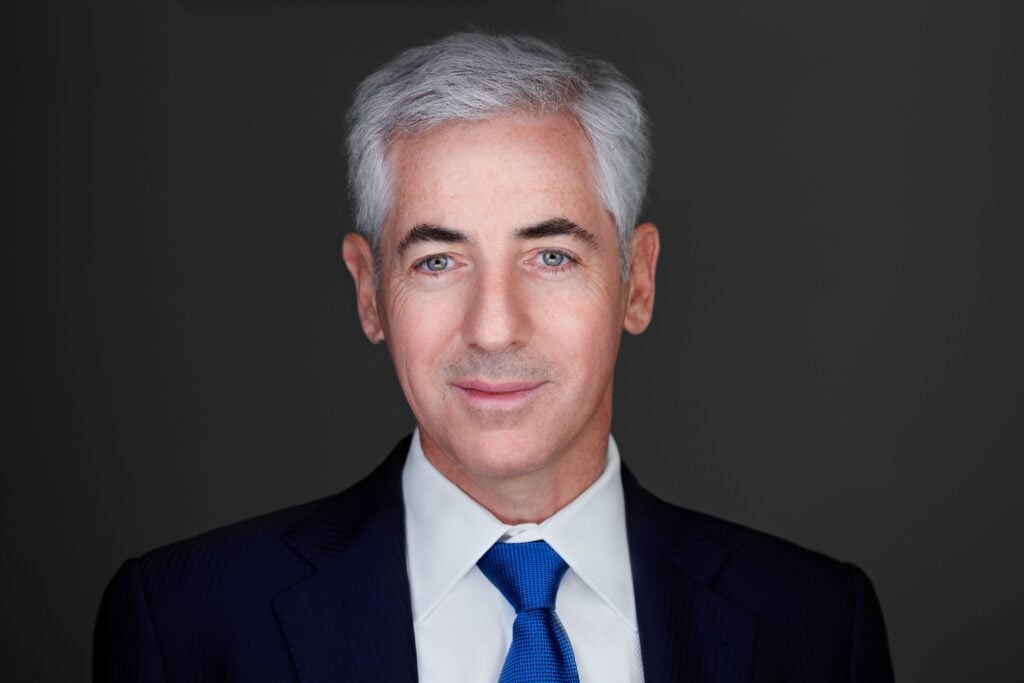
© Pershing Square Foundation (founded by Bill & Karen Ackman) / Press
Barry Ritholtz has watched this movie before, and he knows how it ends. On Bloomberg’s Masters in Business “At The Money” segment, the Ritholtz Wealth Management founder issued a plain warning to retail investors about the parade of private credit and private equity products now being repackaged for Main Street: the smart money is looking for a door, and you are being positioned as the door.
“At the end of every cycle in my career, it is retail that is looked at to be the exit, whether that’s buying Beanie Babies, used cars, or stocks.”
Why The Pitch Is Hitting Your Inbox Now
The macro backdrop matters. The Fed has cut its target rate by 75 basis points over the past six months, from 4.50% to 3.75%, and the 10-year Treasury sits at 4.57%, near the top of its 12-month range. The yield curve has flattened from a 0.74% spread in February to 0.43% in late May, and the VIX has melted back to 16.76, the complacency zone, after spiking to 31.05 in late March.
That is the exact backdrop where private fund sponsors start knocking on retail’s door. Borrowing costs are easing, valuations on private books still reflect a higher-rate world, and fear is cheap again. If you are an institution that loaded up on illiquid assets during the last cycle and now wants liquidity, this is when you go find new buyers.
Ritholtz puts the test simply: “If somebody is coming to you and saying, I want to give you access to private credit or private equity, it’s very smart to say, who is selling this to me and why are they selling it to me now?”
What Is Actually Being Sold To You
Private credit is direct lending to companies that do not borrow in the public bond market. Private equity is ownership stakes in companies that do not trade on an exchange. For decades these were the sandbox of pensions, endowments, and ultra-wealthy families because the assets are illiquid, the holding periods are long, and the valuations are estimates rather than market prices.
The new wrappers, closed-end funds, interval funds, and tender offer funds, are how that sandbox gets opened to retail. On the surface they resemble mutual funds. Underneath, they operate very differently. Interval and tender offer funds typically allow redemptions only on a quarterly schedule, often capped at a small percent of the fund. Closed-end funds trade on exchanges at whatever price buyers will pay, which can be a deep discount to the stated net asset value.
Ritholtz calls these vehicles “roach motels” where “money goes in, money never comes out.” The exhibit he points to is Bill Ackman’s Pershing Square USA (NYSE:PSUS) closed-end fund, which he noted is “trading at a 20% discount to what it’s actually worth.” Even with a celebrated manager and a transparent public portfolio, the wrapper itself created the discount.
The Groucho Test
The segment leans on Groucho Marx’s old line about not wanting to belong to any club that would accept him as a member. Apply that to the current sales push. Private markets used to be a club that turned retail away. Now the club is mailing brochures. Ask what changed.
Ritholtz supports equities and accepts private markets in principle. His verdict on the retail versions is narrower and bluntly stated: “For the most part, I think investors are not well served by them.”
I have been watching the retail-ification of private assets for a couple of years now, and the cadence of the pitch has changed noticeably in the last six months. The fee decks have gotten slicker. The yield numbers have gotten louder. The liquidity disclosures have gotten quieter.
That brings us back to where Ritholtz started. Beanie Babies, used cars, stocks, the asset changes, the dynamic does not. Before you sign anything with quarterly tender windows and a stated NAV no market is testing, run his question through the document one more time: who is selling this to me, and why are they selling it now?














Leave a comment