
Key Takeaways
- Capital expenditures (CapEx) fund long-term asset acquisition and improvement.
- CapEx differs from operating expenditures, focusing on future growth.
- Despite high costs, CapEx boosts operational efficiency.
- CapEx examples include factory equipment and IT systems upgrades.
Get personalized, AI-powered answers built on 27+ years of trusted expertise.
Understanding Capital Expenditures (CapEx)
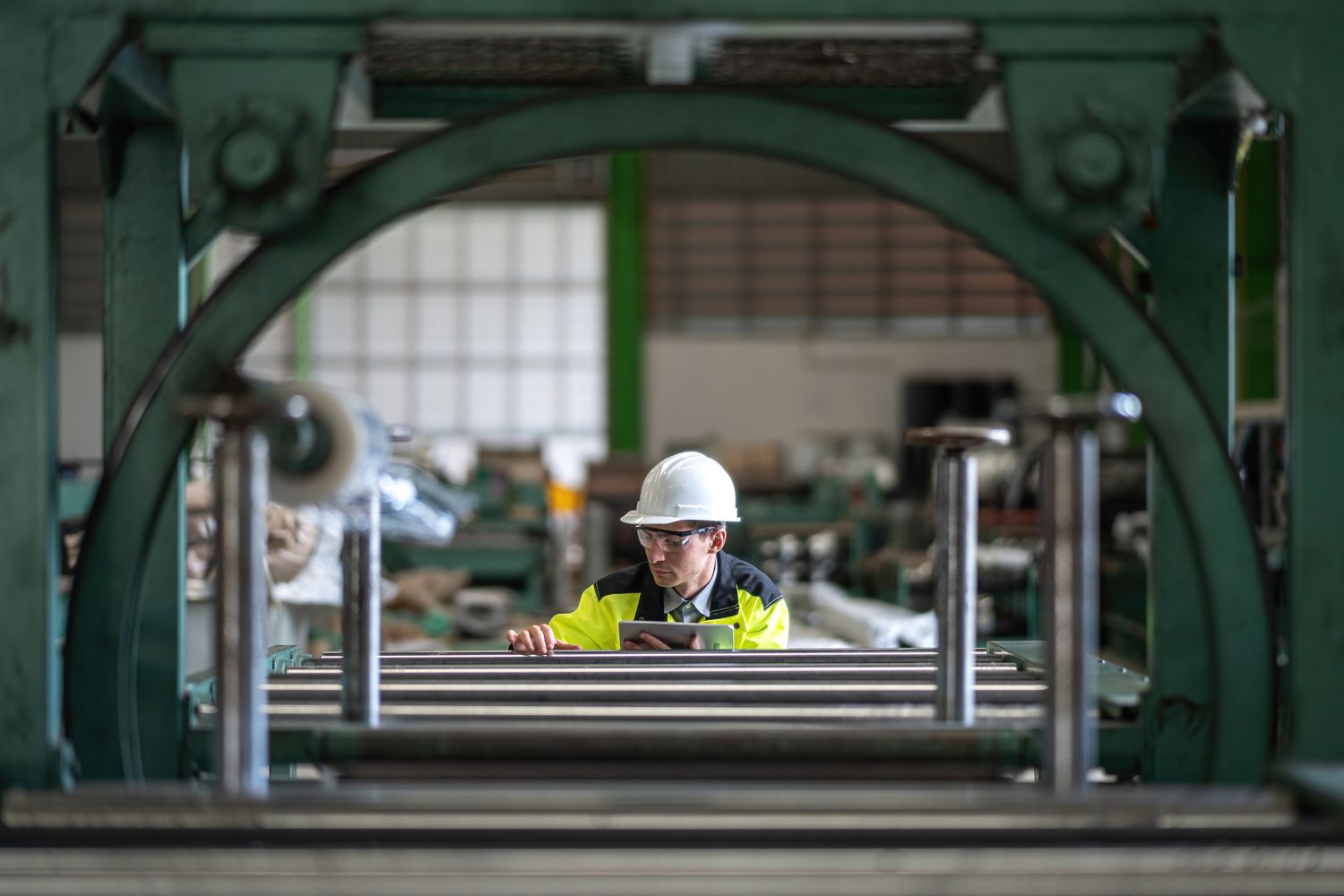
Capital expenditures (CapEx) are funds that a business spends to acquire, upgrade, or maintain its physical assets, like buildings, machinery, or technology.
Unlike operating expenditures (OpEx), which cover day-to-day expenses, CapEx represents long-term investments that can drive future growth and profitability. Although they require significant upfront costs, these expenses can improve operational efficiency and support expansion.
Examples of CapEx vary by industry, from new factory equipment in manufacturing to upgraded information technology (IT) systems in tech firms.
Learn how businesses drive growth with CapEx in assets like buildings and technology, securing long-term success and operational efficiency.
The Impact of Capital Expenditures on Business Growth
Capital expenditures can boost a company’s efficiency and long-term revenue but often require significant spending and borrowing. Companies often conduct a cost-benefit analysis to decide if a capital expenditure is worthwhile.
Poorly planned capital expenditures can cause future financial issues. If a company buys technology that soon becomes obsolete, it may face long-term debt without revenue from the asset.
Investors and analysts monitor capital expenditures to see if management is investing in the company’s long-term health and profits. Some industries, like oil and gas, are more capital-intensive and require expensive equipment like drilling rigs. Investors should compare a company’s capital expenditures with others in the same industry before drawing any conclusions.
Assessing Depreciation in Capital Assets
Depreciation lets companies spread a fixed asset’s cost over its useful life, instead of expensing it all in one year. Without this, the company’s profits for that year might appear unrealistically low. The Internal Revenue Service (IRS) requires some assets to be depreciated over time for tax deduction eligibility.
For example, if a piece of equipment costs $10,000 and is expected to be in use for five years, the company might decide to charge $2,000 to depreciation each year over a five-year period and claim that amount as a tax deduction. This is known as the straight-line depreciation method. Companies can also use other depreciation methods to write off costs faster if beneficial.
Major Categories of Capital Expenditures
These are some of the major types of capital expenditures, some of which are more common in certain industries than others.
Property, Plant, and Equipment
This category of CapEx includes office buildings, factories, and machinery. These assets can have a useful life of many years and are often purchased with a mortgage or other long-term financing, the cost of which is also eligible for a tax deduction.
Bear in mind that while you can depreciate property like a building, you cannot depreciate the land beneath or around it. The reason, as the IRS notes, is that “land does not wear out, become obsolete, or get used up.”
Upgrades to Equipment
In manufacturing and some other industries, the machinery that’s used to produce goods may become obsolete or simply wear out over time. Upgrades to the equipment are often needed and can, in some cases, be treated as capital expenditures. (Many companies establish “capitalization limits,” a threshold above which an expense will be capitalized and depreciated rather than written off as a same-year operating expense.)
However, ordinary maintenance and repairs are not capitalized but considered operating expenses.
Software Upgrades
The cost of buying or upgrading software can be considered CapEx, allowing it to be depreciated if it meets IRS criteria.
Computer Equipment
Technology and computer equipment, including servers, laptops, desktop computers, and peripherals, are considered capital expenditures if they have a useful life of greater than one year. Inexpensive computer-related supplies (such as a mouse pad or cables) may simply be written off as an operating expense, regardless of how long they might theoretically last.
Vehicles
Companies often need a vehicle or an entire fleet of them to distribute their products or serve their customers. These vehicles are considered capital expenditures, regardless of whether they were purchased outright or financed with a loan. However, the costs associated with leasing vehicles must be treated as operational expenses.
Intangible Assets
While tangible assets are the most common CapEx, some intangible assets can also qualify. Purchasing a patent from another company can qualify as a capital expenditure. Intangible assets can’t be depreciated but may be amortized, which is a similar accounting method.
Residual Value
Certain capital assets, such as vehicles or machinery, often retain some value at the end of their useful life that might be recovered by selling them. Companies account for this residual value in their depreciation calculations.
Analyzing CapEx in Financial Statements
A company’s cash flow statement shows its inflows and outflows of cash during a certain period. The cash outflows going to capital expenditures are listed on cash flow statements under the investing activities section.
If a company borrowed money for capital expenditures, that would be listed as an inflow of cash in the financing activities section and an outflow of cash in the investing activities section.
Below is an example of the cash flow statement for Tesla Inc. for the years ending 2023, 2022, and 2021, from the company’s annual report.
Capital expenditures are shown in parentheses (meaning that they are negative numbers) under investing activities. By reading the statement, you can see that:
- Tesla listed purchases of property and equipment for $8.9 billion in 2023, $7.2 billion in 2022, and $6.5 billion in 2021.
- The company also listed as capital expenditures the purchase of solar energy systems for $1 million in 2023, $5 million in 2022, and $32 million in 2021.
How Are Capital Expenditures Reported?
Capital expenditures are reported on the balance sheet as assets. The initial journal entry to record their acquisition may be offset with a credit to cash if the asset was purchased outright, debt if the asset was financed, or equity if the asset was acquired via an exchange for ownership rights.
As capital expenditures are used, they are depreciated. Depreciation is reported on both the balance sheet and the income statement. On the income statement, depreciation is recorded as an expense and is often classified among different types of CapEx depreciation. On the balance sheet, depreciation is recorded as a contra asset that reduces the net asset value of the original asset.
What Is the Difference Between Negative and Positive CapEx Entries on a Cash Flow Statement?
Positive CapEx entries on a cash flow statement represent cash outflows. This means the company is investing in new capital assets like buildings, machinery, or technology, which is a typical capital expenditure. Positive entries indicate that the company is using its cash to acquire or upgrade long-term assets.
Negative CapEx entries represent cash inflows and usually occur when a company sells or disposes of its capital assets. This results in a negative number because it reflects money coming back into the company, not being spent. Negative CapEx entries indicate that the company is divesting from its assets rather than acquiring new ones.
What Is the Difference Between Capital Expenditures and Operating Expenditures?
Capital expenditures are larger, often one-time purchases of fixed assets that are intended to be used for a long time. If a company buys a new vehicle for its fleet, the vehicle is considered a capital expenditure.
Operating expenditures are smaller, usually more frequent purchases that support the operations of the company in the short term.
For example, if the company fills up the new fleet vehicle with gasoline, the entire benefit of the full tank of gas will likely be utilized in the short term. While the vehicle itself will probably still have value next year, that tank of gas will be long gone. Therefore, the cost to fill up the gas tank is considered an operating expense.
Is Maintenance a Capital Expense?
In general, routine maintenance is not a capital expense. Both repairs and maintenance (R&M) are considered operating expenses and are almost always expensed immediately.
The Bottom Line
A company’s CapEx is vital for its long-term growth and operational efficiency, enabling it to purchase, upgrade, or extend the life of essential assets.
Unlike operating expenses, CapEx involves larger, often one-time investments that support long-term use and require careful cost-benefit analysis to ensure profitability. These investments vary across industries and can significantly impact performance. Through depreciation, companies can spread the cost of these assets over their useful life, gaining tax advantages along the way.












Leave a comment