

Also in the letter:
■ EV startups seek fairness
■ Mphasis Q4 report
■ Top deck churn at Cars24
Digital gold sector takes shine to govt’s formal framework signal

India’s digital gold market has grown in the shadows of regulation for years. Its rapid scale-up and mass adoption are now forcing the government to take a closer look, according to people familiar with the matter.
What’s new: Founders of leading digital gold platforms recently met senior officials at the finance ministry for an industry-level discussion. Multiple attendees said the government appeared receptive to the case for clearer rules.
The industry also told officials it is setting up a formal body to define common standards for all fintech players operating in digital gold.
What’s next: The central question is who will regulate digital gold. Sebi has cautioned investors that the asset class is unregulated and risky, while the Reserve Bank of India has stayed on the sidelines, viewing the product primarily as an investment instrument.
Also Read: Gold-loan fintech firms spot a glimmer in RBI’s draft rules
Rapid growth: In the absence of a legal framework, no single regulator has been able to set sector-wide rules. Industry executives now argue that the market has become large enough for the government to step in with a dedicated regime.
Industry estimates indicate that about Rs 3,000 crore flows into digital gold each month. Total assets under management across these platforms are pegged at Rs 15,000–20,000 crore.
Also Read: Gold loan fintech companies build own loan books as RBI tightens norms
IT cuts mid-tier, expands AI-smart entry level in new hiring playbook

India’s largest IT services firms are tilting sharply towards freshers, using AI tools to lift productivity and trimming their dependence on middle management.
Driving the news: Lateral hiring has weakened at TCS, Infosys, Wipro, HCLTech, Tech Mahindra and LTIM, even as campus intake remains strong.
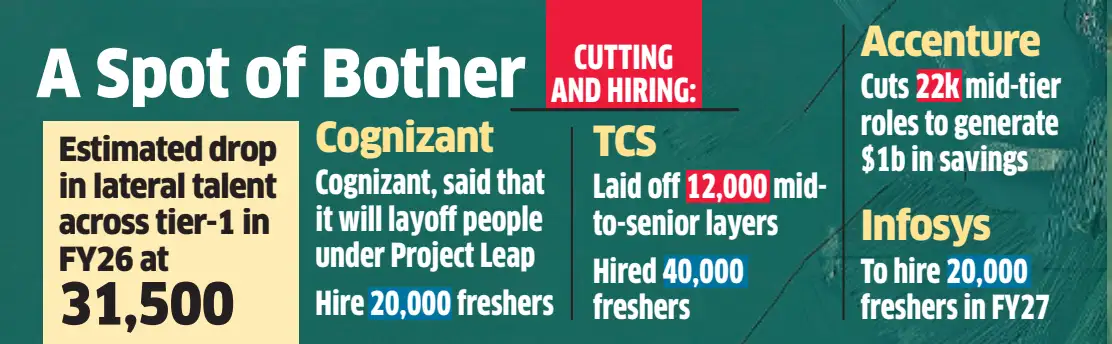
Data decoded: Staffing firm Xpheno estimates that tier-I IT companies reduced their lateral workforce by about 31,500 roles in FY26.
- On Wednesday, Cognizant said it will cut roles under Project Leap, resulting in severance costs of $230–320 million. The company still plans to hire 20,000 freshers.
- TCS hired 40,000 freshers last year, the highest intake by any private employer in India, while letting go of 12,000 mid to senior professionals.
- Accenture has eliminated 22,000 mid-tier roles globally to free up $1 billion in annual savings, which it is reallocating to an AI-focused specialist bench.
- Infosys has committed to hiring 20,000 freshers in FY27.
Why it matters for talent: Employers are rewarding deep specialist skills over broad middle-layer experience. Lateral hiring in AI, cloud and cybersecurity is rising quickly, and even entry-level candidates with strong AI capabilities are commanding premium salaries, as companies build strength at the base instead of relying on costly mid-career replacements.
Also Read: IT firms redraw hiring strategies as GenZ moves on faster
EV founders say PLI Auto needs an overhaul, leaves startups at a disadvantage
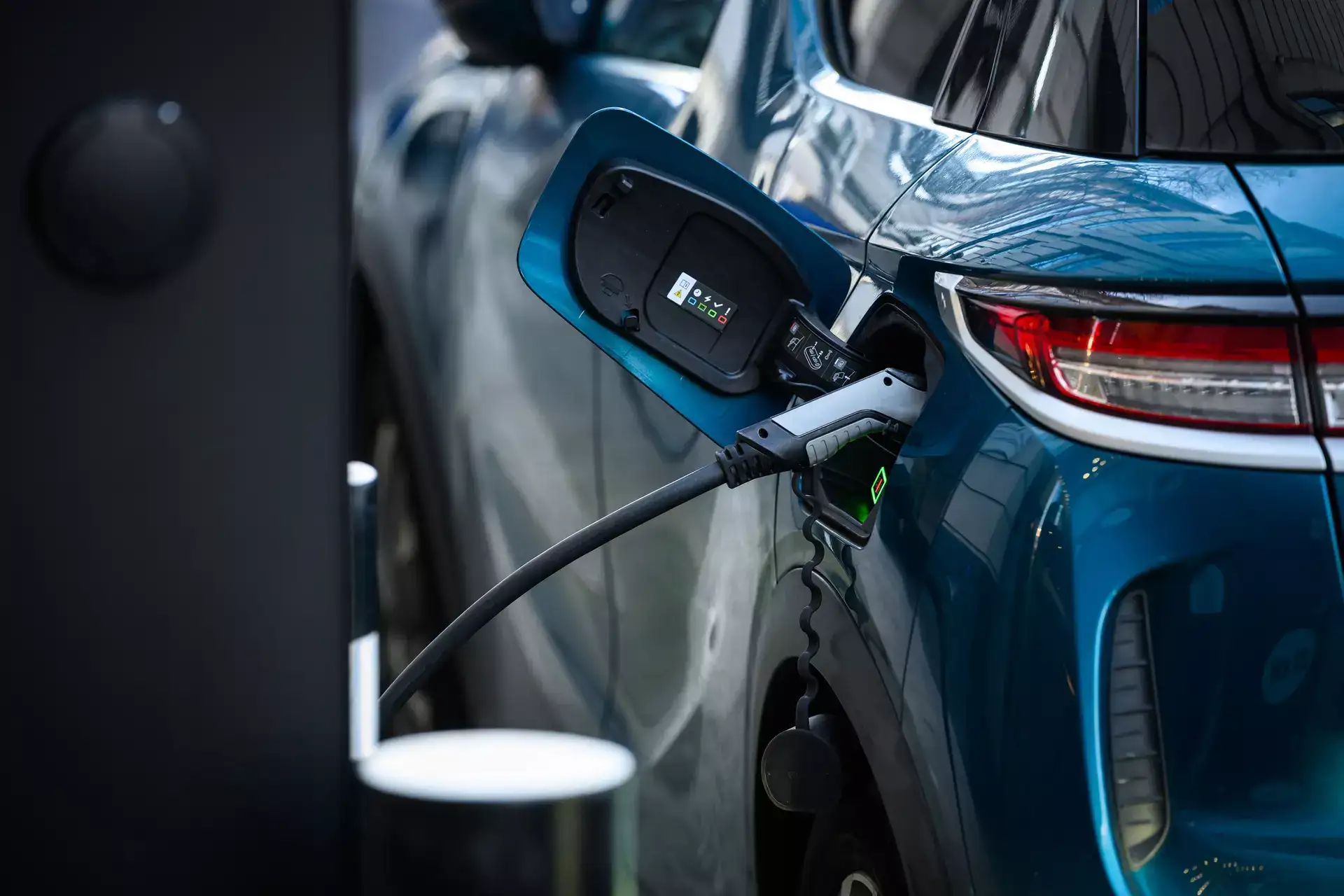
Electric vehicle manufacturers are contesting the current auto PLI scheme, arguing it benefits legacy scale over startups that initially contributed to the category through R&D, localisation, and product development.
Driving the news: Companies like Ather, Euler Motors and River argue that they face a structural cost disadvantage because they are excluded by revenue and asset thresholds.
Under the scheme, OEMs must have a minimum revenue of Rs 10,000 crore and fixed assets of at least Rs 3,000 crore at the group level.
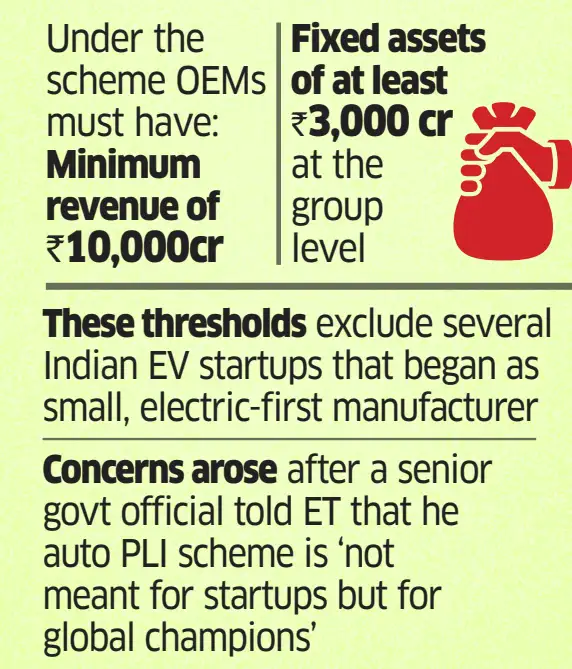
Yes, and: New-age companies have been left out of the scheme, while successful applicants include Tata Motors, Mahindra & Mahindra, Maruti Suzuki, Toyota Kirloskar, Hyundai Motor India, Kia India, Piaggio, Eicher Motors, Hero MotoCorp, Bajaj Auto and Ola Electric.
What’s the objection: “Domestic value addition (DVA) benchmarks are similar across PLI and non-PLI players, so it would be wrong to assume that startups don’t lead DVA requirements,” Ather’s Tarun Mehta said in a post on X. “These companies have consistently pushed deeper on indigenous development, building capabilities that are at par with, and in some cases ahead of, the broader industry.”
Euler says it has already invested over Rs 1,500 crore in indigenous EV tech, manufacturing and talent, while Ather says it has thousands of employees and is putting another Rs 2,000 crore into a new Maharashtra facility.
Also Read: Legacy players gain ground in EV two-wheelers as Ola Electric slips
Other Top Stories By Our Reporters
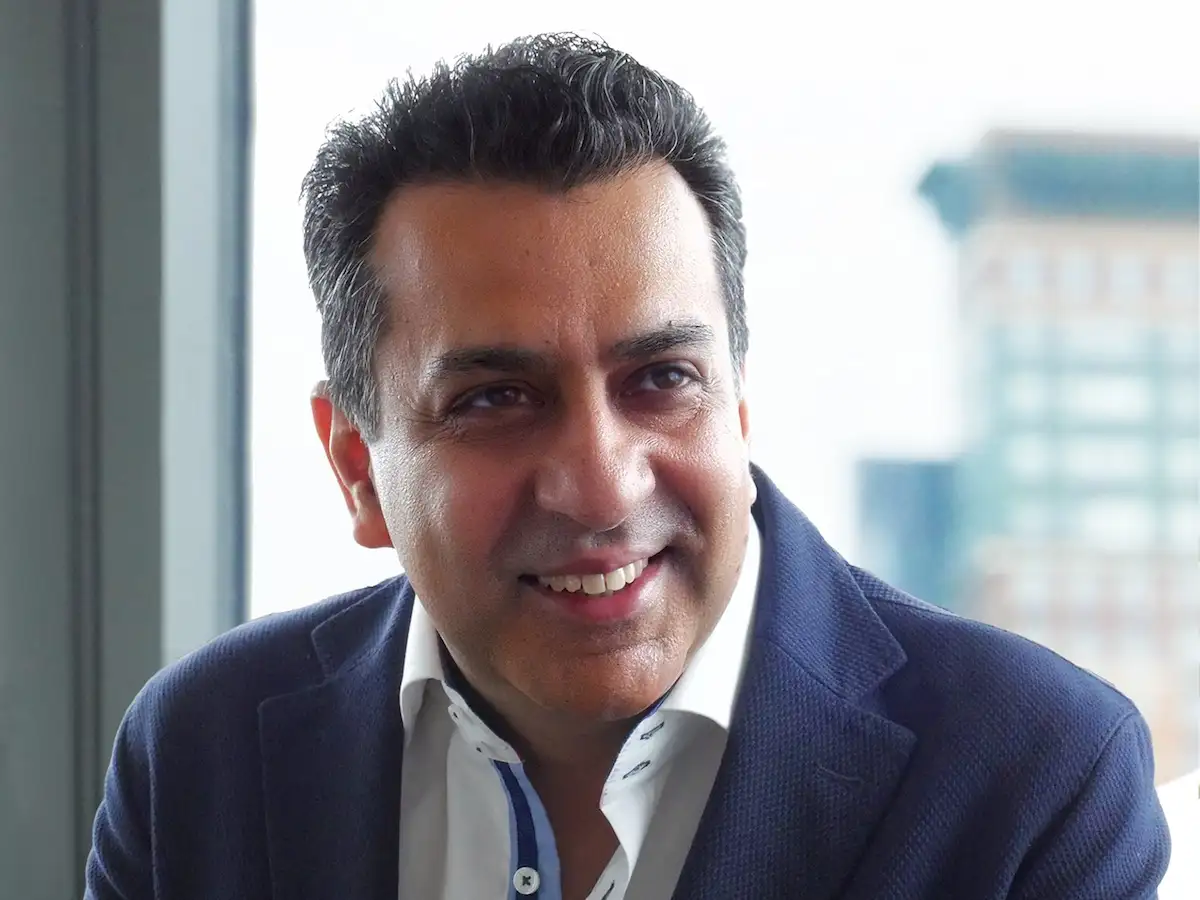
Nitin Rakesh, CEO, Mphasis
Mphasis Q4 report: Mid-tier IT services company Mphasis reported a 14.1% year-on-year increase in its net profit for the fourth quarter of 2026 at Rs 509.6 crore, while sequentially it gained 8.7%, topping street estimates.
Another exit at Cars24: Cofounder Mehul Agrawal is stepping away from his operating role at the used-car platform after more than a decade building the business.
Calligo raises funds: Bengaluru-based semiconductor startup Calligo Technologies is in talks to raise $12-15 million from a mix of new and existing investors, people aware of the discussions said. US-based BIG Capital is expected to lead the round, with participation from existing backers Artha Venture Fund and SeaFund.
Kissht raises Rs 278 crore from anchor investors: Digital lending platform Kissht has raised about Rs 278 crore from anchor investors ahead of its initial public offering opening on April 30. It allotted 1.62 crore equity shares to 22 anchor investors at Rs 171 each, totalling Rs 277.8 crore.
Global Picks We Are Reading
■ How Elon Musk squeezed OpenAI: They ‘are gonna want to kill me’ (Wired)
■ Big Tech’s earnings get ever bigger, and ever less useful (FT)
■ Finding ‘hidden sperm’: New technique offers hope to men previously told they were infertile (BBC)











Leave a comment