
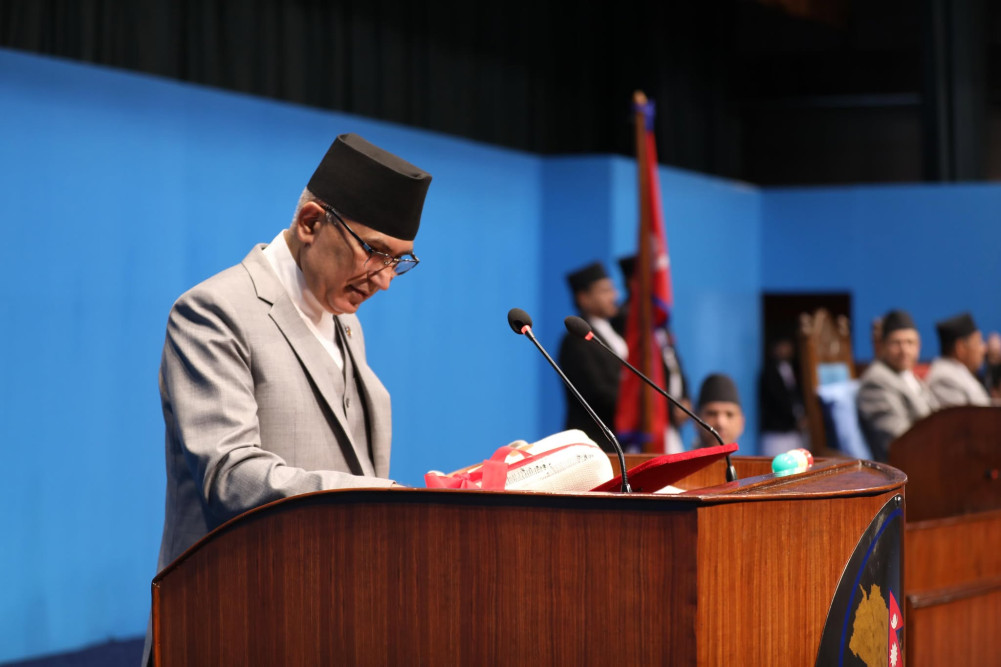
The government has announced to allow Nepali companies to invest abroad, marking a significant policy shift aimed at globalising domestic enterprises. Presenting the budget for fiscal year 2025-26 to a joint session of Parliament on Wednesday, Finance Minister Bishnu Paudel announced the change, which will be subject to approval from the Investment Board Nepal.
Under the new arrangement, Nepali companies will be permitted to set up overseas sales branches and processing units for semi-processed goods. However, up to only 25 percent of the annual income generated from exports will be allowed for reinvestment abroad, and 50 percent of the profits earned from such ventures must be repatriated to Nepal.
In a parallel move, the budget proposes legal provisions allowing Nepali citizens to receive sweat equity from foreign companies in exchange for providing technology, specialised knowledge, or unique services.
“Sweat equity will legally recognise the value of Nepali professionals and innovators working with foreign firms in non-monetary forms,” Finance Minister Paudel said during the announcement. “This is a step forward in harnessing global opportunities for Nepali talent.”













Leave a comment