
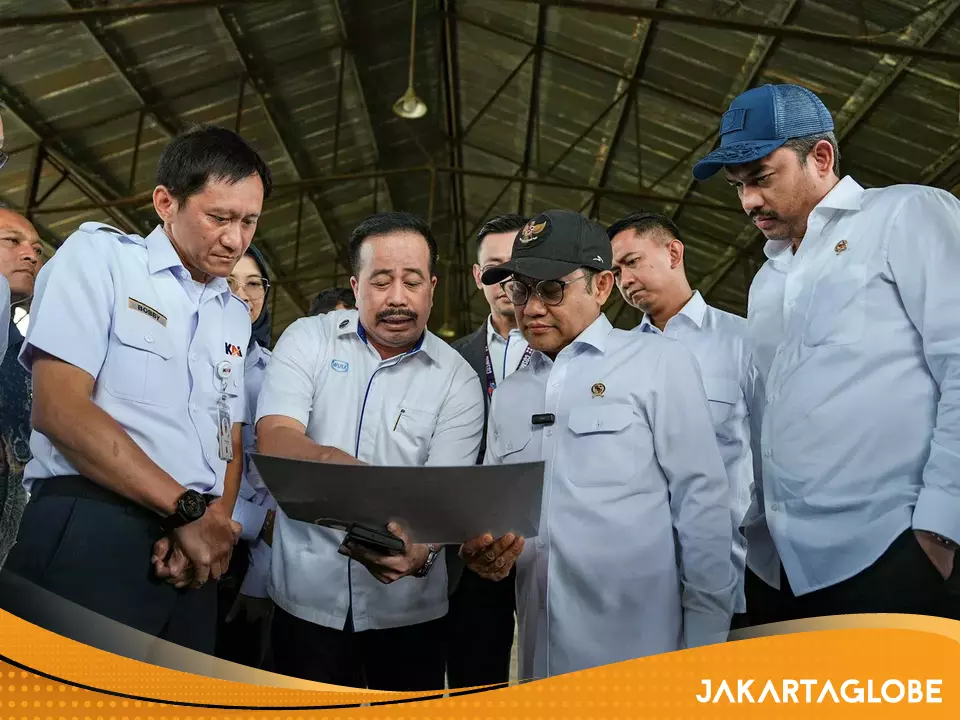
Jakarta. The government has introduced Pasar 1001 Malam as a structural intervention to strengthen micro, small and medium enterprises (MSMEs) and creative economy players by transforming idle state-owned and public assets into affordable business and creative hubs.
The program repurposes underutilized properties owned by state-owned enterprises (SOEs) and government institutions into integrated commercial and creative spaces, offering low rental costs for small businesses. The model follows the creative compound concept that has proven successful in developments such as M Bloc Jakarta, JNM Bloc Yogyakarta, and Pos Bloc Jakarta.
The initiative addresses a key bottleneck facing MSMEs, which contribute 69.87% to Indonesia’s gross domestic product but earn an average net income of only around Rp 2 million per month. High retail rents in major cities, which can reach Rp 782,000 per square meter, have limited expansion opportunities for micro and small enterprises. Pasar 1001 Malam is designed to ease operational costs while widening market access.
The program aligns with Government Regulation No. 7/2021, which mandates that at least 30% of commercial areas and public facilities be allocated for MSMEs. Article 60 of the regulation requires ministries, regional governments, SOEs, and business entities to provide MSME promotion and development spaces in strategic locations, including terminals, ports, airports, railway stations, toll road rest areas, and other public infrastructure.
ADVERTISEMENT
Implementation of the regulation has already produced tangible results. Along toll roads, MSME space allocation increased from 15% to 35%, accommodating 1,409 tenants. At Yogyakarta International Airport, the number of MSME tenants surged from 140 to 500, a 257% increase. Railway stations managed by KAI now allocate 25% of commercial space to MSMEs, compared with no mandatory allocation previously.
The policy direction is also consistent with the ASEAN SME Policy Index 2024, which highlights the importance of equitable market access, capacity building for small businesses, and optimization of public assets to support entrepreneurship.
Under the creative compound model, Pasar 1001 Malam integrates commercial units, creative spaces, and public facilities within a single area. The complexes will be managed by professional third parties through formal cooperation between the government, SOE asset owners, and area operators. The program targets MSMEs and creative economy players, with coordination led by the Coordinating Ministry for Social Empowerment (Kemenko PM) and participation from relevant ministries, regional governments, and SOEs such as Pos Indonesia and KAI.
The initial phase prioritizes assets owned by Pos Indonesia and KAI, with Bandung prepared as one of the first locations. Sites are selected in urban areas with strong market potential, while final asset mapping and regional investor interest are still being assessed. Tenant composition is designed to ensure sustainability, with 20 percent new businesses, 30 percent growing enterprises, and 50 percent established players to maintain visitor traffic.
Beyond retail space, the hubs are expected to serve as MSME promotion centers through daily, weekly, and monthly exhibitions, inspired by festival-based models in Busan and Gangnam, South Korea. Facilities will include internet access, workspaces, exhibition areas, and supporting infrastructure, positioning Pasar 1001 Malam as a one-stop solution for business development.

The launch of Pasar 1001 Malam is embedded within broader national empowerment programs implemented between 2024 and 2025. During this period, 8.4 million families received social protection, 96 million people accessed free healthcare services, and affordable financing reached 3.7 million micro and startup businesses. More than 625,000 people gained employment through the MBG program, while nearly 16,000 children from low-income families continued their education through the Sekolah Rakyat platform.
In addition, around 12 million creative economy players, migrant worker cooperatives, and MSMEs were recorded as having moved up the value chain through targeted policy interventions. The establishment of the National Integrated Social and Economic Data (DTSEN) has further strengthened program targeting and sustainability.
With its regulation-based approach and optimization of state assets, Pasar 1001 Malam is projected to become a new catalyst for MSME and creative economy growth, accelerating urban economic activity without placing additional pressure on the state budget.
Tags:
Keywords:












Leave a comment