
What Is Furniture, Fixtures, and Equipment (FF&E)?
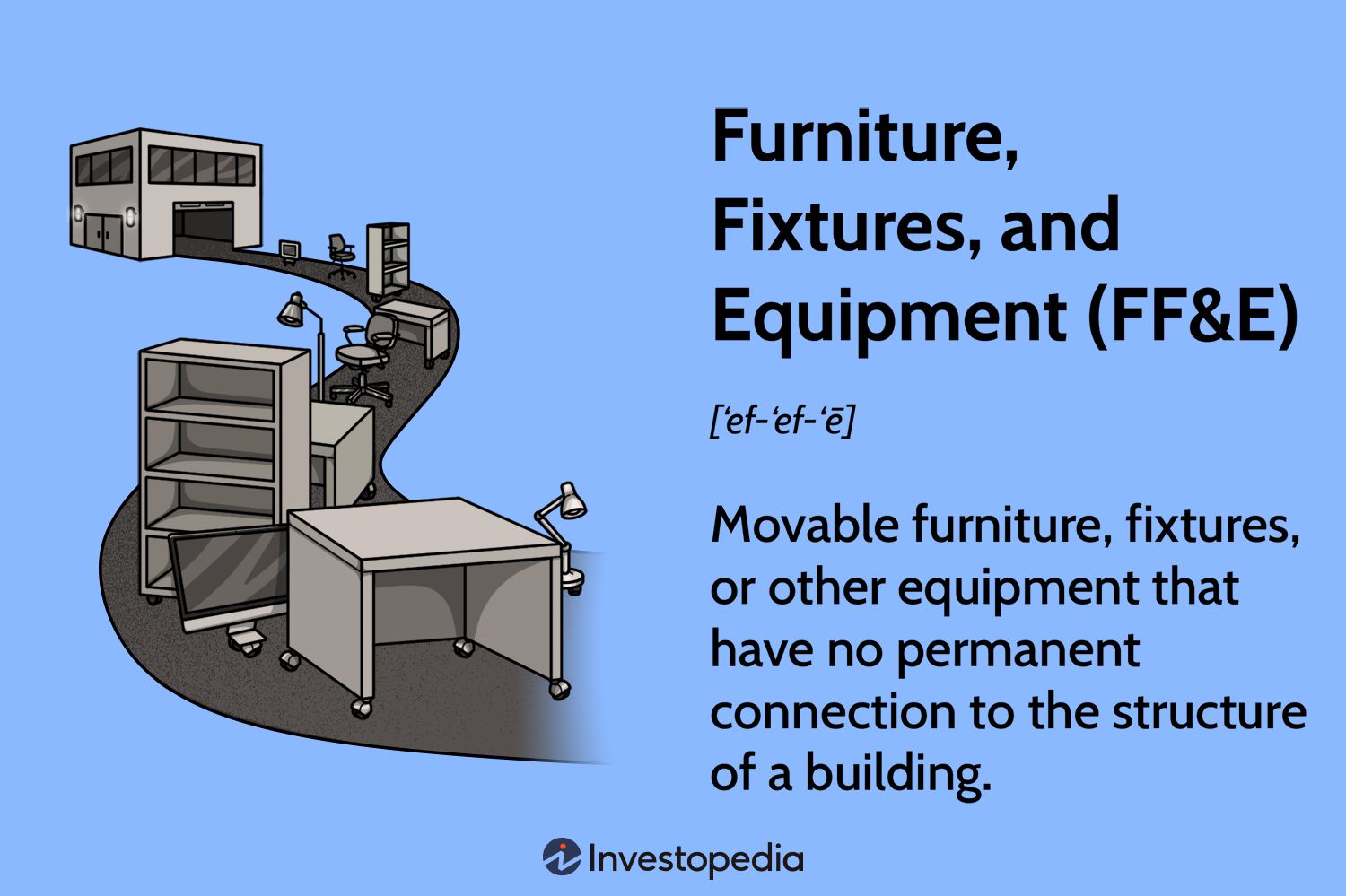
Furniture, Fixtures, and Equipment (FF&E) play a crucial role in business operations, comprising essential movable items like desks, chairs, and computers. These tangible assets are critical in financial assessments, impacting business valuation and financial strategies due to their depreciation over time. Understanding FF&E is vital for accurate accounting and budgeting.
Key Takeaways
- FF&E includes movable assets, such as desks, chairs, and computers, which are essential for business operations but not permanently attached to a building.
- These assets are classified as tangible on financial statements and influence budgeting and project cost assessments.
- Accountants depreciate FF&E over time based on IRS guidelines, spreading costs over each item’s useful life, such as five years for computers and seven for office furniture.
- Security equipment may also be classified as FF&E due to its mobility and lack of permanent installation.
Get personalized, AI-powered answers built on 27+ years of trusted expertise.
Investopedia / Eliana Rodgers
The Role of FF&E in Day-to-Day Business Activities
An asset is classified as FF&E if it’s used by a business for normal daily operations. For example, an office receptionist relies on their desk, chair, telephone, computer, desk organizer, and pen holder to conduct routine activities throughout the normal course of doing business.
Accountants categorize FF&E as tangible assets in separate line items on financial statements and budgets. The FF&E balance is added to a project’s total costs to see if the project is on budget.
Accounting Techniques for FF&E: Managing Depreciation
Accountants spread the cost of FF&E items by depreciating their values over time. To do this, accountants first determine each item’s useful life based on IRS guidelines.
FF&E items often last over a year, but this varies by item. For example, a desktop computer may be outdated after three years, but the IRS gives it a five-year useful life. In contrast, the IRS assigns office furniture a seven-year useful life.
Important
Security equipment like X-ray scanners may be FF&E since they can be moved from one place to another.
Real-World Examples of FF&E Depreciation
Assume a new car is worth $10,000 with a five-year useful life per the IRS. Let’s further assume that the vehicle’s maximum salvage value is 20%. When a company first buys the car, it records the monthly depreciation charge as follows:
The depreciation charge is $133.33 at the end of the first month. The net book value is the original value minus accumulated depreciation.
The Bottom Line
Understanding the role of Furniture, Fixtures, and Equipment (FF&E) is crucial for sound business management and financial planning. These tangible assets, including items like desks, computers, and electronic gadgets, are essential for daily operations but are not permanently attached to facilities. FF&E items, recognized as tangible assets, contribute significantly to company valuations, especially during liquidation scenarios. They must be accurately accounted for, and their costs spread over their useful lives, typically defined by IRS guidelines, to reflect true depreciation in financial statements. By effectively managing FF&E, businesses can maintain accurate budgets and project cost assessments, ultimately supporting informed financial decisions.














Leave a comment