
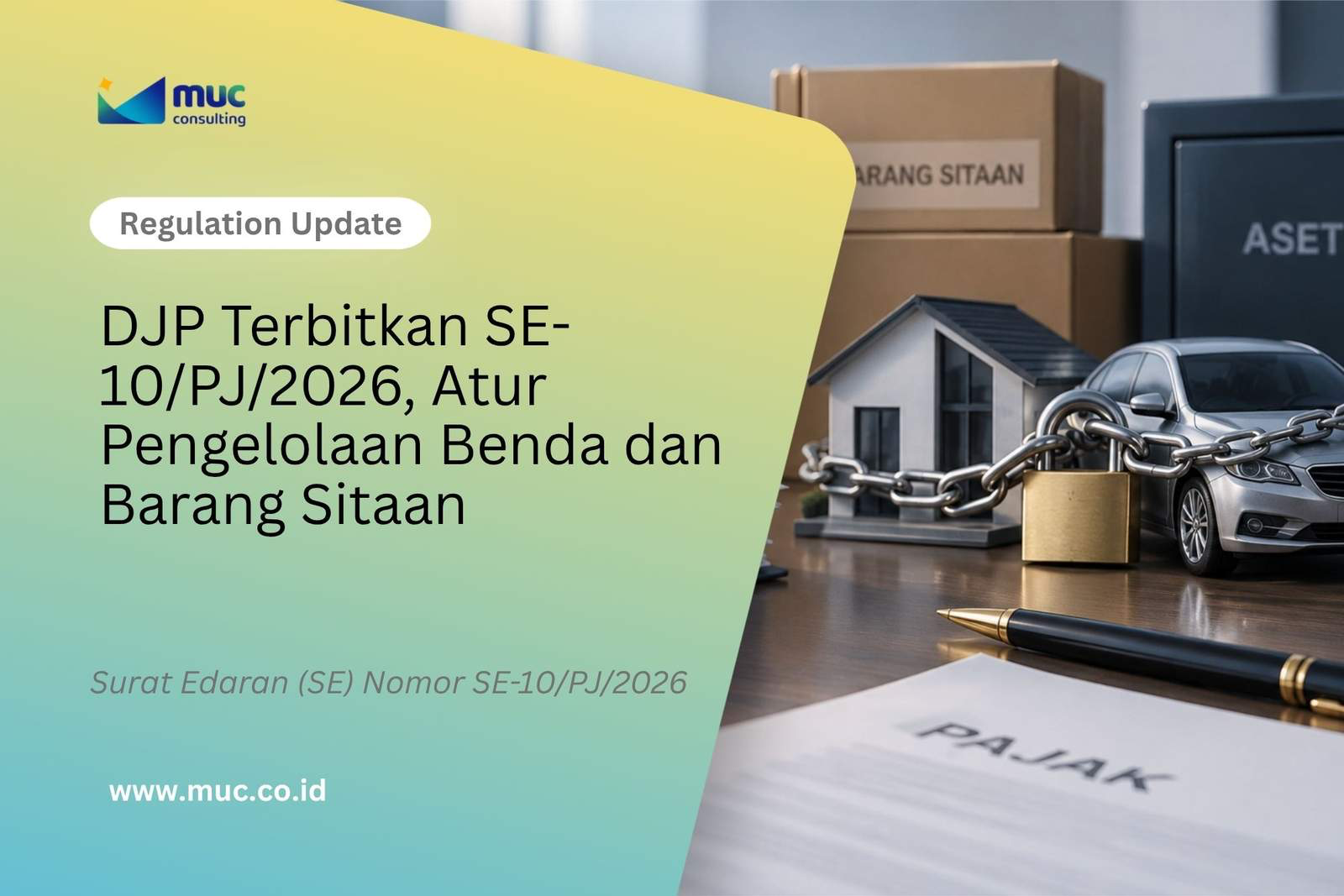
The Directorate General of Taxes (DGT) has issued Circular Letter of the Director General of Taxes No. SE-10/PJ/2026 on Guidelines for the Management of Seized Assets, Seized Goods, Tangible Asset Collateral, and Documents Borrowed for Taxation Purposes.
The circular letter was issued to establish standards and uniformity in managing seized assets, seized goods, tangible asset collateral, and documents borrowed for taxation purposes. The management is intended to preserve the integrity, security, safety, and value of such assets and documents, thereby supporting tax investigations, tax collection, tax audits, Preliminary Evidence Examinations, and objection proceedings.
Management of Seized Assets and Goods
SE-10/PJ/2026 stipulates that seized assets, seized goods, and/or tangible asset collateral may be stored or managed at the DGT Head Office, DGT Regional Offices, or Tax Offices by designated managers of seized assets, seized goods, and tangible asset collateral.
In addition, storage may take place at other locations as necessary, including financial institutions, pawnshops, post offices, local government offices, state seizure storage facilities, or other designated locations.
In practice, seized assets, seized goods, and/or tangible asset collateral are managed by investigators, tax bailiffs, managers of seized assets, seized goods, and tangible asset collateral, or managers of other designated storage locations.
The circular letter also stipulates that seized assets, seized goods, and/or tangible asset collateral that have been recorded must be labeled. At a minimum, the label must include the registration number, Taxpayer Identification Number (NPWP)/National Identity Number (NIK), name of the tax bearer or suspect, and name of the investigator or tax bailiff handing over the assets or goods.
Management of Physical and Electronic Documents
In addition to regulating seized assets and goods, SE-10/PJ/2026 provides guidelines for managing documents borrowed by the DGT for taxation purposes. These include books, records, and documents, including electronic documents, borrowed for tax audits, Preliminary Evidence Examinations, and objection proceedings.
For physical documents, work units conducting tax audits, Preliminary Evidence Examinations, and/or objection proceedings must provide designated document storage facilities. The storage requirements also apply to electronic documents.
SE-10/PJ/2026 further emphasizes the responsibility of tax auditors, Preliminary Evidence Examiners, or review teams for electronic documents from the time the documents are borrowed from taxpayers until they are returned.
Management Forms
As part of the implementation guidelines, SE-10/PJ/2026 also includes appendices containing lists of forms and sample formats to be used in managing seized assets, seized goods, tangible asset collateral, and documents borrowed for taxation purposes.
With the issuance of this circular letter, the DGT has a more uniform guideline for ensuring the proper management of assets, goods, and documents under its control during tax enforcement and the implementation of tax provisions. (KEN)












Leave a comment