
Key Takeaways
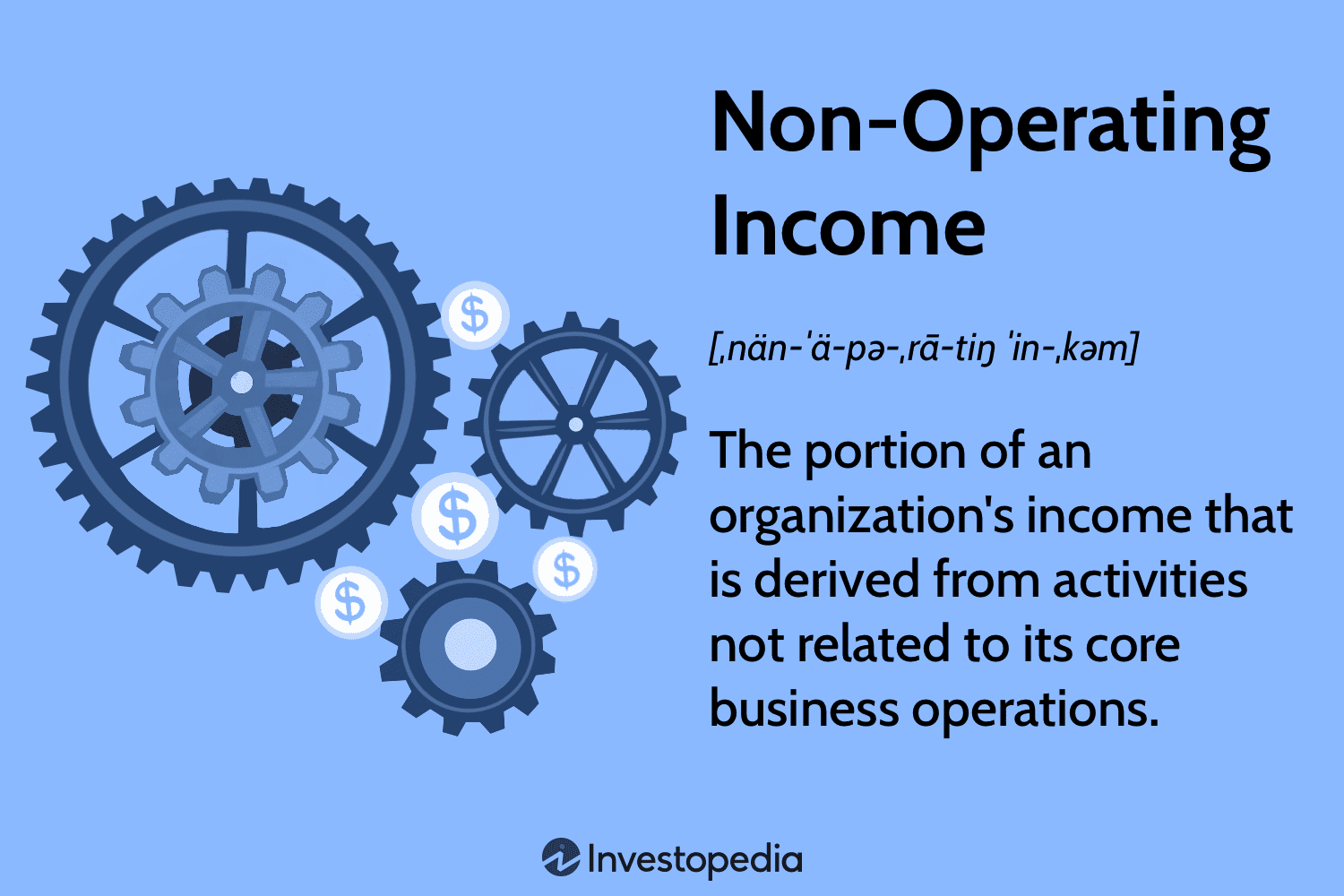
- Non-operating income is derived from sources that are not related to a company’s main business activities.
- Common sources of non-operating income include dividend income, investment profits or losses, and foreign exchange gains or losses.
- Differentiating between operating and non-operating income helps investors assess a company’s true operational efficiency.
- Companies are required to report non-operating income separately on their income statements to provide clearer financial insights.
- Analysts should be cautious of high non-operating income figures as they might obscure poor operating performance.
What Is Non-Operating Income?
Non-operating income arises from activities outside a company’s main business operations, such as investment profits or asset sales, and affects the true measure of corporate earnings. It’s important for investors to differentiate this from operating income to gain an accurate picture of a company’s financial performance.
It can include items such as dividend income, profits or losses from investments, as well as gains or losses incurred by foreign exchange and asset write-downs. Non-operating income is also referred to as incidental or peripheral income.
Investopedia / Zoe Hansen
Analyzing Non-Operating Income and Its Impact
Earnings are probably the most analyzed number in a company’s financial statements. They indicate profitability compared to analyst predictions and company guidance.
The problem is that profit in an accounting period can be skewed by things that have little to do with the everyday running of the business. For example, there are occasions when a company earns a significant, one-off amount of income from investment securities, a wholly owned subsidiary, or the sale of a large piece of equipment, property or land.
These types of gains—on top of income earned from recurring events outside of the business’ main line of work—can significantly alter a company’s earnings and make it difficult for investors to measure how well the firm’s operations actually fared during the reported period.
Comparing Non-Operating and Operating Income
It’s important to separate income from daily operations and income from other sources to evaluate a company’s true performance. That is why firms are required to disclose non-operating income separately from operating income.
Operating income is an accounting figure that measures the amount of profit realized from a business’s operations, after deducting operating expenses such as wages, depreciation, and cost of goods sold (COGS). In short, it provides information to interested parties about how much revenue was turned into profit through the company’s normal and ongoing business activities.
Operating income is recorded on the income statement. Toward the bottom of the income statement, under the operating income line, non-operating income should appear, helping investors to distinguish between the two and recognize what income came from where.
Real-World Examples of Non-Operating Income
The main operations of retail stores are the purchasing and selling of merchandise, which requires a lot of cash on hand and liquid assets. Sometimes, a retailer invests its idle cash to make it productive.
If a retail store invests $10,000 in the stock market and earns 5% in a month, the $500 earned would be non-operating income. When a person sets out to analyze this retail company, the $500 would be classified as nonoperating, or non-recurring, earnings because it can’t be relied on as continuous income over the long term.
Alternatively, if a technology company sells or spins off one of its divisions for $400 million in cash and stock, the proceeds from the sale are considered non-operating income. If the technology company earns $1 billion in income in a year, it’s easy to see that the additional $400 million will increase company earnings by 40%.
To an investor, a sharp bump in earnings like this makes the company look like a very attractive investment. However, since the sale cannot be replicated or duplicated, it can’t be considered recurring operating income and should be removed from performance analysis.
Important Considerations for Non-Operating Income
Some companies may hide low operating profit with high non-operating income. Beware of management teams attempting to flag metrics that incorporate inflated, separate gains. Earnings before interest and taxes (EBIT) for example, can include income derived from activities not related to the core business and can sometimes be advertised heavily by companies to mask underwhelming operational results.
Often a sharp spike in earnings from one period to the next will be caused by non-operating income. Determine where money comes from and how much is tied to regular business operations and likely to repeat.
The Bottom Line
Non-operating income refers to earnings that arise from activities not central to a company’s primary business functions, such as dividends, investment gains, or one-time sales of assets. Distinguishing between non-operating and operating income is vital for investors to accurately assess a company’s operational efficiency. While non-operating income can sometimes inflate a company’s earnings, it’s not indicative of long-term business performance. Investors should scrutinize where income is derived from and recognize the impact of non-operating gains on overall profitability to make informed investment decisions.














Leave a comment