
dfcu Bank is expanding its vehicle and asset financing strategy, positioning it as a key driver of business productivity and economic growth in Uganda, according to the bank’s Head of Vehicle and Asset Finance, Gloria Ssuuna Namutebi.
Vehicle and Asset Financing (VAF) allows individuals and businesses to acquire vehicles, machinery and equipment without full upfront payment, with repayments structured around cash flows.
“At its core, Vehicle and Asset Financing is about unlocking productivity,” Namutebi said. “Across sectors such as transport, construction, agriculture, and light manufacturing, access to the right asset determines how efficiently a business can operate, how quickly it can scale, and how competitive it becomes.”
She said the main constraint for many Ugandan businesses is not ambition but access to productive tools, adding that structured financing enables firms to expand capacity and participate more actively in the economy.
“In her view, the real constraint facing many Ugandan businesses is not ambition, but access to the tools required to execute,” she said.
dfcu said its approach moves beyond standardised lending products, instead offering tailored financing solutions including finance leases, asset loans and insurance premium financing.
“It is about structuring solutions around the customer, not forcing customers into fixed products,” Namutebi said. “For individuals, that means accessibility and manageable repayment terms. For businesses, it means aligning financing to project cycles and operational cash flows.”
The bank finances a wide range of assets including vehicles, construction machinery, agricultural equipment such as tractors and irrigation systems, as well as specialised tools like medical devices, generators and solar solutions. Assets with a lifespan of up to 15 years can be financed depending on quality and marketability assessments.
Namutebi said the broader economic impact is visible when businesses gain access to equipment.
“When a logistics company expands its fleet, when a contractor acquires new equipment, or when a farmer transitions to mechanised agriculture, the impact is immediate — increased productivity, greater efficiency, and often job creation,” she said.
dfcu said it differentiates its offering through higher financing depth, faster turnaround times and ecosystem partnerships. The bank said it can provide up to 100% financing in select segments, with approval times of three to five days.
“With up to 100 percent financing in select segments, we are significantly lowering the entry barrier,” Namutebi said. “Our turnaround times are designed to support business momentum, typically within three to five days.”
The lender has also built partnerships with equipment and vehicle suppliers, including Mantrac for construction machinery, CFAO for Toyota vehicles, Mac East Africa for Isuzu commercial vehicles, and Meta Plant and Equipment Uganda Limited for agricultural machinery.
On agriculture, Namutebi said mechanisation remains a major opportunity for Uganda’s economy.
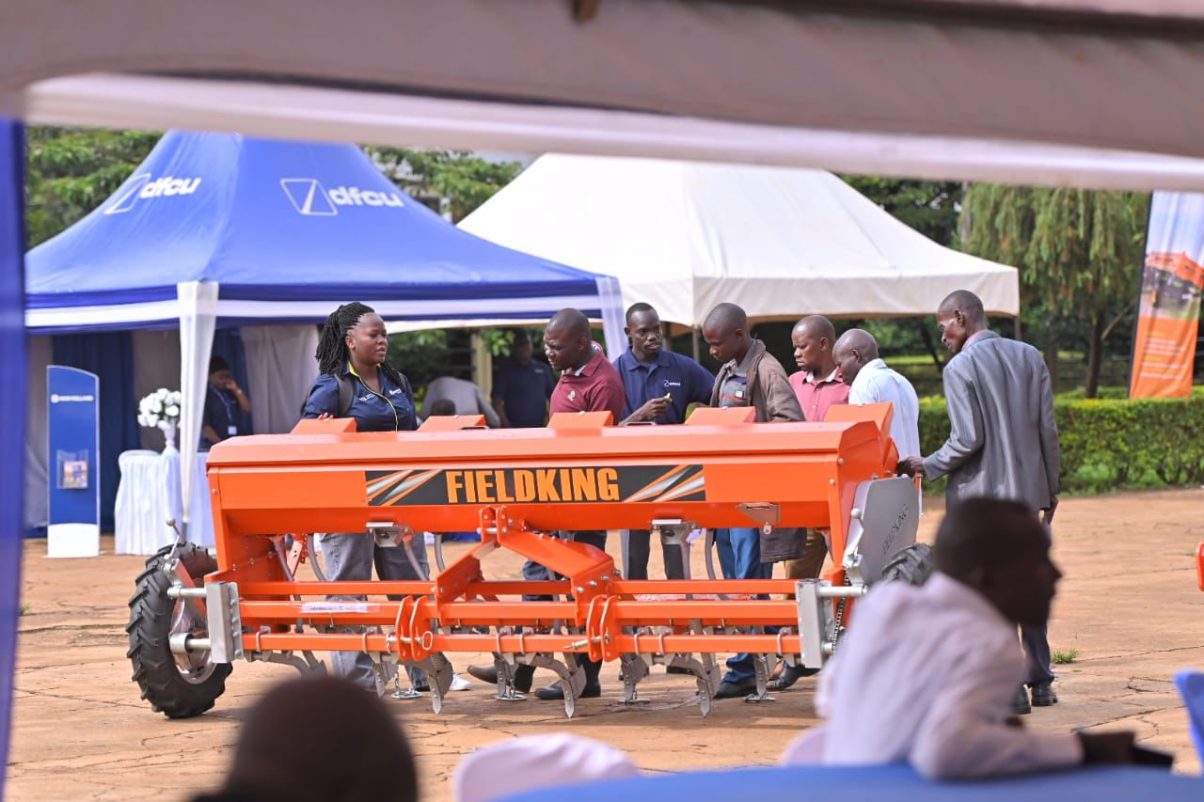
“Agriculture is central to Uganda’s economy, but productivity remains constrained by limited mechanisation,” she said. “Through our partnership with Meta, we are enabling farmers to access modern equipment with up to 90 percent financing, significantly reducing the upfront burden.”
She said dfcu is also conducting regional activations in areas such as Jinja and Soroti, where equipment demonstrations are paired with on-site financing approvals to speed up adoption.
“For us, success is about impact,” Namutebi said. “Each asset we finance should enable income generation, support job creation, and unlock business growth. Our role is to make it easier for customers to move from ambition to execution.”
dfcu said it views vehicle and asset financing not only as a lending product but as a catalyst for enterprise development and industrial productivity in Uganda.











Leave a comment