
Amid record-high operating profit in Q1
The polarization of large companies intensifies
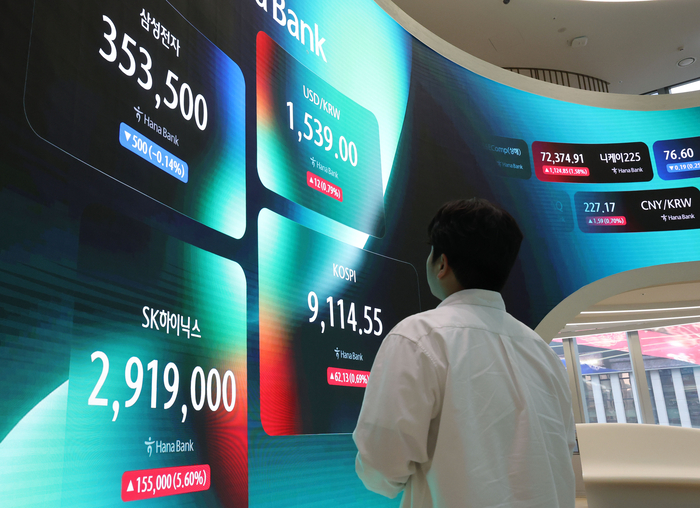
![SK Hynix rose to the top of the KOSPI market capitalization, beating Samsung Electronics (based on ordinary shares) by increasing its intraday gains. This is the first time in 25 years and 7 months that the KOSPI's "Thrones" has been replaced. The photo shows Hana Bank dealing room in Jung-gu, Seoul on the 22nd. [Yonhap News]](https://wimg.mk.co.kr/news/cms/202606/22/rcv.YNA.20260622.PYH2026062214230001300_P1.jpg)
The asset management industry posted its highest quarterly operating profit in the first quarter of this year thanks to the rise of the domestic stock market and the expansion of the exchange-traded fund (ETF) market. However, about 4 out of 10 management companies recorded losses, indicating that the focus on large companies and the polarization of the industry have intensified.
The Financial Supervisory Service said on the 22nd that the operating profit of 511 domestic asset managers in the first quarter of this year was 1.3523 trillion won. This is the largest quarterly increase of 54.0% from the previous quarter and 232.5% from the same period last year.
Its net profit also increased 91.2% quarter-on-quarter and 228.7% year-on-year to KRW 1.4664 trillion. The FSS said it posted its largest quarterly profit since the fourth quarter of 2022 on the back of a rise in the local stock index and expanded commission income.
In the fourth quarter of 2022, the industry’s overall net profit temporarily surged due to one-time non-operating income from the sale of a stake in a particular management company. Excluding this, net profit in the first quarter is actually the highest.
Strong stock markets and ETF growth boosted performance. The KOSPI rose 19.9% from 4214 at the end of last year to 5052 at the end of March this year, and the ETF net asset value (NAV) increased 21.4% from 297.1 trillion won to 360.7 trillion won during the same period.
As a result, asset managers’ total operating assets reached 2,355.7 trillion won at the end of March, up 166.7 trillion won (7.6 percent) from the end of the previous quarter. The amount of trust in public offering funds increased by 96.1 trillion won (15.8%) to 705.5 trillion won on the back of the inflow of ETFs and equity funds. On the other hand, private equity funds only increased by 23.1 trillion won (3.0%) to 784.9 trillion won.
The commission income was 1.8931 trillion won, up 9.5 percent from the previous quarter. Fund-related fees increased by 3.5%, and discretionary and advisory fees increased by 36.4%, leading the performance improvement. The 22.1% decrease in sales management expenses compared to the previous quarter, when year-end bonus payments were concentrated, also affected the increase in profits.
However, the warmth of good performance did not spread throughout the industry. The proportion of deficit companies among all managers was 37.6%, up 5.3 percentage points from the previous quarter. The loss ratio of public offering managers doubled from 7.8 percent to 15.6 percent, while the loss ratio of private equity managers also rose from 36.7 percent to 41.5 percent.
The Financial Supervisory Service diagnosed that the sluggish real estate industry has worsened the performance of some alternative investment managers and that profits are concentrated on some large management companies as the fund market is reorganized around ETFs. Competition among managers to expand ETF market share is also overheating.
The Financial Supervisory Service plans to continue to check market volatility such as the recent trend of individual investor buying, the soundness of operators, and interest rates and exchange rates, focusing on semiconductor stocks and single-stock leverage ETFs.











Leave a comment