
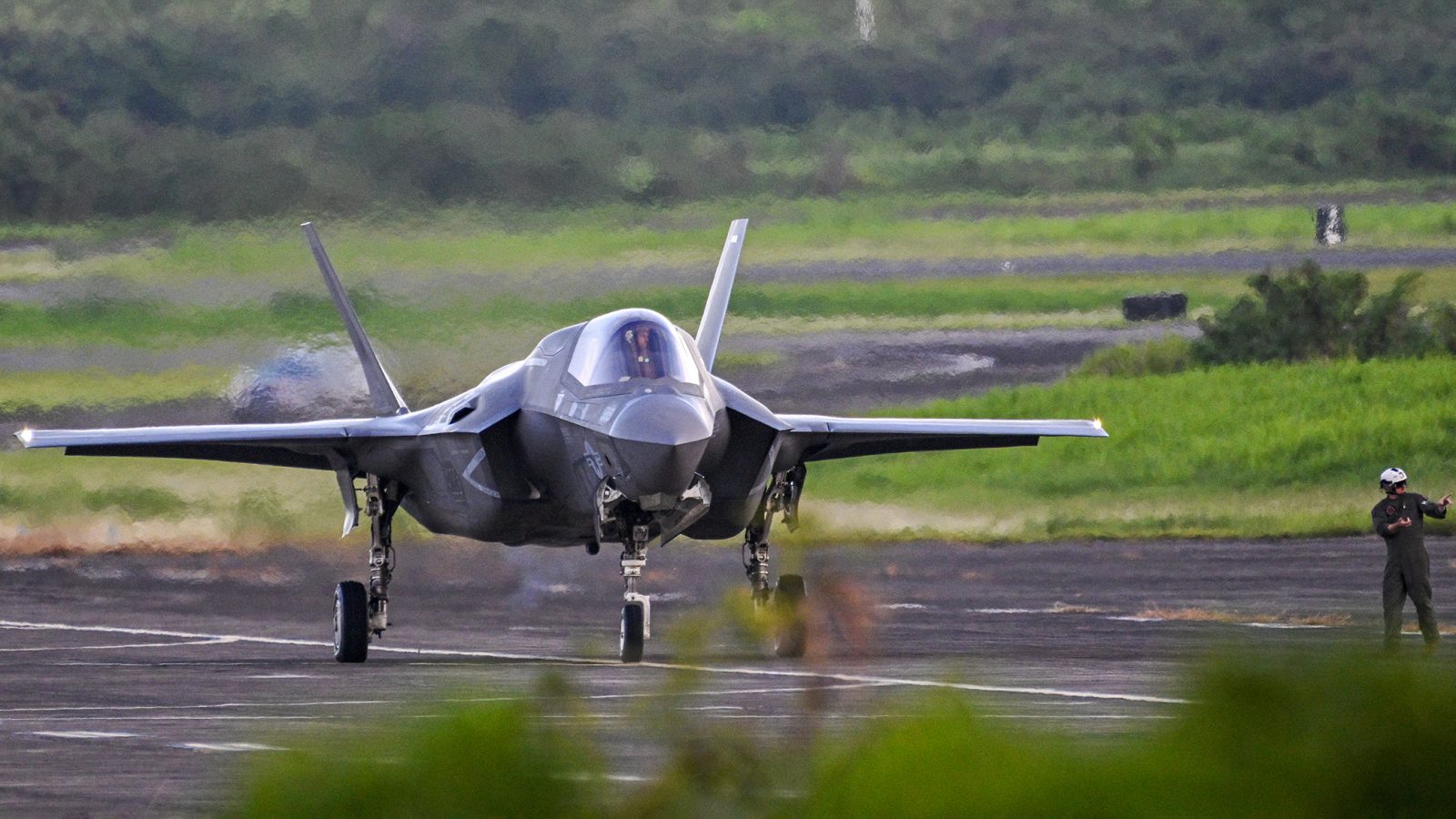
The force in the Caribbean is in need of airfields to fly its planes and ports to dock and resupply its ships. Puerto Rico has thus far been providing the lion’s share of such infrastructure, with the Port of Ponce hosting several warships when they are not on patrol (the U.S. Virgin Islands have also served as an important stopover for U.S. vessels). Meanwhile, navy reconnaissance planes like the P8-A Poseidon are flying out of the National Guard facilities at the otherwise civilian Luis Muñoz Marín International Airport. Indeed, the pressure to find usable basing have led the United States to reopen the former Roosevelt Roads Naval Station in Ceiba, Puerto Rico, which had been shuttered for more than two decades.
The need to reopen old facilities, acclimate forces to a new theater, and requisition support from civilian logistics may limit the United States’ ability to sustain intense combat operations. To be sure, the U.S. military already has significant power projection from Puerto Rico alone, to say nothing of the ability of platforms like the USS Iwo Jima to provide additional in-theater support. However, as previous CSIS analysis has suggested, the U.S. presence remains well below the level needed for full-scale combat operations in a territory the size of Venezuela, with all its attendant complexities. Nevertheless, with the force posture currently in the SOUTHCOM area of responsibility, the United States remains capable of precision strikes from a safe distance at targets presumably linked to drug trafficking in Venezuela. Furthermore, the introduction of additional assets to bolster capabilities, such as an aircraft carrier and its accompanying air wing, would likely strain in-theater logistics and require a further period of adaptation. Lastly, recent reports that U.S. forces have been spotted training in the waters of the coast of Trinidad and Tobago bring the United States potentially to Venezuela’s doorstep. If the United States were able to leverage the small island nation for operations, possibly leveraging an updated status of forces agreement signed in late 2024, some of the logistical challenges could well be solved.
A lack of basing infrastructure also creates opportunities for adversaries to gather intelligence on U.S. movements. Several of the ships currently deployed to the Caribbean on counternarcotics missions called into ports where China exercises influence. The Arleigh Burke–class destroyer USS Sampson docked at Manzanillo, Mexico, in July, where Hong Kong–based conglomerate CK Hutchison operates a terminal. More recently, the USS Lake Erie, a guided missile cruiser, docked at Hutchison-operated Port of Balboa in Panama before transiting the Panama Canal on its way from the Pacific to the Caribbean theater. Naval port calls represent potential intelligence vulnerabilities where China can gather data on U.S. standard operating procedures and patterns of life that could be applicable to the Indo-Pacific. Indeed, China has reportedly sought to gather this information on U.S. naval deployments closer to its shores, like in Subic Bay in the Philippines.
Nevertheless, this is not to say that intensified military operations in the region are off the table. Technically, several targets are well within range of U.S. Tomahawk land attack cruise missiles even while the ships they are based on are docked in Puerto Rico. This also reinforces Puerto Rico’s strategic significance as a site from which several U.S. assets can range Venezuela, while remaining on or near friendly shores. No military campaign is without risks, however, and the Trump administration thus far appears to be seeking to minimize the degree to which U.S. forces must enter the range of Venezuela’s limited area denial capabilities.
U.S. military activity in the Caribbean will likely only intensify in the near term. Recent U.S. supply and logistics operations on the island of Puerto Rico would seem to support this theory. Meanwhile, reports that the forthcoming 2025 National Defense Strategy is set to emphasize the Western Hemisphere and homeland security over other geographies suggest that the current deployment may become a new normal in LAC. However, if the United States is serious about reprioritizing the Western Hemisphere, it must understand that this objective cannot be achieved overnight. Puerto Rico has emerged as a valuable asset for the current deployment in the southern Caribbean, but elsewhere in the region, especially in South America proper, U.S. power projection becomes even more limited. Clear guidance on when and how additional assets will be used in the region is sorely needed, as is additional investment in growing the logistical backbone in LAC if the pivot to the Western Hemisphere is to be fully realized.
Henry Ziemer is an associate fellow with the Americas Program at the Center for Strategic and International Studies (CSIS) in Washington, D.C. Ryan C. Berg is director of the Americas Program at CSIS and Head of the Future of Venezuela Initiative.












Leave a comment