
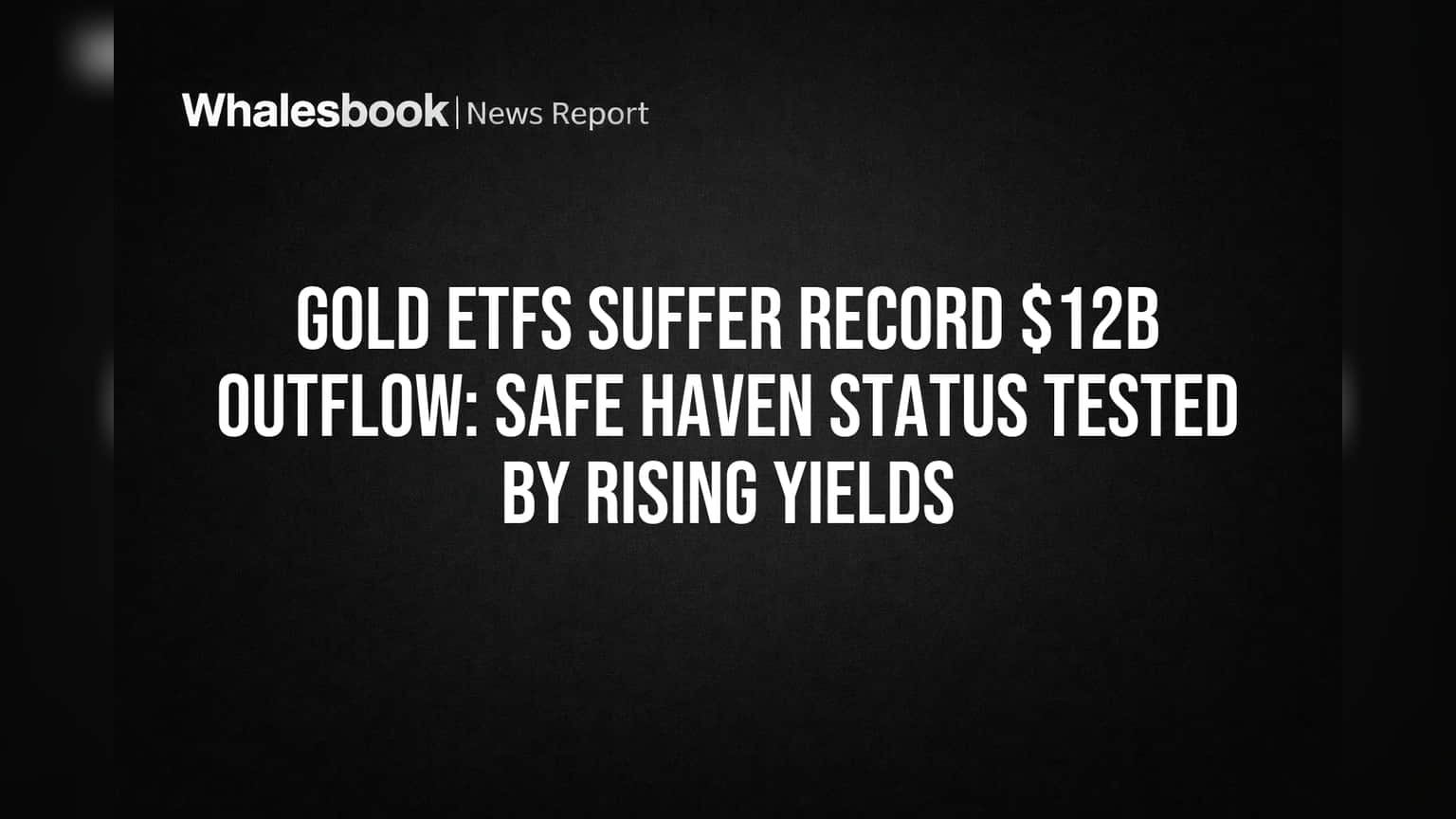
Gold exchange-traded funds experienced an unprecedented $12 billion exodus in March 2026, bringing total assets under management to $606 billion. This outflow signals a significant shift, as investors move away from gold as a primary safe asset, reflecting a broader market re-evaluation influenced by competing global economic trends.
Safe Haven Status Re-examined
The largest investor withdrawals occurred in North America, where rising bond yields, a strengthening U.S. dollar, and general risk aversion prompted a swift exit from gold funds. European investors also reduced their holdings, influenced by falling gold prices and persistently higher interest rate environments. This marks a departure from gold’s historical role as a trusted hedge against market turmoil, suggesting its perceived safe-haven value is being re-evaluated. Compared to March 2025, when gold ETFs also faced pressure from rising yields, this year’s outflows were far more severe, indicating a heightened sensitivity to macroeconomic shifts.
Asian Demand Offers a Counter-Trend
In sharp contrast to Western markets, Asian investors continued to show strong demand for gold ETFs. China and India led these inflows, driven by a strong need for safe-haven assets amid weaker local equity markets and currency pressures that impacted purchasing power. This divergence highlights differing economic outlooks and risk management strategies between major global regions, with Asian investors prioritizing hedges against domestic instability.
Other Precious Metals and Market Indicators
The pressures on gold ETFs were not uniform across all precious metals. Silver ETFs saw smaller outflows, indicating slightly more resilient, though still negative, sentiment for the white metal. Platinum ETFs, however, registered modest inflows, suggesting a distinct demand dynamic, possibly tied to industrial outlooks or specific supply issues. Gold miner ETFs tracked the decline in gold prices but also faced operational cost pressures, leading to larger percentage drops. The U.S. Dollar Index (DXY) strengthened significantly throughout March 2026, acting as a headwind for dollar-denominated commodities like gold. Meanwhile, the VIX index remained elevated, signaling market uncertainty, but this volatility did not translate into traditional safe-haven demand for gold, instead fueling a flight to yield-bearing assets.
Challenges to Gold’s Safe Haven Narrative
While Asian inflows offer some support, the record outflows from Western markets present a significant challenge to gold’s status as an undisputed safe haven. The current environment of rising real yields and a strong dollar directly competes with gold’s appeal. Analysts are questioning gold’s effectiveness as a hedge when inflation appears to be receding or when central banks are aggressively tightening monetary policy, favoring assets with tangible returns. Some analyses also suggest gold’s correlation with equities is increasing, reducing its diversification benefits. The sustained strength of the U.S. dollar, driven by economic outperformance and higher interest rates, continues to deter foreign investment in dollar-priced assets like gold. Reports indicate major gold ETF providers are seeing continuous redemption requests, a trend that could accelerate if macroeconomic conditions remain unfavorable. This weakening of gold’s appeal in Western portfolios raises questions about its long-term demand beyond speculative flows. If currency pressures in Asia ease or local markets stabilize, the primary support for gold inflows could diminish, potentially leading to further downward pressure. Some analysts note that while gold has historically served as an inflation hedge, its performance in early 2026 suggests this correlation is weakening, particularly as central banks focus on combating inflation through rate hikes.
Future Outlook for Gold
Analysts remain divided on gold’s future. Some anticipate potential upside from ongoing geopolitical risks and continued central bank diversification into the metal. Others foresee continued pressure from higher interest rates and a strong dollar, which could drive further ETF outflows. The market will watch closely to see if divergent regional trends persist and how U.S. Federal Reserve monetary policy, favoring higher yields, impacts gold’s attractiveness compared to interest-bearing assets. The performance of gold miner ETFs will also serve as a key indicator for sentiment in the broader precious metals sector.
Disclaimer:This content
is for educational and informational purposes only and does not constitute investment, financial, or
trading advice, nor a recommendation to buy or sell any securities. Readers should consult a
SEBI-registered advisor before making investment decisions, as markets involve risk and past performance
does not guarantee future results. The publisher and authors accept no liability for any losses. Some
content may be AI-generated and may contain errors; accuracy and completeness are not guaranteed. Views
expressed do not reflect the publication’s editorial stance.












Leave a comment