

US Dollar Stablecoins became useful when they stopped being an idea and started behaving like infrastructure. They were not valuable just because dollars existed. They became valuable because dollars could move quickly, settle cleanly, and plug into digital markets.
Digital gold is now threatening to push into this territory.
Gold has already done the hard part. People trust and use it. Governments hold it. Institutions use it as collateral. Tokenize gold access, settlement, and friction. If gold can move like a digital, it stops being a static asset sitting in vaults and starts looking like usable financial infrastructure.
Last week, Brave New Coin had the opportunity to interview Kurt Hemecker, CEO of Gold Token S.A. (GTSA), the tokenization arm of precious metals giant MKS PAMP.
Hemecker sits at the intersection of precious metals and digital asset infrastructure, helping steer a product that aims to connect one of the world’s oldest reserve assets to the fastest-moving rails in finance.
On 20th November 2025, MKS PAMP SA – a 60-year-old Swiss bullion refiner, one of only three London Bullion Market Association and LPPM-approved Good Delivery Referees worldwide, and the owner of the iconic PAMP brand, acquired full ownership of Gold Token SA (GTSA) and relaunched DGLD. DGLD was first issued in 2019. In December 2025, it was transformed when on Base, Coinbase’s Layer 2, via the Aerodrome decentralised exchange.
What digital gold actually is
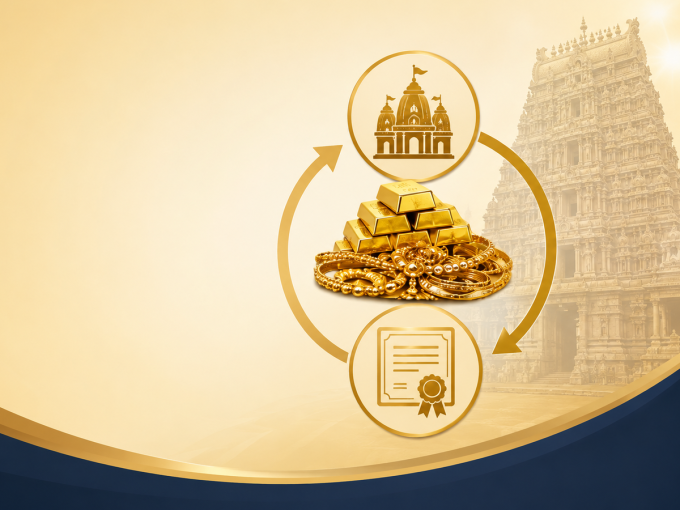
Digital gold is a token representing ownership of specifically allocated physical gold held in a named vault. It is not an ETF share, a futures contract, or a synthetic instrument. It is, in Hemecker’s view, closer to an ownership certificate than to a financial product.
DGLD is designed to represent allocated physical gold rather than a claim on an issuer. That design approach is important in jurisdictions like the US, where regulators are still clarifying the boundaries between securities and other digital assets. – Kurt Hemecker, CEO, Gold Token SA
A gold ETF share gives the holder a proportional claim on a fund that holds gold. In a stress event, the holder’s claim is on the fund structure – not on a specific bar.
An allocated digital gold token, properly structured, gives the holder a direct beneficial ownership interest in specifically identified physical metal. DGLD offers this through GTSA’s bar-mapping tool, with gold held in PAMP SA’s vaulting facility in Ticino, Switzerland, under what the company describes as a bankruptcy-remote structure.
The practical advantages over physical gold are equally concrete. Physical gold is difficult to move quickly, difficult to fractionalise, and impossible to integrate into 24-hour digital financial markets. Hemecker frames this directly:
Tokenization changes that. It does not change the underlying nature of gold, and it should not make gold more speculative. What it does is make gold easier to transfer, settle, verify, and integrate into digital markets. – Kurt Hemecker, CEO, Gold Token SA
Why 2026 is different from 2019
The original DGLD launched in 2019 on the Ocean Bitcoin sidechain, at a moment when DeFi protocols held less than US$1 billion in total value locked and institutional custody for digital assets was still an experiment. The token ‘soon went quiet,’ in GTSA’s own phrasing. Hemecker is direct about what that means:
The original DGLD was early. The thesis was right, but the market around it was not yet mature enough. In 2019, tokenised real-world assets were still a niche concept, DeFi infrastructure was far less developed, institutional custody was still emerging, and regulatory frameworks were much less clear. – Kurt Hemecker, CEO, Gold Token SA
His account of what has changed identifies three converging forces that together make 2025 and 2026 materially different from 2019.
Regulatory clarity. In Europe, the Markets in Crypto Assets regulation has created formal language and structure for digital assets, giving institutions the framework they need to engage. The GENIUS Act in the United States, signed into law on 18 July 2025, created a federal regulatory regime for payment stablecoins. Hemecker notes that while the GENIUS Act is focused on payment stablecoins rather than gold tokens specifically, ‘it is still part of a broader shift: reserve-backed digital assets are moving from the margins into formal regulatory discussion.’ That shift matters for the whole tokenisation market.
Infrastructure maturity. The relaunch from the Bitcoin sidechain to Ethereum and Base is not incidental. Hemecker describes it as reflecting a genuinely different environment: ‘more mature blockchains, better smart contract standards, deeper liquidity venues, improved custody solutions, more sophisticated market makers, and more developed DeFi protocols.’
Chainlink CCIP processed US$7.77 billion in cross-chain transfer volume in 2025, a 1,972 per cent increase. Circle’s CCTP processed more than US$110 billion in cumulative stablecoin transfers. The rails that digital gold needs to run on now exist at scale.
Market demand. Gold has become increasingly relevant in an environment of inflation concerns, geopolitical uncertainty, and questions about fiat currency stability. At the same time, institutional interest in tokenised real-world assets has grown significantly.
CoinGecko’s RWA Report 2026 shows the tokenised commodities market grew from US$1.43 billion to US$5.55 billion in the fifteen months to the end of Q1 2026. Hemecker puts it plainly: ‘DGLD sits at the intersection of both trends: demand for gold and demand for more credible, asset-backed digital instruments. The relaunch is not simply a second attempt at the same product. It is the same core idea entering a very different market.’
DGLD’s operator, MKS PAMP, is not a digital-asset company that acquired a gold relationship. It is one of the world’s most significant physical gold operators: a 60-year-old Swiss refiner, a FINMA-supervised entity, one of only three LBMA/LPPM-approved Good Delivery Referees globally, and the organisation responsible for the PAMP brand and its hallmark Lady Fortuna bars. When MKS PAMP acquires the issuer of a gold token, it is not lending a brand. It is contributing to the end-to-end infrastructure that the token depends on to be real.
MKS PAMP gives DGLD deep physical gold infrastructure, something a digital-native issuer cannot easily build. The blockchain provides transparency and transferability, but MKS PAMP provides the sourcing, custody, vaulting, logistics, redemption, liquidity expertise, and institutional trust that make the token credible. DGLD is not a crypto trying to borrow credibility from gold. It is institutional gold infrastructure moving on-chain.
Gold tokens and stablecoins
The parallel between digital gold and stablecoins is not a marketing construct. It is a structural observation about how real-world assets enter digital financial markets.
Both asset classes require the same four things to function as infrastructure: trust in the backing, reliable custody, compliant issuance, and distribution at scale. USD stablecoins solved for transactional money, the ability to move a dollar equivalent across chains, into DeFi protocols, and out through card networks, at any hour, at near-zero cost. Digital gold is solving for the same problem in the store-of-value layer: the ability to move precious metals across chains, into lending markets, and out as physical metal on demand.
The key distinction is complementarity rather than competition. Hemecker makes the point with characteristic directness:
“Tokenised gold allows institutions to maintain exposure to a familiar reserve asset while benefiting from faster settlement. This is about putting trusted assets on modern rails.”
The assets serve different purposes – stablecoins for transactional money, gold tokens for safe-haven preservation – but the infrastructure logic is identical.
The World Gold Council and Boston Consulting Group formalised the institutional version of this argument in their March 2026 joint paper. BCG’s Matthias Tauber stated the thesis in a single sentence: ‘The question is no longer whether gold will be digital, it’s how it can participate in modern financial systems without compromising physical integrity.’ WGC chief executive David Tait added that shared infrastructure could help gold become ‘more accessible, more easily traded and fully integrated into modern financial systems.’
Techemynt’s GoldNZ, launched in New Zealand in March 2026, is a parallel answer to the same underlying market problem, built for a different geography, a different regulatory environment, and a different distribution story.
The structural mechanics are similar. Each GoldNZ token represents one troy ounce of investment-grade gold, fully allocated and segregated in Commonwealth Vault’s New Zealand facilities, governed by a bare trust under New Zealand law. Token holders are beneficial owners of specifically identified physical gold, not creditors of the issuer.
The structural differentiation is jurisdictional. DGLD’s gold sits in a Swiss vault, under Swiss law, issued by a FINMA-supervised entity. GoldNZ’s gold sits in New Zealand, under New Zealand law, issued by an NZ-registered FSP.
Concliusion
Kurt concluded the conversation by explaining, “DGLD is not trying to make gold more speculative. It is trying to make gold more useful. By combining allocated physical gold with blockchain infrastructure, we can bring one of the world’s oldest and most trusted assets into modern financial markets without compromising the qualities that made it trusted in the first place.”
Gold has been a store of value for five thousand years. The qualities that made it valuable – scarcity, non-sovereignty, universal recognition, resistance to debasement – have not changed. What has changed is the operational layer: the ability to hold, transfer, verify, and integrate gold-backed instruments into modern financial infrastructure.










Leave a comment