
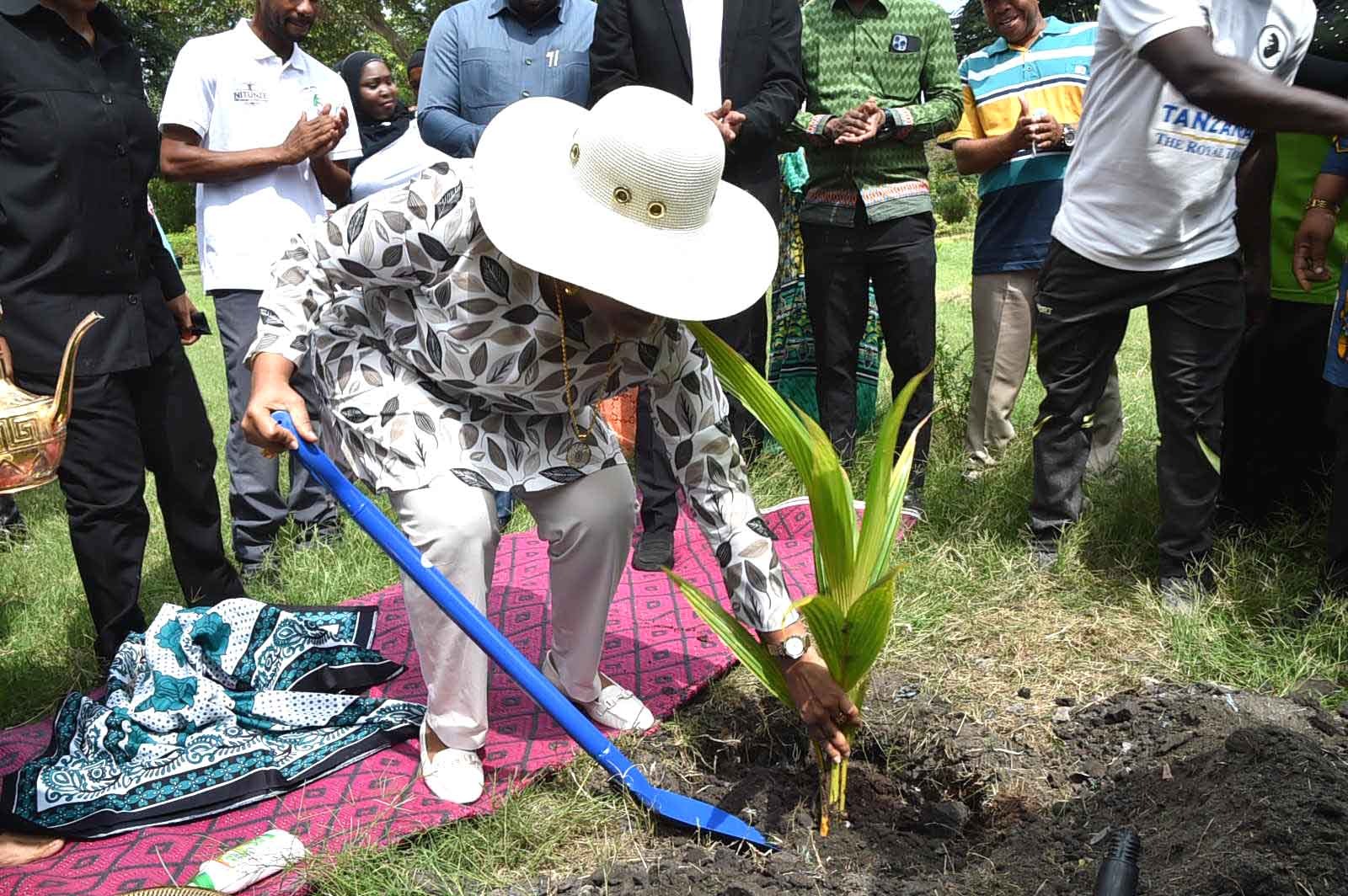
ZANZIBAR: AS the morning sun rose over Zanzibar’s coastline, a sense of cautious optimism filled the conference hall where government leaders, development partners, and community representatives gathered.
They were not just launching a project after a decade of waiting; they were shaping what many believe could be a turning point for the future of Unguja and Pemba.
The initiative, “Safeguarding Zanzibar’s Forest and Coastal Habitats for Multiple Benefits,” promises to do more than protect trees and coral reefs. For communities across the islands, it offers hope: hope for jobs, for climate resilience, and for a sustainable future rooted in the protection of nature.
“This is about our lives,” said Ms Zainab Omar, a community member from Bumbwini in Unguja who attended the launch.
“We depend on the environment every day, whether it is firewood, fishing, or farming. If the environment is destroyed, our lives become very difficult.”
Her words reflect the reality for thousands of Zanzibaris whose livelihoods are closely tied to forests and coastal ecosystems. Speaking at the launch, UNDP Resident Representative in Tanzania, Mr Shigeki Komatsubara, emphasised that Zanzibar’s natural ecosystems are central to its development.
“These ecosystems are not only part of Zanzibar’s natural heritage; they are fundamental assets for sustainable development,” he said.
From the dense forests of Pemba to the mangrove-lined shores of Unguja, these ecosystems support agriculture, fisheries, tourism, and water systems.
Yet they are increasingly under threat. Deforestation, climate change, and unsustainable practices have put pressure on these natural resources, making this new project both timely and urgent.
“This project marks the beginning of an important journey to protect the natural capital that underpins Zanzibar’s economy, livelihoods, culture and resilience,” Komatsubara added.
One of the project’s defining features is its “ridge-to-reef” approach—linking what happens in inland forests to what happens along the coast and in the ocean.
For communities in Pemba, where forests play a critical role in maintaining water sources, this connection is clear.
“If forests disappear, even farming becomes difficult,” said Salim Kombo, a farmer from Pemba, who participated in the workshop discussions.
“Rainfall changes, the soil becomes poor, and we suffer.” In Unguja, the impact is equally visible along the coastline.
“When mangroves are cut, the sea comes closer,” said Ms Zainab. “We see more erosion, and even the fish reduce.”
By addressing these interconnected challenges, the project aims to restore balance across ecosystems, ensuring that actions taken inland benefit coastal and marine environments as well.
Opportunities for communities Beyond conservation, the project is expected to unlock economic opportunities for local communities.
“Protecting and investing in environment and biodiversity of Zanzibar is about creating jobs, and better jobs,” Komatsubara noted.
“The choices we make today will determine the future of Zanzibar’s natural heritage and the prosperity of future generations,”
ALSO READ: Green Legacy Initiative: What it means for Zanzibar’s current, future generation
Komatsubara said as he emphasised that success will not be measured by meetings or reports, but by real change on the ground.
“Success will be measured by healthier forests and mangroves, more resilient coral reefs, improved livelihoods, and stronger community stewardship of natural resources.” For residents like Zainab, this is one of the most important aspects.
“We have heard about activities like beekeeping and planting mangroves,” she said.
“If these projects are supported well, they can help us earn income and also protect the environment.”
Communities in both Unguja and Pemba are being encouraged to engage in sustainable livelihoods such as beekeeping, ecotourism, and conservation-based enterprises.
Government officials say this approach ensures that environmental protection goes hand in hand with poverty reduction.
Permanent Secretary in the Ministry of Agriculture, Irrigation, Natural Resources and Livestock, Dr Saleh Mohamed Juma, highlighted the importance of inclusive participation.
“This inception workshop provides an important platform for stakeholders to develop a shared understanding of the project’s objectives, outputs and implementation strategies,” he said.
“I am confident that the project will contribute significantly to strengthening sustainable natural resource management, improving livelihoods, and enhancing climate resilience.”
A key pillar of the project is community involvement, not just as beneficiaries, but as active managers of natural resources.
This is particularly important in Zanzibar, where community forest management areas already play a role in conservation. Director of Forestry, Mr Said Juma Ali, stressed the urgency of strengthening these efforts.
“Forests are disappearing very quickly due to indiscriminate tree cutting and climate change. This project is therefore very important for their protection,” he said adding that public awareness is essential.
“We must continue educating citizens on the importance of protecting forests, and they themselves must take ownership of this responsibility.”
For Salim Kombo in Pemba, this message resonates deeply. “In the past, people did not understand the importance of conservation,” he said.
“Now we see the effects. If we are given knowledge and support, we can protect these resources ourselves.”
Climate change remains one of the biggest threats facing Zanzibar’s communities. Rising sea levels, unpredictable rainfall, and stronger storms are already affecting livelihoods across both islands.
The project aims to address these challenges through ecosystem-based solutions, restoring mangroves to protect coastlines, conserving forests to regulate water cycles, and safeguarding coral reefs to support fisheries.
In addition, government efforts such as rainwater drainage infrastructure in Unguja and Pemba are helping to reduce flooding risks. For many residents, these combined efforts bring a sense of reassurance.
The initiative comes at a critical moment, as Zanzibar aligns its development goals with long-term visions such as Tanzania Vision 2050. But for those on the ground, the vision is simple: a better, more secure future.
For Zanzibar, the path forward is clear: protect nature, empower communities, and build an economy that works in harmony with the environment.
If successful, this initiative will not only transform Unguja and Pemba, it could stand as a model for sustainable development across the region.













Leave a comment