
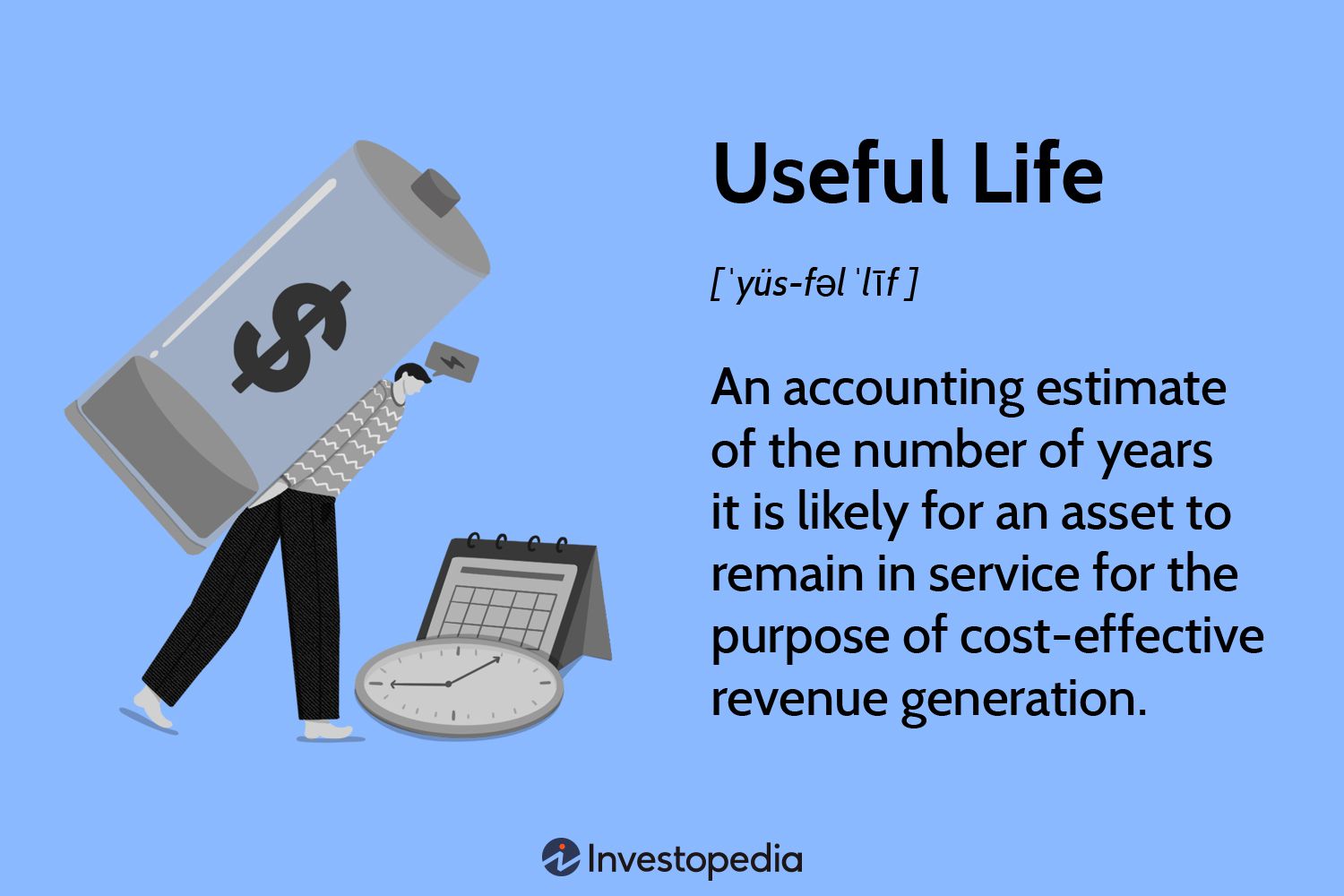
What Is Useful Life?
The useful life of an asset is a key accounting estimate crucial for determining how long an asset remains serviceable and fetches revenue efficiently. Factors such as usage, purchase age, and technological changes influence these estimates. The IRS uses useful life to set depreciation timelines, impacting how businesses calculate asset value over time.
Key Takeaways
- The useful life of an asset is an accounting estimate that determines how long an asset is expected to generate cost-effective revenue.
- Useful life estimates are crucial for calculating depreciation schedules, such as straight-line and accelerated models.
- Straight-line depreciation evenly allocates an asset’s cost over its useful life, while accelerated depreciation allows for higher write-offs in the asset’s early years.
- Factors like usage patterns, technological advances, or extraordinary repairs can lead to adjustments in an asset’s useful life estimate.
- Any change in useful life for tax purposes must be supported with documentation and reported to the IRS.
Get personalized, AI-powered answers built on 27+ years of trusted expertise.
How Useful Life Impacts Business Assets
Useful life is the estimated period during which assets like buildings, machinery, and electronics remain useful. Useful life estimations terminate at the point when assets are expected to become obsolete, require extraordinary repairs, or cease to deliver economic results. The estimation of the useful life of each asset, which is measured in years, can serve as a reference for depreciation schedules used to write off expenses related to the purchase of capital goods.
Straight Line Depreciation: Calculating Asset Value Over Time
The depreciation of assets using the straight-line model divides the cost of an asset by the number of years in its estimated life calculation to determine a yearly depreciation value. The value is depreciated in equal amounts over the course of the estimated useful life. For example, the depreciation of an asset purchased for $1 million with an estimated useful life of 10 years is $100,000 per year.
Accelerated Depreciation: Maximizing Early Write-Offs
Businesses might choose higher depreciation at the start of an asset’s useful life, decreasing over time, using an accelerated model. The yearly write-offs in the reducing balance depreciation model decline by a set percentage rate to zero. Using the sum of the years method, depreciation declines by a set dollar amount each year throughout the useful life period until it is fully depreciated.
Adjusting Useful Life Estimates: Adapting to Technological Changes
The duration of utility in a useful life estimate can be changed under a variety of conditions, including the early obsolescence of an asset due to technological advances in similar applications. To adjust the useful life estimate, a company must explain to the IRS and provide documentation comparing old and new technologies. For example, if a company’s original useful life estimate is 10 years, but new technology is likely to render it obsolete after eight years, the company may be able to accelerate depreciation based on a shorter schedule. In this situation, a company that has been depreciating assets based on a 10-year schedule will update depreciation values based on a newly abbreviated eight-year useful life estimate.
The Bottom Line
The estimation of an asset’s useful life is a fundamental aspect of financial management and asset depreciation. Understanding useful life allows businesses to determine the duration over which assets can contribute to revenue generation and helps in scheduling depreciation, whether using the straight-line or accelerated methods. Such calculations are crucial in planning for asset replacement and managing financial statements effectively. Additionally, staying updated with technological advancements and changes in business needs is essential for adjusting useful life estimates, ensuring accurate financial reporting, and avoiding depreciation misstatements.












Leave a comment