
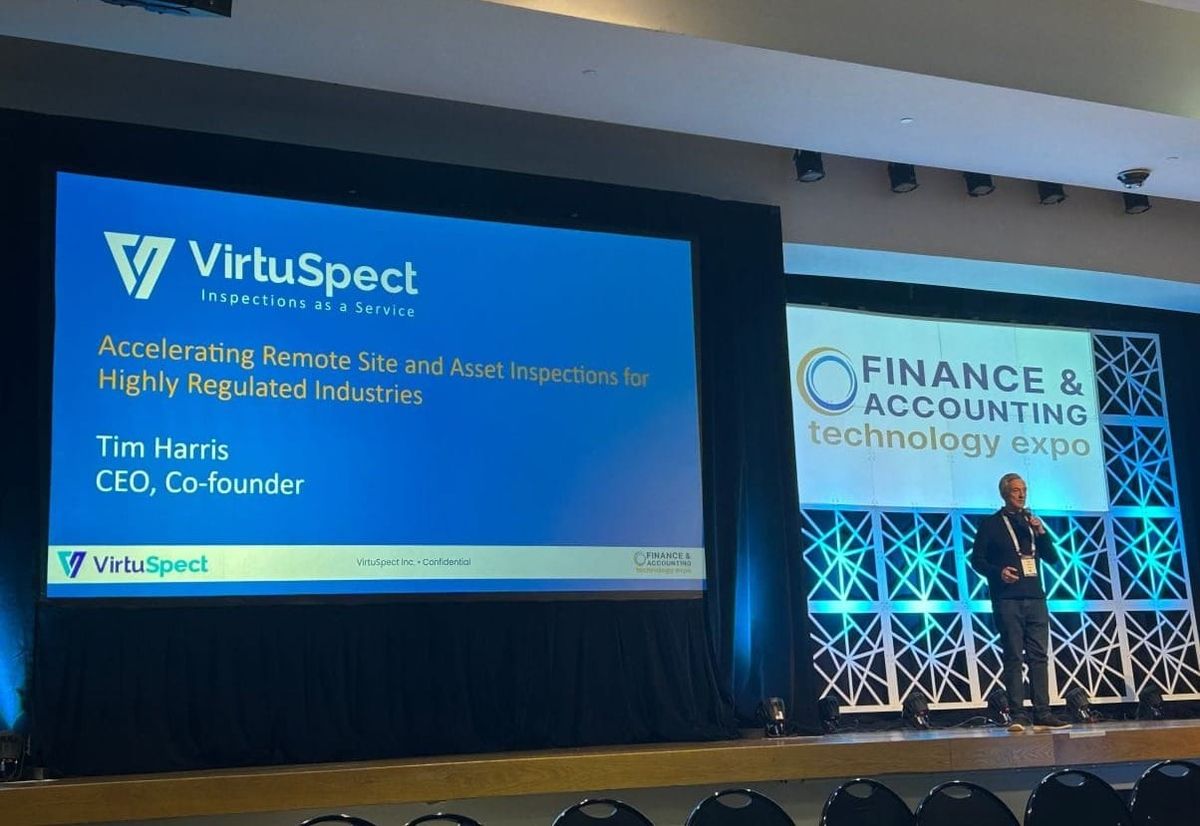
Sandy, Utah — July 13, 2026
Every big company has ghosts on its books — forklifts that were scrapped years ago but are still being depreciated, laptops that walked out the door but are still insured, machinery that exists somewhere but nobody can say exactly where. Tim Harris, CEO and co-founder of Sandy-based SoloTruth, has built a business around hunting them down alongside co-founder Cam Cope.
“We are like the Ghostbusters of ghost and zombie assets,” Harris said in an interview with TechBuzz, explaining a problem that even seasoned CFOs are often surprised to learn has a name.

From Bank Inspections to Enterprise-Wide Asset Truth
SoloTruth’s roots are in a narrower, more specific problem: verifying the condition of assets and property used as collateral for loans, including regulatory-driven inspections tied to SBA lending. The company, headquartered in Sandy, built a platform to manage that inspection process at scale, running close to 1,000 inspections a year for Salt Lake City-based Celtic Bank alone, along with several other bank customers.
What set the approach apart from traditional third-party inspection services, Harris said, was a mobile app that let the borrower — the person actually on site with the asset — capture the evidence themselves, rather than dispatching a third-party inspector. That model, which the company still offers today under its original evidence-based inspection platform, let SoloTruth do inspections at a scale that would be cost-prohibitive using traditional methods.
The bigger opportunity emerged almost by accident. After winning an award at an industry event with a largely CFO-heavy audience, Harris said the consistent feedback was that inspection evidence alone wasn’t enough. Location and proof of existence mattered just as much to finance teams evaluating the true state of a company’s assets. That insight led the company to rebrand as SoloTruth in January and to build a new product line on top of the same underlying platform: Asset Relationship Management, or ARM.
The ARM platform is currently in prototype, with a public launch expected around August.
Solving the Fixed Asset Register Problem
ARM’s initial focus is squarely on enterprise resource planning (ERP) systems. Specifically, this means the fixed asset register module where a company’s equipment, vehicles, and machinery live as line items. Harris walked through how the drift happens: a company acquires a forklift, the information gets entered into the ERP system from a bill of materials or a spreadsheet, and then nothing changes until an audit, sometimes a year or two later. In the meantime, assets move, get lost, get stolen, get upgraded through maintenance, or simply stop existing, while the ERP system remains frozen in time.
SoloTruth’s answer is to keep that register continuously current. The platform combines a mobile inspection app, used far more frequently than an annual audit, on a daily, weekly, or monthly cadence depending on the asset, with RFID and GPS technology to track location and confirm an asset physically exists. Condition, location, and proof-of-existence data all feed back into the ERP system in real time.
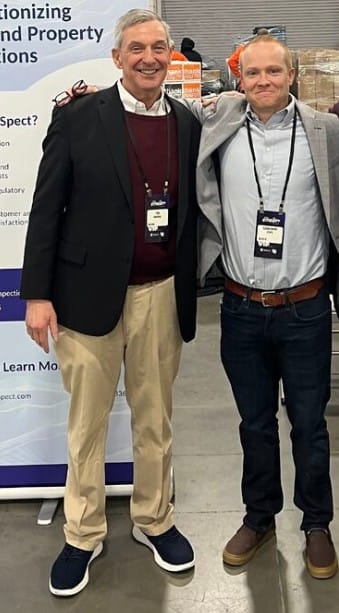
Capture Versus Orchestration — Where AI Fits and Where Humans Stay in the Loop
SoloTruth draws a sharp distinction between two problems that are easy to conflate: capturing evidence about an asset, and doing something useful with that evidence once it exists. RFID readers, GPS tags, and inspection apps solve the first problem; they answer the question of what state an asset is in right now. On their own, though, they don’t answer the harder question: what needs to happen next, and who needs to sign off on it. That second layer is what SoloTruth calls orchestration, and it’s the piece the company argues most fixed-asset technology never actually builds.
In practice, orchestration breaks down into four linked functions: scheduling which assets get inspected, by whom, and how often; delegating each inspection task to the right person based on location and role; escalating exceptions to the appropriate reviewer when something doesn’t match expectations; and requiring a human approval step before any verified data is allowed to change the official financial record. Miss any one of the four, and the chain breaks down. A company might collect excellent field data and still have no reliable way to turn it into a trustworthy asset register.
The scheduling piece alone becomes a serious operational problem at scale. Harris gave the example of a a mid-sized manufacturer with 10,000 fixed assets on quarterly inspection cycles generates roughly 40,000 inspection touchpoints a year. Spread across a 100-person workforce, this works out to around 400 inspection tasks per employee annually. Coordinating that volume manually, Harris said, is exactly the kind of logistical problem AI and automation are suited to solve.
On the approval side, when an inspection comes back with no material variance from what’s expected, AI can push that update directly into the system of record. When something falls outside an established threshold, the platform routes it into a human-in-the-loop review process instead, with escalation, notification, and remediation workflows built in, the human sign-off gate that keeps a governed record instead of an automated guess.
That orchestration layer runs on Axon Ivy, a Swiss digital process automation platform that Harris described as a strategic partner “since day one.” Axon Ivy, which has been in the business process automation space for more than two decades, handles both the agentic AI processes and the human review workflows that sit underneath SoloTruth’s applications. “We’re relying on them for the plumbing, and we are building the applications on top of that,” Harris said.
Ghost Assets, Zombie Assets, and Real Money
The concepts of “ghost” and “zombie” assets are central to how SoloTruth pitches ARM to CFOs, and Harris said they’re still an “aha moment” for most finance leaders who haven’t encountered the terms before. Ghost assets are line items still on the books, and still being insured and depreciated, that no longer physically exist. Harris estimated that a typical manufacturing company carries ghost assets equal to 10 to 30 percent of its recorded asset base, often a bigger line item on the balance sheet than cash itself.
“Can you imagine if the CEO could only have visibility on the value of the cash in the bank once a year?” Harris said, drawing the comparison to how infrequently most companies’ physical assets are actually verified.

The downstream effects go beyond a cleaner balance sheet, Harris said. More accurate asset data improves depreciation accuracy and curbs unnecessary capital spending. He gave an example of companies buying more laptops than they need simply because they’ve lost track of existing inventory. He also pointed out how having accurate data can dramatically speed up mergers and acquisitions, where an out-of-date asset register often forces companies into a costly emergency audit. Harris said SoloTruth’s approach can typically drive $1 million to $4 million in cost savings for a mid-sized manufacturing company.
SoloTruth also positions ARM as complementary to, not a replacement for, the standard annual audit process. Harris said the company has already partnered with at least one audit firm that sees the model as a competitive advantage: if a company is capturing real-time inspection data on an ongoing basis, the audit firm’s own annual work becomes faster and cheaper, since the burden of gathering evidence shifts from a once-a-year army of auditors to the employees already handling the equipment day to day.
There’s also a regulatory tailwind pushing in the same direction. A recent update to PCAOB AS 1105, the primary U.S. standard governing audit evidence, in effect for 2026 audits, raises the bar for how auditors evaluate evidence produced by technology, putting the operational process behind that data more directly in scope. In practical terms, an inspection program without documented approval workflows and escalation logic becomes harder for auditors to sign off on, even if the underlying data collection tools are solid.
Manufacturing First, Logistics and Mining Not Far Behind
SoloTruth’s primary target is manufacturing companies with more than $50 million in assets. It is a threshold Harris described as representing a mid-sized manufacturer in most cases. Harris said they have a preference for multi-site or global operations, since the platform is built to manage a hierarchy of locations. Logistics is the company’s second core vertical, given the combination of high-value equipment and large volumes of lower-value assets that still need to be tracked.
Asked whether large-scale automated mining operations, the kind increasingly seen in southern Utah, with massive haul trucks, drones, and robotics operating in rugged terrain, would fit the platform, Harris said mining is closely analogous to manufacturing. The platform supports both RFID and GPS tracking, with GPS typically better suited to mobile mining assets. “An asset is an asset that needs to be tracked,” Harris said. “We need to know that it exists, we need to know its location, and we need to do the check on the condition of the asset on a regular basis.”
Harris drew a clear line, however, around what SoloTruth doesn’t do. The company isn’t trying to compete with established asset management platforms built for complex operational monitoring, such as vibration and ambient temperature sensors used in the oil industry, nor with dedicated vehicle telemetry and fleet-tracking systems already used by transportation companies. “We’re really more just making sure that the systems of record have the right information,” he said.
Going Global
SoloTruth has had a global outlook from early on, Harris said, and has already begun building international partnerships. The company is working with a partner in Brazil affiliated with the largest software company in Latin America, part of a strategy to pursue OEM relationships as it expands outside the U.S. Axon Ivy’s Swiss headquarters and strong European presence is another asset the company expects to lean on as ARM rolls out, something that wasn’t as relevant during the earlier, U.S.-bank-focused inspection business.
Looking three to five years out, Harris framed SoloTruth’s ambitions in a familiar enterprise-software analogy: “We are to assets what CRM is to customer records.” Beyond reconciling ERP systems, the company sees itself eventually serving as a control layer connecting asset data to other enterprise systems — HR platforms to track who’s trained on a piece of equipment, IT systems, and more — without displacing the enterprise asset management or ERP systems already in place.
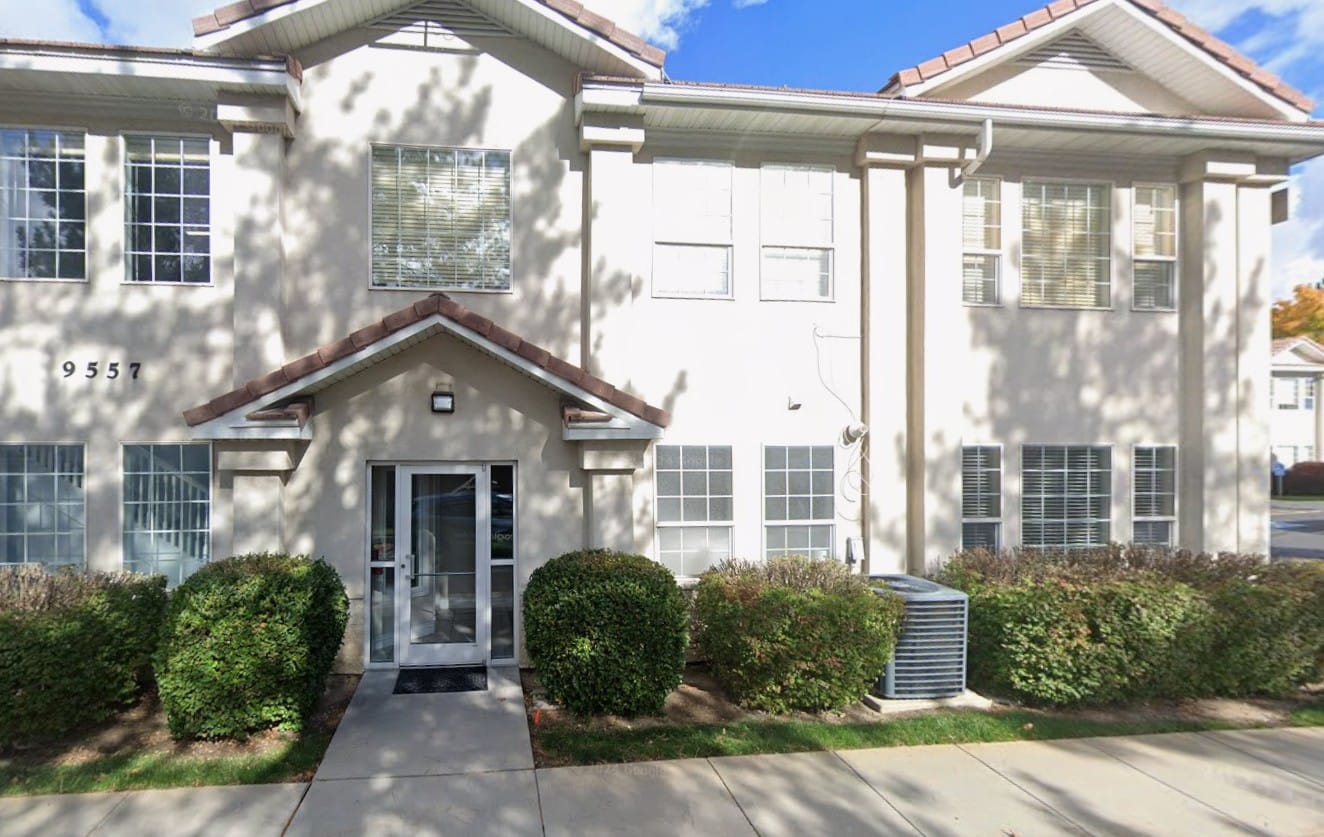
Learn more at solotruth.com. Check out the company’s blog posts: The 8 Cost Categories of Unmanaged Fixed Assets and You Solved the Capture Problem, But Not the Orchestration Problem to get a better
Share this article










Leave a comment