
Key Takeaways
- Hard assets are tangible items owned by individuals or businesses and include things like land, vehicles, and machinery.
- These assets can provide a buffer against losses since their value may move inversely to soft assets.
- Hard assets are often long-term investments categorized as property, plant, and equipment on balance sheets.
- They are valuable for their ability to produce or purchase goods and services, supporting a company’s operations.
- Unlike hard assets, intangible assets have no physical form and include things like patents and trademarks.
Get personalized, AI-powered answers built on 27+ years of trusted expertise.
What Is a Hard Asset?
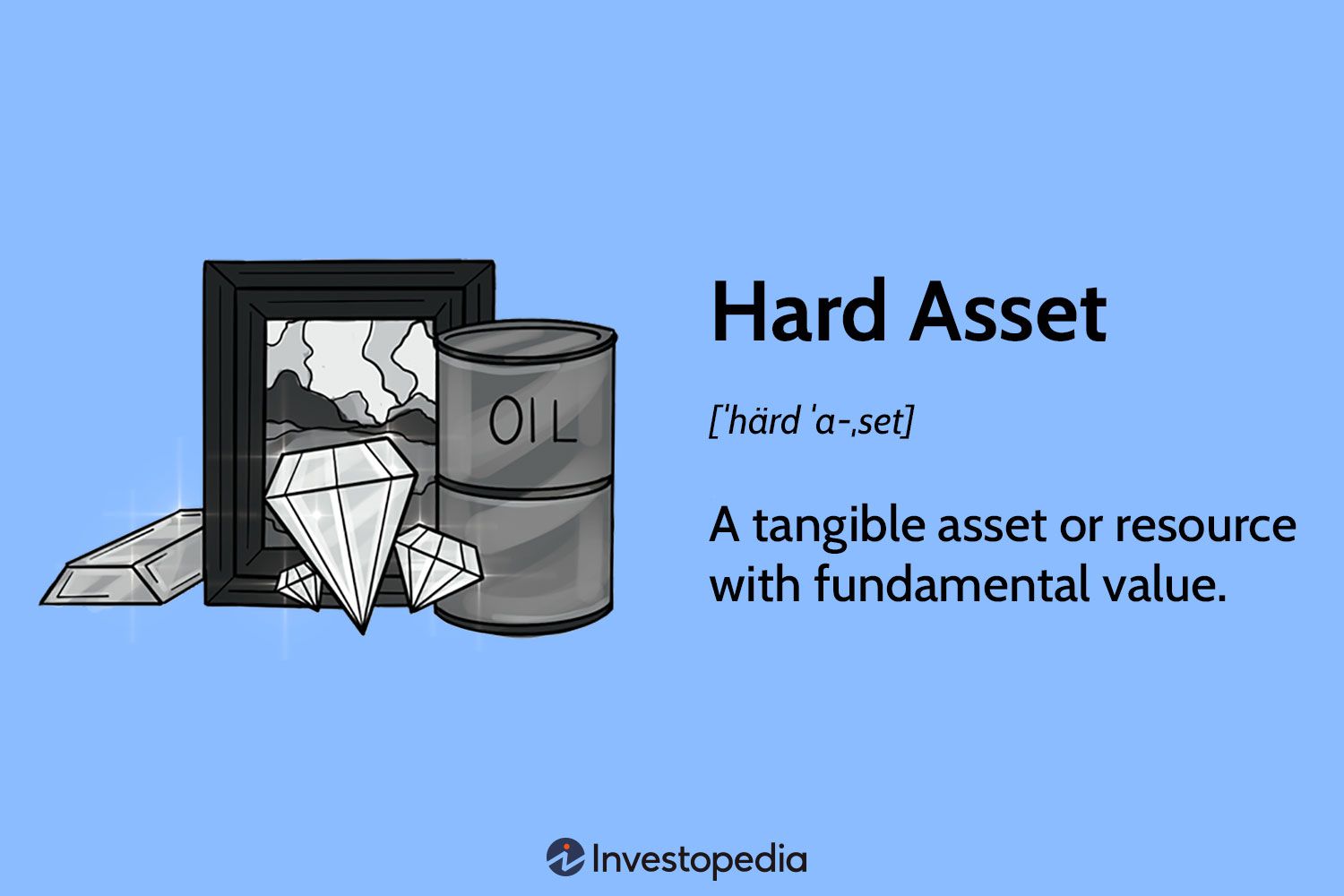
A hard asset is a tangible resource with intrinsic value, such as land, real estate, equipment, or commodities. These assets support business operations by enhancing production, generating revenue, and serving as a financial buffer during downturns. Understanding hard assets helps investors and analysts assess a company’s underlying strength and long-term value.
How Hard Assets Function in Business
Hard assets often serve as fixed, long-term assets that help produce a company’s goods and services. These assets usually last over a year and appear as property, plant, and equipment on a balance sheet.
Some examples of hard assets include:
- Buildings
- Vehicles such as trucks or cars
- Machinery and equipment
- Office furniture
- Machinery
However, hard assets can also be short-term assets, called current assets, which are typically used up within one year. Inventory, for example, could be a hard asset for a company. If a company manufactures machinery, the raw materials or inventory, such as the machine parts, would be hard assets.
Financing Strategies for Hard Asset Purchases
Fixed hard assets often require capital investment decisions from a company’s executives. These typically involve large cash outlays and are treated as long-term funding decisions. The funding for big-ticket hard assets can come from banks, venture capital firms, issuance of corporate bonds or debt, as well as issuing new shares of stock. The capital investment of hard assets, such as a new manufacturing plant means the company plans to use the facility for many years to generate revenue.
Assessing the Worth of Hard Assets
Hard assets are valuable because they can be used to produce, purchase other goods or services, or sold to generate cash during financial trouble. When analysts calculate a company’s intrinsic value, a portion of this underlying value is derived from the value of its hard assets.
The intrinsic value of a company is a calculation of a company’s value using various models that include analyzing a company’s cash flow, assets, future revenue streams, and its cost structure. Hard assets come into play when valuing a company since they can be sold for cash to pay off debts, bondholders, and shareholders in the event of financial distress or liquidation.
Comparing Hard Assets and Intangible Assets
Hard assets are the opposite of intangible assets, which are non-physical assets that are used over the long-term. Examples of intangible assets include:
- A brand of a company
- Investments in securities
- Trademarks
- Patents
- Copyrights
- Franchises
Technology companies tend to have many intangible assets since they have patents for their products, as well as significant capital tied up in research and development. On the other hand, oil-producing companies have many hard assets, such as oil rigs and drilling machinery.
Real-World Examples of Hard Assets in Action
Ford Motor Company (NYSE: F) is a US automotive company that produces various cars and trucks. The company’s executive management team is looking to buy new machinery for their assembly line. The company will also purchase steel and aluminum for the rivets. All of the assets, the machinery, steel, and aluminum are considered hard assets.
The assembly machinery is a long-term hard asset. On the other hand, the steel and aluminum raw materials are current assets since their inventory will likely be used up within one year. Also, any patents on the equipment are considered intangible assets.
The Bottom Line
Hard assets, such as real estate, machinery, and vehicles, are tangible resources that add lasting value, support production, and strengthen a company’s financial stability. Usually classified as fixed assets, they require a significant investment, as seen with Ford Motor Company’s use of factories and equipment to sustain operations and growth.














Leave a comment