
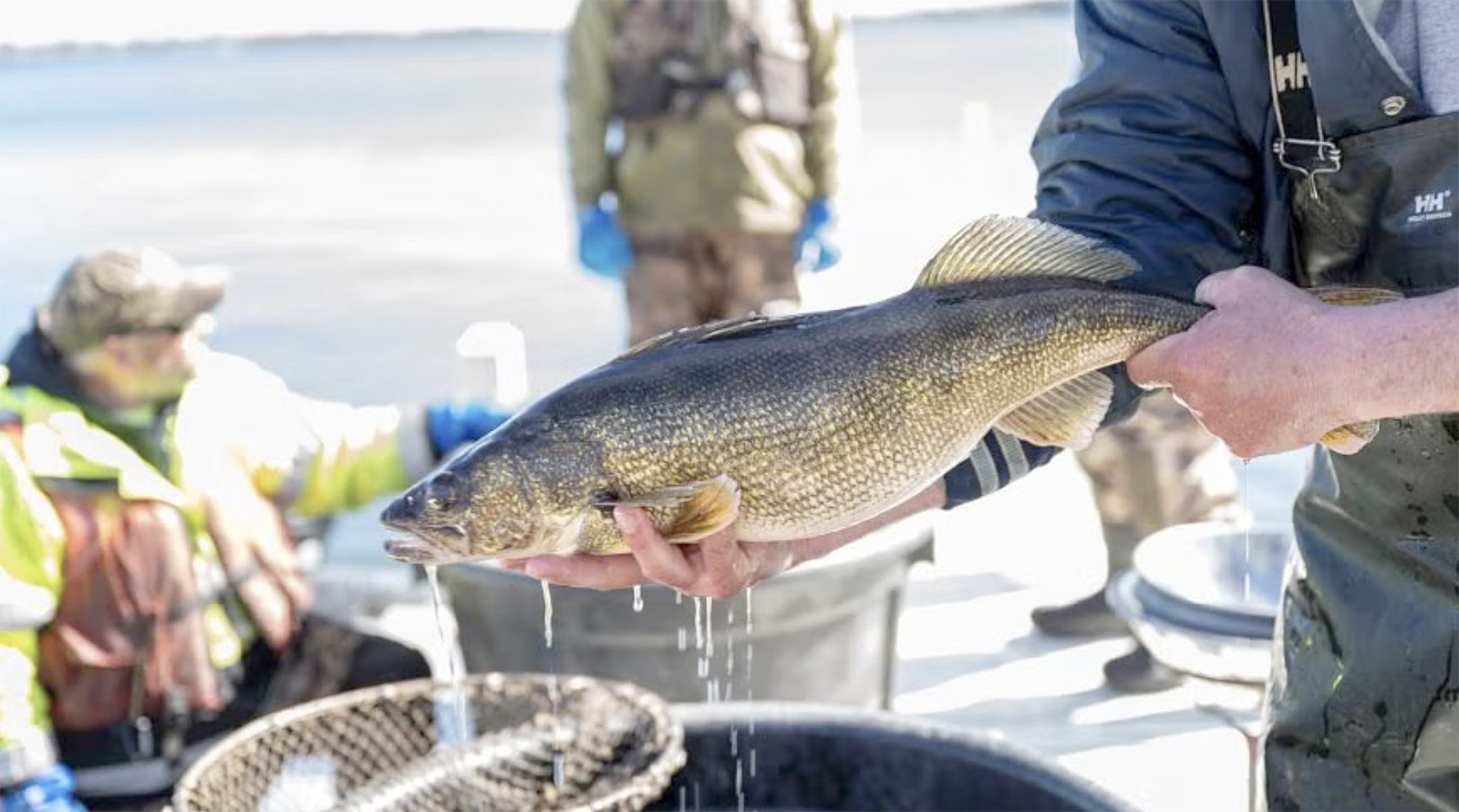
A walleye caught by the Wisconsin Department of Natural Resources. (Photo courtesy of the Wisconsin Department of Natural Resources, via Wisconsin Public Radio)
The Wisconsin Department of Natural Resources can now set special bag and size limits on lakes where walleye populations are struggling.
The Natural Resources Board adopted a final rule at its meeting Wednesday.
Kari Lee-Zimmerman, the DNR’s fisheries regulations and policy specialist, said the rule outlines specific conditions under which the agency could use special bag and size limits to rehabilitate walleye populations. They would be used on lakes where natural reproduction of the fish has seen a sudden decline.
The agency has said the DNR’s regular rulemaking process can take more than two years, making it difficult to swiftly change bag and size limits to help struggling walleye.
“This is just a way to make this rule change a little bit more quickly than the normal process,” she said.
The DNR approved a one-fish-a-day bag limit for walleye on lakes where populations are struggling. The agency would require an 18-inch minimum length for fish caught. But it would bar anglers from keeping fish between 22 and 28 inches, the fish most likely to increase spawning or natural reproduction.
Under the rule, the DNR could move more quickly to apply those limits on lakes where most surveys over the past five years have detected fewer than 15 juvenile fish per mile.
The DNR has previously adopted such limits on the Minocqua Chain of Lakes in addition to four other lakes in Oneida and Vilas counties.
Walleye ranks as a favorite catch among sports anglers, and sport fishing generates more than $2 billion annually in economic activity for Wisconsin.
Walleye are also a main species harvested by Ojibwe tribes. The Great Lakes Indian Fish and Wildlife Commission works with 11 tribes in Minnesota, Michigan and Wisconsin on their rights to hunt, fish and gather in ceded territory.
The new regulations are valuable to GLIFWC and member tribes, said Mark Luehring, inland fisheries section leader with the commission. Walleye, or ogaa in the Ojibwe language, are culturally significant to northern Wisconsin tribes. The fish is one of the first foods used by tribal members in ceremonies.
“When we see walleye populations declining, it’s something that all of us want to fix, and we want to fix it as quickly as possible,” Luehring told the board. “This process enables everybody to do it together in partnership. Tribes can reduce harvest when we see these conditions, and now the state would have the ability to do that as well in a very quick process.”
Wisconsin has seen declining walleye populations across the state, especially since 2000.
Earlier this year, the Lac du Flambeau Band of Lake Superior Chippewa had attempted to restrict walleye and musky fishing on almost 20 lakes within its reservation. The tribe had sought to restrict fishing by anyone except tribal members, citing “critically low” populations.
The state sued tribal leaders, and a federal judge barred the tribe from restricting walleye and musky fishing. The tribe has appealed the judge’s ruling to the Seventh Circuit Court of Appeals.
Research has found that warming waters due to climate change may lead to fewer walleye surviving to adulthood on most Wisconsin lakes by mid-century. However, a study last year found that fishing has a greater impact than warming, indicating that limited harvest may help with population declines.











Leave a comment