
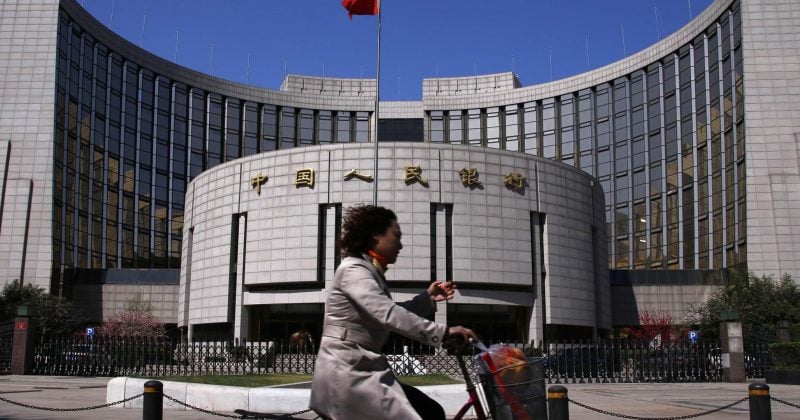
China’s central bank just flooded the financial system with 669.5 billion yuan, roughly $92 billion, in a single day. Before anyone starts dreaming about a liquidity-fueled rally rippling into crypto, here’s the thing: this is more about keeping the plumbing working than turning on the firehose.
The People’s Bank of China executed the operation on June 30 through two channels. It pushed 600 billion yuan through overnight reverse repos and another 69.5 billion yuan through seven-day reverse repos. The interest rate stayed parked at 1.4%, unchanged from prior operations.
Why the PBOC opened the taps
Month-end and half-year windows are notoriously tight periods for Chinese banks. Tax payments come due, regulatory requirements pile up, and the government tends to issue bonds that need buyers with actual cash on hand. All of that creates a temporary vacuum in the interbank funding market.
The PBOC has been managing these seasonal squeezes throughout 2026. Back in April, it executed a comparatively modest net injection of just 9.5 billion yuan through seven-day repos. In May and June, the central bank alternated between pauses and net withdrawals, pulling liquidity back when conditions allowed.
The unchanged 1.4% rate is arguably the most important signal in the entire operation. If the PBOC wanted to send a dovish message, it would have trimmed the rate. Holding it steady while injecting a massive volume of cash says: “We’re solving a logistics problem, not changing direction.”
What this means for global risk assets
The PBOC’s reverse repos are ultra-short-duration instruments. Overnight repos literally mature the next day. Seven-day repos expire within a week. This isn’t new money permanently entering the financial system. It’s a bridge loan for banks that need to settle obligations before the calendar flips to July.
An aggressive monetary easing cycle, the kind that historically correlates with risk-on moves in global markets, would involve rate cuts, reserve requirement ratio reductions, or medium-term lending facility expansions. None of that happened here.
China’s liquidity management does influence the yuan’s exchange rate and, by extension, cross-border capital flows. When the PBOC ensures domestic stability, it reduces the probability of a disorderly yuan depreciation, the kind of event that historically triggers risk-off moves across global markets, including crypto. In that narrow sense, this operation is a net neutral-to-slightly-positive signal for digital assets — not because it’s injecting speculative fuel, but because it’s preventing a potential source of instability.
The digital yuan angle
China continues to advance its digital yuan, or e-CNY, rollout as a core policy objective. Every liquidity operation that keeps the domestic financial system running smoothly is, in part, infrastructure maintenance for that project.
The e-CNY represents a fundamentally different vision of digital money than decentralized cryptocurrencies. It’s a central bank digital currency designed for surveillance-compatible payments within China’s financial ecosystem.
The 669.5 billion yuan injection is a large number that tells a small story: banks needed cash for month-end obligations, and the central bank provided it at unchanged rates. The real signals to watch are whether the PBOC begins cutting the reverse repo rate in coming months, whether it adjusts reserve requirements for commercial banks, or whether government bond issuance accelerates beyond what the system can absorb without permanent liquidity expansion.












Leave a comment