
- Key insights: Wells Fargo’s AI platform is designed to be model and cloud agnostic, allowing the bank to adapt to newer, larger and more specific models as they emerge.
- What’s at stake: The payments landscape is changing at a fast clip, and banks will need to adapt quickly to stay ahead.
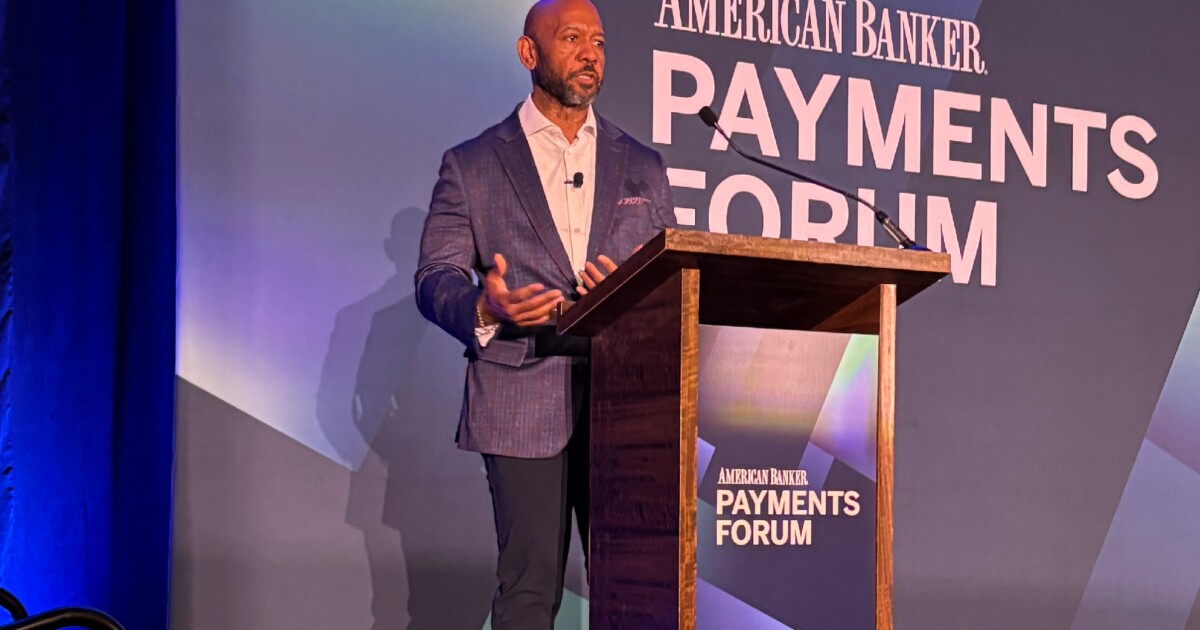
- Expert quote: “New capabilities such as tokenized deposits, programmable liquidity and near-real-time or atomic settlement didn’t exist five years ago, but they will be table stakes five years from now,” said Ather Williams III, head of global payments and liquidity and wholesale digital at Wells Fargo.
SAN FRANCISCO — The payments landscape is changing at a fast clip, and at
Processing Content
“Here’s how platforms that provide intelligence use AI, in my perspective,” Williams said. “Intelligence on top of transactions converts data on balances, accounts receivable, accounts payable, foreign exchange exposure, liquidity positions into cash flow forecasting, liquidity risk detection, pricing insights [and] growth opportunities.”
“New capabilities such as tokenized deposits, programmable liquidity and near-real-time or atomic settlement didn’t exist five years ago, but they will be table stakes five years from now,” Williams said.
“We have a tool that partners with our bankers to do call summaries” that goes beyond simply dumping the call into the CRM, Williams said. “Having insights into the clients, of being advisory, providing recommendations, that’s the path of travel.”
Setting up a framework where AI use cases can scale is key to developing an AI strategy at an organization, Williams said. “We allow people to experiment, build, test and deploy, while maintaining security governance and oversight at scale. We all have our experiments. Everyone has [Microsoft] Co-pilot at their desk. Everyone messes around with Claude. We need to be able to do it at scale.”
Banks are warming up to AI use cases, according to













Leave a comment