
Equity markets have already run hard on the back of the US profit cycle and AI driven demand, leaving strategists warning that valuations offer fewer bargains than earlier in the cycle. Bond markets are reflecting the inflation side of the story, with long end yields climbing across developed markets as investors price in central banks holding rates higher for longer. The divergence between a resilient US and AI linked Asian economies against a stagnant eurozone and slowing China points to continued dispersion in regional asset performance. Energy driven inflation staying above target keeps the path for further tightening open across much of the developed world.
—
Barclays expects 3.1% global growth this year on US profit strength, but flags eurozone stagnation, China’s slowdown and inflation keeping central banks higher for longer.
Summary:
- Global growth is forecast at 3.1% this year, a touch slower than last year but still robust
- The US profit cycle remains the dominant driver of global growth alongside AI linked East Asian economies such as Korea
- The eurozone contracted in the first quarter and is expected to grow just 0.4% this year, under a third of last year’s pace
- China’s first quarter growth masked structural weakness, with retail sales at a 40 month low in April and the property market still unstable
- China’s growth is expected to slow below 5% in 2026 amid ongoing deflationary pressure
- Energy driven inflation is expected to stay above central bank targets across most developed markets, keeping rates higher for longer
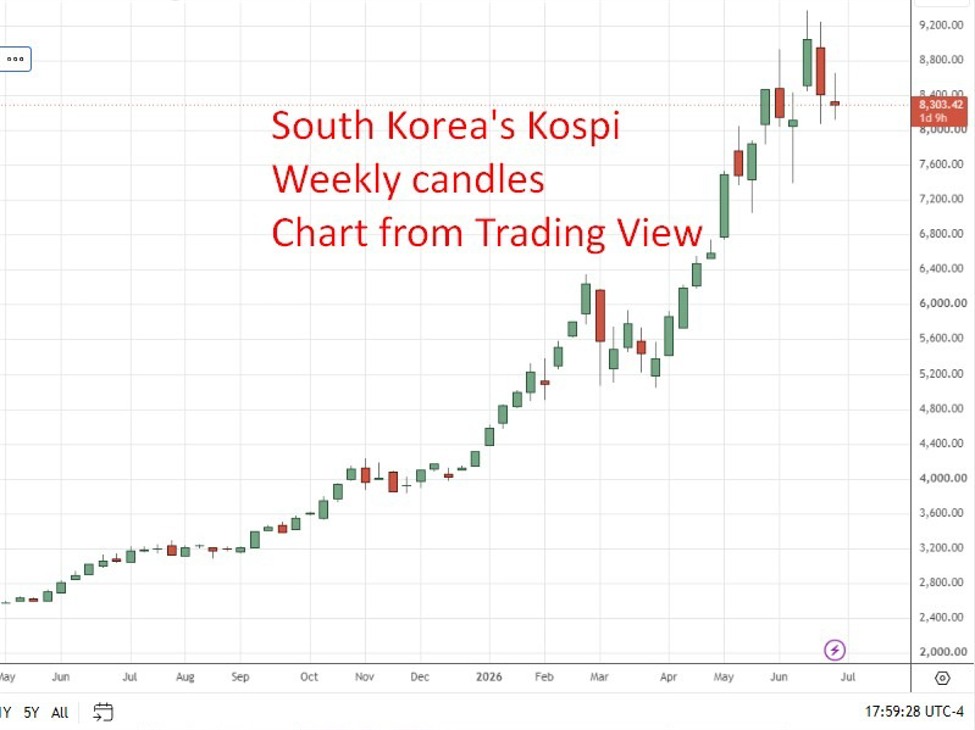
- The S&P 500 has risen almost 20% since March, Taiwan’s stock market is up about 50% year to date and Korea’s KOSPI has doubled
The global economy is on track to keep expanding through the rest of the year, powered largely by the strength of US corporate profits and a boom in AI linked demand across parts of East Asia, according to Barclays’ latest quarterly outlook. The bank’s economists and strategists expect global growth of 3.1% this year, a modest step down from last year’s pace but still a robust outcome given easing geopolitical tensions.
The report describes a barbell shaped global economy. At one end, the US profit cycle continues to act as the primary engine of growth, with dynamic East Asian economies such as Korea riding the same wave as they feed into AI supply chains. At the other end sit a number of major economies that are struggling to keep pace. The eurozone contracted in the first quarter and Barclays sees little prospect of a material acceleration from here, projecting growth of just 0.4% for the year, less than a third of last year’s rate.
China presents a more complicated picture. Headline first quarter growth looked strong, but Barclays argues it masked deeper structural weaknesses. Retail sales fell to a 40 month low in April, the property sector remains unstabilised, and deflationary pressure continues to weigh on the economy. The bank expects Chinese growth to slow to below 5% in 2026.
Inflation remains the common thread tying the outlook together. The energy shock from recent geopolitical tensions has pushed inflation above central bank targets across most of the developed world, and Barclays expects it to stay elevated. That has forced central banks to keep raising rates or hold them higher for longer than previously expected, a dynamic playing out across bond markets, where long end yields have climbed in response to sticky inflation.
Equity markets have already priced in much of the optimism around US profits and AI demand. The S&P 500 has climbed almost 20% since March, Taiwan’s stock market has surged about 50% year to date, and Korea’s KOSPI index has doubled. Barclays strategists note that this rally has made it increasingly difficult to find genuine bargains, even as the underlying growth story remains intact.














Leave a comment