
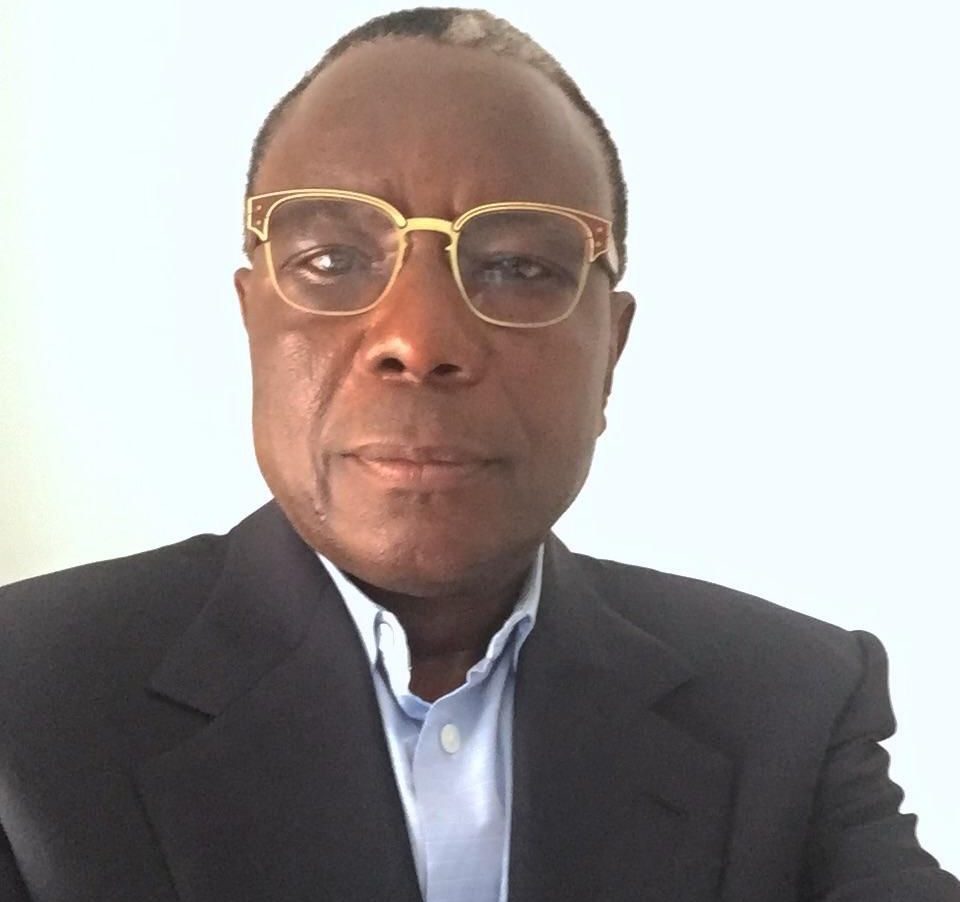
By Philip Obazee
The Presidency Is Not a Crown
Peter Obi’s road to becoming president of Nigeria presents one of the most revealing paradoxes in contemporary Nigerian politics. He remains one of the most recognizable opposition figures in the country. He has a disciplined public image, a reputation for personal restraint, a powerful reformist vocabulary, a large youth-driven following, and a moral language that appeals to Nigerians exhausted by corruption, waste, incompetence, and elite impunity. Yet his path to power increasingly raises a difficult question: does he want to build the institutional road to the presidency, or does he want the presidency handed to him by moral acclamation?
That is the central issue. The presidency of Nigeria is not a crown awaiting the most eloquent claimant. It is not an honorary title awarded to the politician with the cleanest public brand. It is not a trophy reserved for whoever appears least contaminated by the older political class. It is the highest executive office in a large, plural, ethnically complex, religiously sensitive, regionally divided, and institutionally fragile federation. To win it and govern effectively, a candidate must do more than inspire admiration. He must build structure, negotiate coalition, endure internal contestation, manage contradiction, command organization, and accumulate what may be called political sweat equity.
Obi’s difficulty is that his public appeal often appears stronger than his institutional footing. He has a movement, but not yet a durable machine. He has intensity, but not enough spread. He has moral energy, but not always organizational discipline. He has a constituency that believes deeply in him, but he has not yet shown that this constituency can be converted into a broad enough national coalition to defeat an incumbent power structure.
From Administrator to National Brand
To be fair, Obi did not emerge from political emptiness. His record as governor of Anambra State gave him a platform before he became a national presidential figure. He was not a mere commentator who suddenly became ambitious. He had governed a state, participated in party politics, served as a vice-presidential candidate, and built a reputation around prudence, savings, frugality, and administrative seriousness.
That history matters because it explains why he became attractive to many Nigerians in 2023. He was not entirely an outsider, but he could plausibly campaign against the exhausted political duopoly. He had enough experience to claim competence, yet enough distance from the central ruling class to claim reformist authenticity. This hybrid identity became his strength. He was insider enough to understand government, but outsider enough to embody dissatisfaction with politics as usual.
Under the Labour Party, Obi became more than a candidate. He became a symbol. He represented protest against the old order, impatience with corruption, anger at economic mismanagement, and the desire for a leaner, more serious state. The Obidient movement gave voice to a generation of Nigerians who no longer wanted to be told that the country must endlessly choose between the same familiar power blocs. It created moral excitement. It made politics feel participatory again for many citizens who had withdrawn into cynicism.
But a symbol is not a state. A movement is not necessarily a party. Moral excitement is not the same as electoral infrastructure. Obi’s emergence proved that there was a national appetite for alternative politics. It did not prove that he had built an institution capable of taking, defending, and exercising national power.
The 2023 Breakthrough and Its Warning
The 2023 presidential election was both Obi’s breakthrough and his warning. He disrupted the old arithmetic. He broke through the assumption that only the APC and PDP could command presidential scale attention. He energized young voters, urban voters, professionals, diaspora-linked citizens, and reform-minded Nigerians who wanted a sharper break from the past. He showed that a third-force candidacy could be more than symbolic.
Yet he did not win. That fact cannot be wished away. However, one interprets the election, however one assesses the credibility of the process, and however one views the subsequent legal challenges, the political fact remains that Obi’s campaign did not produce control of the federal executive. That outcome should have forced a period of hard institutional learning. It should have led to a sober question: what was missing?
The answer is not simply “votes.” Votes were missing, but votes were missing because deeper structures were missing. There was insufficient national spread. There was insufficient elite coalition. There was insufficient ward-level strength in too many places. There was insufficient party depth. There was insufficient ability to defend the vote across Nigeria’s vast electoral terrain. Above all, there was insufficient conversion of moral energy into organized machinery.
That is the central lesson of 2023. Obi had momentum, but momentum is not machinery. Momentum fills rallies; machinery wins polling units. Momentum trends online; machinery recruits agents. Momentum excites supporters; machinery negotiates coalitions. Momentum creates a moral atmosphere; machinery survives election day.
Party Movement or Ideological Evolution?
The sharper critique begins with Obi’s movement across platforms: PDP to Labour Party, then toward ADC coalition arrangements, and now into the orbit of the NDC conversation. In itself, party movement is not immoral. Nigerian parties are often ideologically thin, factionalized, money-driven, and organizationally unstable. A politician can leave a party for principled reasons: internal sabotage, corruption, rigged primaries, ideological incoherence, factional capture, or strategic impossibility.
So, the objection is not simply that Obi changed parties. That would be too easy. Nigerian politics is filled with defections. Many of the people criticizing Obi have themselves defended or benefited from political migration when it suited them. The more serious question is what the movement means. Is it an ideological evolution, a principled reorientation, or a search for a more convenient route to the presidential ticket?
This is where Obi’s road becomes vulnerable to criticism. If every platform becomes unacceptable once it requires internal struggle, then the candidate begins to look less like a reformer and more like a platform shopper. If every institutional vehicle is useful only until it becomes difficult, then the public is entitled to ask whether the goal is party transformation or personal coronation.
Political realignment can be strategic. It can even be necessary. But repeated realignment without a stable institutional theory creates suspicion. A presidential candidate must explain not only why he leaves a party, but what he is building in its place. Otherwise, each movement begins to look like an attempt to avoid the hard work of internal organization.
The Problem of Sweat Equity
This is where the concept of sweat equity becomes essential. In business, sweat equity refers to the value created through labor, sacrifice, discipline, persistence, and direct contribution. In politics, sweat equity means building wards, recruiting organizers, training party agents, financing local structures, nurturing legislative candidates, resolving internal conflicts, managing factions, developing party doctrine, and creating an institution that can survive beyond one election cycle.
Obi’s weakness is not that he lacks personal discipline. He plainly has discipline. His weakness is that his political project often looks insufficiently institutionalized. The Obidient movement is real, but it is not yet a mature political organization. It has passion, but passion is not structure. It has loyalty, but loyalty is not always discipline. It has outrage, but outrage is not a theory of government. It has online force, but online force does not automatically translate into ward-level electoral control.
A first campaign can be insurgent. A second campaign must become institutional. That is the difference between protest and power. In 2023, it was enough for Obi to symbolize possibility. For 2027, symbolism will not be enough. Nigerians have already seen the possibility. The question now is whether he can build the machinery.
The Abdul Analogy
This is why the comparison to Abdul in Oxford English Reader Four is rhetorically useful. Abdul, as many who read the old primary school text may remember, wanted wealth without work. He wanted the reward without the labor. The analogy should not be misread. It does not mean that Obi is lazy as a person. That would be unfair and unserious. Obi is visibly energetic, articulate, and persistent.
The analogy is institutional, not personal. The concern is that Obi sometimes appears to want the presidency without remaining long enough inside any one political structure to bear its full burdens. He wants the result of organization without always doing the long organizational apprenticeship. He wants the harvest of coalition without enduring the full season of coalition cultivation. He wants the presidency as a moral destination, but Nigeria’s presidency is not reached by moral claim alone.
The presidency is not a prize for being better liked by a devoted base. It is a national office that requires hard bargaining, institutional patience, geographic spread, and the ability to persuade people outside one’s emotional comfort zone. Abdul wanted quick enrichment without labor. Obi’s critics worry that he wants high office without enough party-building sweat equity.
Nigeria Does Not Elect Brands Alone
Nigeria does not elect presidents by brand admiration alone. The country’s presidential system rewards national spread, coalition breadth, regional bargaining, party machinery, and local electoral defense. A candidate may be loved intensely in certain places and still lose nationally. A candidate may be admired by educated urban voters and still fail to penetrate rural networks. A candidate may dominate social media and still be weak at the polling-unit level.
This is not a moral defense of old politics. It is simply a description of the terrain. Nigeria is not a seminar room. It is not an online poll. It is not a diaspora town hall. It is a hard federation with uneven political loyalties, entrenched local brokers, ethnic anxieties, religious calculations, patronage networks, and deep mistrust among regions. A presidential candidate who ignores this terrain may win admiration but lose power.
Obi’s strongest supporters sometimes treat criticism of his strategy as hostility to reform. That is a mistake. Serious criticism may be the most useful thing he can receive. If he wants to become president, he must ask why his appeal did not translate into victory. He must ask where his vote was too thin. He must ask why the movement struggled to become a national party structure. He must ask why other opposition actors did not subordinate themselves to his candidacy. He must ask why some Nigerians admired him but still did not vote for him.
Those questions are uncomfortable. But without them, the road to Aso Rock becomes a road of repetition: the same energy, the same grievances, the same moral certainty, and the same structural weakness.
The Opposition Unity Problem
The central strategic challenge is opposition unity. No serious opposition can defeat an incumbent machine if every major figure insists on being the natural center of gravity. Atiku has ambition. Kwankwaso has ambition. Obi has ambition. Regional actors have ambition. Party founders have ambition. Governors have ambition. Former governors have ambition. The problem is not ambition itself. Politics requires ambition. The problem is ambition without architecture.
If Obi wants to lead the opposition, he must do more than claim moral superiority. He must persuade other ambitious actors that their interests are safer under his leadership than outside it. That requires negotiation, concession, discipline, and credibility. It requires a theory of power-sharing. It requires a regional compact. It requires assurances to those who fear domination by his base. It requires more than the argument that he deserves the ticket because he performed impressively last time.
The opposition’s weakness is not simply that it is divided. It is that each major bloc has reasons to distrust the others. Obi’s supporters distrust the old PDP order. The old PDP order may see Obi as a disruptive outsider who benefited from their collapse. Kwankwaso’s base has its own regional calculations. Smaller parties may fear being swallowed. Under such conditions, unity cannot be achieved by enthusiasm alone. It must be constructed through enforceable political bargains.
This is where Obi has work to do. He cannot simply wait for the opposition to recognize him as the obvious candidate. There is no such thing as obviousness in Nigerian coalition politics. What looks obvious to one faction may look threatening to another.
Coronation Politics and Its Dangers
The worst version of Obi’s 2027 strategy would be coronation politics: the assumption that because he became the moral symbol of 2023, every serious opposition platform should naturally hand him the 2027 ticket. That would be a strategic error. No candidate owns the opposition. No candidate owns national frustration. No candidate owns the youth vote. No candidate owns the right to be treated as inevitable.
Coronation politics weakens leaders because it shields them from the discipline of contest. A politician who wants to govern Nigeria must show that he can win inside hard institutions, not simply exit them when they become inconvenient. He must show that he can manage betrayal, factionalism, suspicion, litigation, elite bargaining, and internal rivalry. These are not distractions from leadership. They are part of leadership.
If a party is too chaotic to endure, how will the Nigerian state be governed? If factional conflict is enough to justify repeated movement, how will federal conflict be managed? If internal party disputes are too toxic, what happens when the candidate faces governors, legislators, security agencies, entrenched bureaucracies, labor unions, regional blocs, and hostile interests?
The presidency is harder than any party primary. Therefore, the road to the presidency must demonstrate the capacity to endure institutional difficulty.
The Difference Between Movement and Machine
Obi has a movement. That is not in doubt. But the difference between a movement and a machine is critical. A movement creates identity. A machine converts identity into votes, offices, legislative seats, legal defense, funding streams, local command, and policy implementation. A movement can rise quickly. A machine takes time. A movement can be carried by emotion. A machine requires hierarchy, rules, discipline, and repetition.
The Obidient movement has often excelled at moral pressure, public enthusiasm, digital amplification, and symbolic politics. It has been less effective at translating that energy into a disciplined national institution. In some cases, its very intensity may have become a constraint. Supporters who attack every critic can narrow the candidate’s coalition. A movement that treats skepticism as betrayal may energize itself but alienate persuadable voters. A movement that confuses online dominance with national majority risks repeating its own illusions.
Obi must discipline his movement without killing its energy. That is not easy, but it is necessary. He needs supporters who can persuade, not simply insult. He needs organizers, not only defenders. He needs bridge builders, not only loyalists. He needs a coalition capable of speaking to traders in Onitsha, farmers in Benue, workers in Kano, students in Ibadan, civil servants in Abuja, artisans in Aba, market women in Lagos, and traditional networks across the North.
A national presidency requires a national language.
Ideology Must Become Clearer
Obi’s message has often rested on prudence, frugality, anti-corruption, production, and competence. These are attractive themes, but they are not yet a full governing ideology. Nigeria needs more than a careful manager. It needs a coherent account of state capacity, federalism, industrial policy, insecurity, taxation, energy, education, health, technology, agriculture, exchange-rate management, and social protection.
A presidential candidate cannot govern a country of over two hundred million people by moral seriousness alone. He must say what kind of state he wants to build. Is he a market liberal? A developmental statist? A fiscal conservative? A social democrat? A federalist reformer? A technocratic nationalist? How would he balance austerity with welfare? How would he fund infrastructure without worsening debt distress? How would he handle fuel pricing, currency instability, food inflation, policing, and regional insecurity?
Obi’s supporters may say he has answered these questions. Perhaps he has answered some. But the national perception remains that his brand is clearer than his ideology. That must change. A reform candidate must not simply be trusted; he must be understood.
The Northern Question
Obi’s road to Aso Rock also requires a serious northern strategy. This cannot be cosmetic. It cannot be reduced to selecting a running mate and assuming that symbolic balance has solved the problem. Northern Nigeria is not a monolith, but it is electorally decisive. It contains multiple political cultures, religious networks, traditional institutions, economic grievances, youth populations, security crises, and historical suspicions of southern reformist projects.
A serious northern strategy would require years of presence, not months of campaigning. It would require local candidates, policy commitments, elite relationships, religious sensitivity, agricultural programs, security plans, and patient trust-building. It would require Obi to become less of a sectional symbol in the eyes of skeptical voters. This is not because he is inherently sectional, but because politics is perception as much as intention.
If Obi wants to win nationally, he must be felt nationally. He must not merely visit; he must embed. He must not merely speak; he must listen. He must not merely campaign; he must organize. Northern voters must see him not as a southern protest candidate, but as a plausible national president with concrete answers to their lived conditions.
What Obi Must Do Now
Obi’s road to the presidency is not closed. It is simply harder than his most devoted supporters admit. His name recognition remains strong. His reform brand remains valuable. His 2023 performance created a permanent fact in Nigerian politics: millions of Nigerians are willing to consider an alternative outside the old two-party comfort zone. He also benefits from national frustration with economic pain, insecurity, inflation, and the perception that the old political class has failed too often.
But dissatisfaction with the incumbent does not automatically become support for Obi. Anger must be organized. Hope must be registered. Sympathy must become votes. Votes must be protected. Supporters must become agents. Online conviction must become local structure. Moral language must become coalition agreement.
He must therefore do several things. He must stop looking like a platform shopper. He must choose or build a stable institutional home and remain there long enough to give it weight. He must develop a fuller governing doctrine. He must construct a serious northern strategy. He must discipline the Obidient movement into a persuasive national force. He must negotiate with other opposition actors without assuming that they owe him automatic deference. He must build party infrastructure that can survive whether he wins or loses.
Most importantly, he must show that he is willing to work for the crown he seeks.
A Road, Not a Shortcut
Peter Obi remains one of the most consequential political figures in Nigeria’s current opposition landscape. He has changed the imagination of what is electorally possible. He has shown that competence, frugality, and moral seriousness can mobilize citizens. He has given many Nigerians a language of political refusal against cynicism. Those achievements should not be dismissed.
But admiration is not enough. A presidential road is not built out of admiration alone. It is built through organization, sacrifice, discipline, compromise, ideological clarity, and the slow accumulation of trust across groups that do not naturally agree.
That is the critique. It is not that Obi lacks value. He has value. It is not that he lacks appeal. He has appeal. It is not that he lacks a constituency. He has one. The critique is that his political conduct risks confirming the suspicion that he wants the presidency as coronation rather than construction.
Nigeria does not need another politician who treats parties as disposable ladders. It needs leaders who can build institutions strong enough to outlive their ambition. If Obi wants to become president, he must stop simply finding roads and start building one.
The presidency is not waiting to crown him. It must be earned through structure, patience, coalition, and sweat equity.
_____
Philip Obazee retired as a managing director and head of derivatives from Macquarie Asset Management – a global asset management company with an office in Philadelphia, PA, USA, and currently, he is the founder and chief executive officer of Polymetrics Americas Research.













Leave a comment