
OpenAI is trying to attract private equity firms, as this could strengthen its enterprise strategy and secure additional capital for growth. The company is offering significant incentives, including favorable investment terms and access to its latest artificial intelligence (AI) models, as part of its joint-venture discussions aimed at accelerating technology adoption. The move became necessary as competition became intense with industry rivals like Anthropic, which is also trying to expand its enterprise footprint through a similar strategy.
OpenAI is offering private equity firms a guaranteed minimum return of 17.5% to secure partnerships through joint ventures, according to people familiar with the discussions. The company is also providing early access to its latest AI models to make its investment proposition more attractive to institutional investors like TPG (TPG) and Advent (ADNH).
These moves are part of a broader strategy to further strengthen OpenAI’s presence in enterprise markets while competing with Anthropic, which is making similar moves with buyout firms, but without comparable return guarantees. The joint venture approach is aimed at helping both companies scale adoption of their AI tools across portfolios of private companies, while reducing the upfront costs associated with enterprise customization and deployment.
Private equity firms are closely examining OpenAI’s proposals while keeping an eye on Anthropic’s, with some investors raising concerns about the economics, flexibility, and long-term returns of such joint ventures. Reports indicate that at least two firms have decided not to participate, citing uncertainties about profitability and whether the partnerships would provide meaningful incremental value relative to existing access to AI tools.
Other firms are in discussions but would most likely take smaller stakes without leadership roles or board seats, given their caution about the deals. The joint venture structure will give AI companies access to broader enterprise distribution and also allow private equity investors to integrate AI tools across their portfolio companies, though the ultimate financial upside is still being considered by participants.
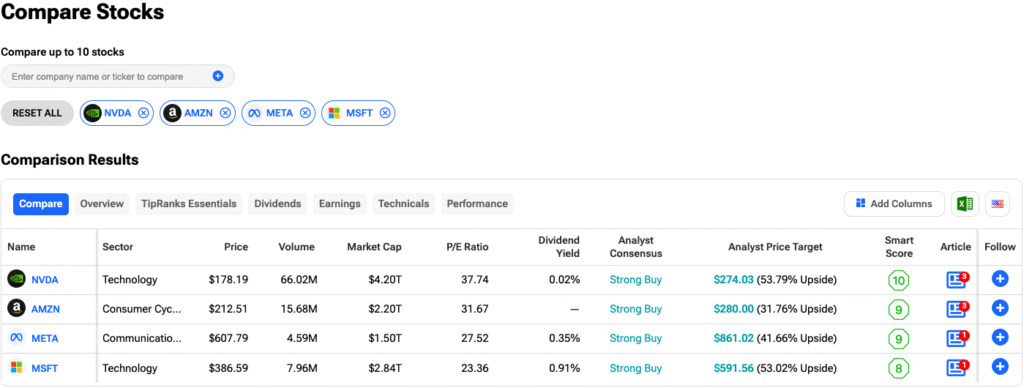
Investors exploring the AI sector are tracking publicly traded companies that are actively developing, deploying, or investing in AI technology. Stocks like Microsoft (MSFT), Amazon (AMZN), Meta (META), and Nvidia (NVDA), tracked in the TipRanks Stocks Comparison Center, are frequently mentioned for their roles in AI infrastructure, cloud computing, and model deployment. These companies provide indirect exposure to AI growth trends, as firms like OpenAI and Anthropic remain private companies and are not directly investable through public markets.














Leave a comment