
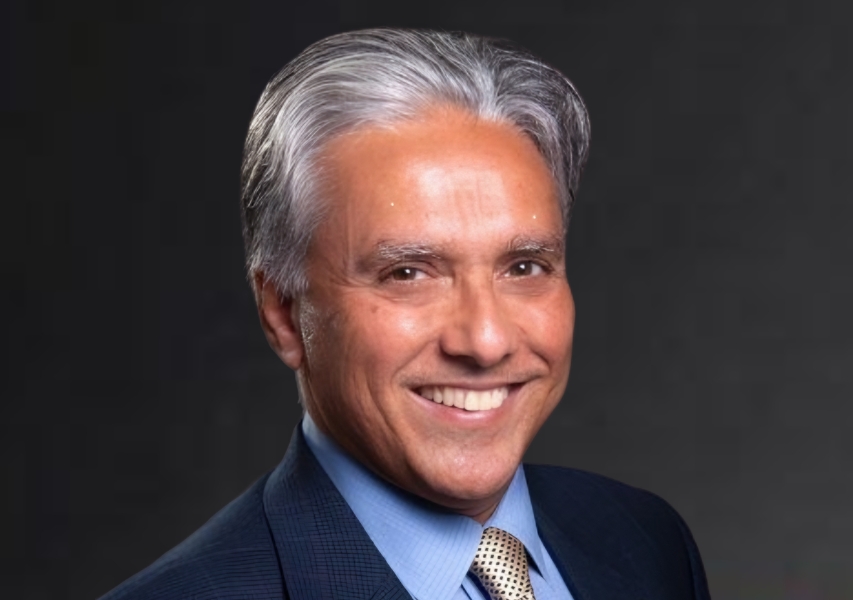
Anurag Pandit is the chief investment officer for the American Lebanese Syrian Associated Charities (ALSAC), the fundraising and awareness organization for St. Jude Children’s Research Hospital. He was formerly with Boston Children’s Hospital.
Muskan Arora: What are the most significant pain points in private markets — and how are you managing liquidity?
Anurag Pandit: One of the most significant challenges facing the private markets industry is the persistent liquidity deficit. Private investments have not distributed as much capital back to investors as has been committed, and have not generated adequate returns, particularly when compared to large-cap public equities over the past three years. Questions relating to the transparency and accuracy of private credit net asset values have led to higher-than-anticipated redemption requests. Managers meet redemptions based on what is easiest to sell rather than what they would like to sell. This creates a negative redemption loop since no one wants to be the last investor.
It is important to recognize the significant endpoint sensitivity in these analyses. If the same evaluation had been conducted in mid-2022, the conclusion might have been the opposite: that the optimal strategy would have been to invest exclusively in private markets.
We have removed managers with excessively long lock-up periods and are shifting away from strategies that impose artificial liquidity terms such as gates when the underlying assets are perfectly liquid. We have also been discussing whether the liquidity premium should have a term structure akin to that for interest rates — lowering the liquidity premium for strategies like private credit that pay off sooner than, say, venture. I don’t have strong conviction yet, but there appears to be merit in this thinking.
Arora: What is driving the hangover effect in buyouts — and where does venture stand?
Pandit: The hangover effect refers to lingering pressures in certain buyout segments — constrained cash flows and slower growth — which necessitate a more selective approach to new investments. With rising interest rates, the benefits of financial engineering that once served as tailwinds have diminished. Simultaneously, this created lower exit multiples, further constraining returns.
Investing in the flavor of the day — private credit a few years ago or data centers more recently — especially when fundraising is so abundant, typically causes overcrowding and compromises long-term results. Selectivity becomes even more important and access to the biggest blue chips becomes paramount, as they have access to the best deals while residual capital chases uncompelling returns at higher levels of risk, setting the stage for future hangover effects.
In venture, today’s stock of great companies is small relative to the capital available. Unlike niche middle market buyouts, the most promising entrepreneurs with the best ideas are well courted by the most prestigious venture capital firms. Venture capitalists are paying up for unicorns while still bearing the investment risk. Although business formation will be rewarded, the multiples earned by LPs will likely be less than in the past as entrepreneurs give up the same fraction of the company for larger check sizes. The bull market post-COVID has created friendlier and favorable documentation outcomes for GPs, creating more challenging prospects and fewer negotiation levers for LPs.
Arora: What still works — and what is your favorite niche?
Pandit: Earlier, venture capital was a transition to a small-cap public listing. Consider Tesla, Facebook and Alibaba, who raised billions of dollars on their IPOs. Now it is no longer a small-cap orientation. SpaceX, OpenAI and Anthropic are forthcoming business creation IPOs with valuations close to a trillion — indeed, more for SpaceX. Investing in venture and growth equity is effective because it allows economic access early in the process.
Buyouts have been effective in a different way. Several businesses are penalized for being small, usually in lower entry multiples and higher financing costs. Successful buyout managers can transform and aggregate such businesses, streamlining operations, increasing revenue opportunities, lowering financing costs and instating professional management. We recently came across an expert manager in consumer staples, an unloved area of current market focus. By targeting these less crowded areas, such managers are positioned to uncover distinctive and attractive value propositions.
One area of particular interest is lower-middle-market buyouts. This market segment is fragmented both in terms of quality companies and smaller cheque sizes. The companies are often family owned with unknown succession plans. Adding value requires industry domain expertise and the ability to source by building trust with patriarchs or matriarchs, then execute to efficiently operate or roll up the operations into an existing platform company. Artificial intelligence can increase productivity by expanding revenue opportunities and rationalizing operations.
Arora: What qualities do you seek in emerging managers — and what are the red flags?
Pandit: Manager selection is the biggest driver in investing in privates. Within privates, we are driven by a manager-first mentality, and, secondarily, by the strategy and portfolio need. Spin-offs from established firms represent a sound sourcing opportunity for emerging managers.
Qualities we seek include extreme passion in a business or research area demonstrated by significant understanding of the subject matter. Due diligence focuses on track record, team cohesion and the strength of the manager’s ecosystem. Intelligence and hard work are considered commodities — what matters is access, proprietary deal flow and the capacity to generate unique opportunities.
Red flags include over-hyped reputations without realized returns, cobbled teams that have not worked together to create value, spin-offs where prior firm infrastructure and expertise were instrumental in creating value and formerly successful managers using the new firm as an off-ramp in their careers. Managers with excessive and quick fundraising histories, without tangible exits, are an additional red flag.
Arora: What opportunities do you see beyond private markets — and how are you incorporating AI?
Pandit: Our valuation analysis paints a picture of slim pickings among major asset classes. Bonds, including TIPS, look better than stocks. Even commodities, including gold, look uninspiring and are not likely to protect in a downturn. Alternative marketable strategies that hedge both equity beta and duration appear most attractive — global macro, trend-following, insurance-linked securities, relative value and market-neutral equity and credit strategies. London non-luxury real estate is worth analyzing, especially for long-term investors, given the very negative sentiment.
On AI, we currently use it primarily to streamline administrative tasks like reporting and documentation. The time savings have already helped the quality, accuracy and speed of presentations. Adopting AI with a strong inference engine on targeted data sources is our holy grail. However, even general-purpose engines on broad unstructured data remain useful. Not devoting enough time and resources to AI could be costly in the long term.














Leave a comment