
The alternatives conversation in private wealth has been dominated in recent years by private credit and private equity. But options-based strategies are becoming a larger part of the liquid alternatives discussion as market liquidity expands, options-based ETFs, and mutual funds gather assets and advisors look for new sources of income.
Carrick Lane is one of the firms building for that shift. The independent, employee-owned firm manages more than $3 billion in actively managed options strategies for high-net-worth families, family offices, trusts, foundations, and the advisors who work with them, with offices in New York and San Francisco.
The firm announced in June that John Marshall had joined as senior partner following a 25-year career at Goldman Sachs, where he built and led the firm’s derivatives research franchise and published more than 4,500 options trade recommendations. His work on asset allocation with options overlays has helped shape how many options-based mutual funds and ETFs think about sizing strategies like index put-selling.
Alternatives Watch spoke with Ken Kwalik, Carrick Lane’s co-founder and managing partner, about what Marshall’s arrival enables, how advisors should think about options within a private client portfolio, and where the firm sees opportunity as investors watch the AI-driven equity rally for signs of stress.
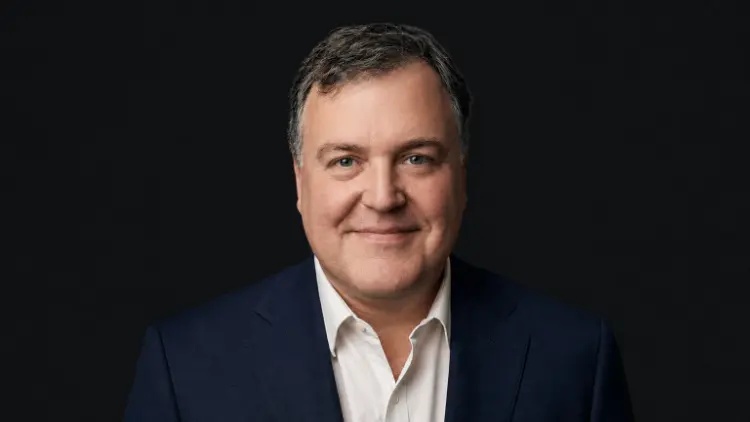
Before co-founding Carrick Lane, Kwalik led portfolio management and trading within Goldman Sachs’ Private Wealth Management Equity Solutions Group, where he helped grow the managed options business from inception to more than $20 billion in assets. Earlier in his career, he traded derivatives at Credit Suisse’s Volaris group in New York and Zurich.
AW: What does John Marshall’s arrival allow Carrick Lane to do that it could not do before?
Kwalik: John’s foundational studies of options strategies over the past 20 years have helped shape many of the largest options-based mutual funds and ETFs managed today. His work on asset allocation with options has provided much-needed context for advisors as they decide the size of their options overlay strategies such as index put-selling. We believe John will enable Carrick Lane to launch the next generation of options overlay strategies and expand our audience. Every week, we speak with clients who are looking for ways to make their money work harder for them. We expect the focus on income, total return, tax efficiency, and capital efficiency to continue. Through in-depth research and timely market commentary, we expect John to continue to be a thought leader in the global market for index and single-stock options.
AW: How do you explain to advisors, many of whom likely view derivatives as too complex or too risky for private client portfolios, that options are more than just a one-off trade?
Kwalik: When investors have a view on the timing or magnitude of asset price moves, we believe options can provide a superior way to express those views. While there is value when buying single-stock calls ahead of a bullish earnings event or buying index puts ahead of a bearish macro event, views on systematic mispricing can be just as powerful. We believe it is well-documented that investors have historically overpaid for index puts to protect their portfolios. While index put buying has had a negative return over the past 30 years, in our opinion, it does have the potential to help anxious investors worry less about their portfolio. The opposite trade, selling index puts systematically each week or month, has provided liquidity to these investors and has earned a premium.
AW: With private credit and private equity largely dominating the alternatives conversation, why should advisors pay more attention to liquid, options-based alternatives now?
Kwalik: In the search for portfolios with attractive risk-adjusted returns, popular investment theories encourage investors to diversify their investments (e.g., CAPM) and broaden the risk premia that they collect (e.g., Fama-French). Private credit and private equity often provide exposure to underlying businesses that are not available in the public markets. Similarly, in our opinion, the volatility risk premium can be a diversifying income stream. Options liquidity has increased over the past several years, enabling a wider range of investors to participate. On average in recent years, SPX index options volume (notional) has been more than 3 times the size of the S&P futures market.
AW: Looking forward to the second half of 2026, are there specific options strategies that you are considering, particularly in light of recent market rumblings in areas related to the AI buildout?
Kwalik: We believe option-selling strategies perform particularly well when there are reasons for investors to worry, but the economy remains strong. The past 18 months have been a period of high geopolitical concern, leading some investors to hedge. Periodic concerns regarding AI-related stocks have led to temporary pullbacks that encourage investors to hedge. Despite these risks, the U.S. and global economies have grown at a solid pace over the past year and supported equity markets. We expect continued growth to support equity markets in the near term but keep close watch on investment flows and leverage to identify emerging risks. Individual investors have continued to buy equities even through periods of volatility over the past two years as evidenced by steady ETF inflows. Professional investors have added to exposure in synthetic products as evidenced by a rise in funding spreads (the cost of leverage in the futures and swaps markets).











Leave a comment