

Key Takeaways:
- Intangible assets such as talent and reputation now make up an estimated 70% to 80% of a company’s value, so they increasingly behave like capital.
- Executives attribute roughly 63% of their firm’s market value to reputation, and a tight market for proven leaders has turned executive search into a $22 billion industry.
- The businesses that manage people and trust as deliberately as cash tend to win, because those two intangible assets are the hardest for rivals to copy.
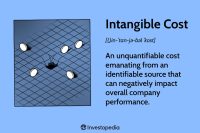
Ask a chief executive what their company is worth and they will quote a market value. Ask what actually sits behind that number and the honest answer is increasingly about intangible assets. The ones that matter most here, home-grown talent, reputation and know-how, are built up rather than bought, so accounting rules largely keep them off the balance sheet even as they decide much of a firm’s worth.
Intangibles a company buys, such as patents or the goodwill from an acquisition, do get recorded. The self-made kind rarely do, and that gap is what this piece is about. Two of them matter more than the rest: the people who lead the business, and the reputation that surrounds it. Both are now managed with the seriousness once reserved for factories and cash.
The scale of the shift is striking. Analysis of listed companies suggests intangible assets, brand and trust and know-how chief among them, now account for somewhere between 70% and 80% of total market value. Much of that never shows up in the books, which is why a firm’s market value can tower over its balance-sheet worth.
In global surveys, executives put around 63% of their company’s market value down to reputation alone. The machines and the money still count, but the belief that a firm has the right leaders and will do what it says has become the larger part of the story.
Why intangible assets took over the balance sheet
Two changes pushed intangibles from a footnote to the main event. The first is the move from a physical economy to one built on ideas, relationships and brands. When value lives in customer loyalty, know-how and talent rather than in plant and equipment, the soft stuff is the business. The second is visibility. In a connected world, a great hire or a broken promise travels fast, so the gap between what a company is and how it is seen has narrowed to almost nothing.
That is why both leadership and reputation now sit on the boardroom agenda rather than in a side office. They shape who wants to work for a firm, who will partner with it, what customers will pay and how much slack it gets when something goes wrong. The discipline behind managing them has grown into a serious professional field, drawing on data and advisory work in the way our look at the reinvention of management consulting describes.

Judging whether a leader can actually lead is now treated as a core business decision. Photo by Vitaly Gariev on Unsplash
Talent: the first great intangible asset
If people are a company’s biggest intangible asset, then finding the right ones at the top is among the highest-return decisions a board makes. That is why executive search has grown into a global industry worth an estimated $22 billion in 2026, up from roughly $20.8 billion a year earlier. The logic is simple. The pool of people who can genuinely run a complex modern company is smaller than the number of open roles, and a failed senior hire is enormously expensive, so paying a specialist to reduce that risk looks like cheap insurance.
The firms that do this work show the money involved. Korn Ferry reported about $668.7 million in professional fee revenue in a recent quarter, and its executive search business brought in roughly $846 million across the full fiscal year. Heidrick & Struggles books hundreds of millions more, with a growing slice from advisory rather than pure search. Even so, the field is fragmented, with the largest player holding only about 4% of the global market. The newest twist is flexibility: a rising number of companies now hire fractional or interim executives, seasoned leaders who work part-time across several businesses, which widens access to talent that overlaps with the shortages in our piece on closing the skills gap.
Machines can be bought by anyone with cash. The right leader and a trusted name cannot. That is why intangible assets, not equipment, now decide who wins.
Reputation: the second great intangible asset
The other giant intangible is reputation. It behaves exactly like capital: built up slowly in good times, drawn down fast in bad ones. The annual Edelman Trust Barometer for 2026 found trust becoming a workplace issue as well as a consumer one, with employees judging employers on behaviour, not just pay. Leadership sits at the centre of this too, because chief executives seen as credible stewards of their brand are linked to stronger brand-value growth over time. It is a high-wire act, since a leader who becomes the brand also becomes its biggest single risk.
Building reputation is less about clever campaigns and more about consistency between what a company says and what it does. The firms that manage it well communicate clearly, align promises with behaviour, and prepare for trouble before it lands. They also watch the messy world of partnerships and influence, where one bad tie-up can dent a brand overnight, a risk our coverage of brand safety and influencers examines, and where authenticity has become the currency we describe in creator-led content.

What intangible assets mean for business
Treating talent and reputation as assets changes how decisions get made. A firm that knows its reputation is worth billions thinks twice before a short-term move that saves money but erodes trust. A board that sees leadership as its scarcest resource plans succession early and builds a bench rather than scrambling when someone leaves. Private equity owners have understood both for years, backing management teams as hard as they back the business, a link our coverage of private equity and jobs draws out. You can dig into the value of intangibles through PwC research and the trust data on the Harvard Business Review.
There is a competitive edge here too. When products and prices are easy to copy, neither trust nor a proven leadership team is. A company with strong intangible assets can charge a little more, recover faster from mistakes, attract better people and stretch into new categories customers would never accept from a stranger. That edge is portable and durable in a way a new machine never is.
The future of intangible assets
The pressure will only grow. Data and AI already help firms map talent and measure sentiment, and judging a leader or tracking trust will get more sophisticated, moving from vague scores toward metrics a board can act on. Yet the core of both jobs resists automation, because deciding whether a person can hold a room, or whether a promise rings true, is stubbornly human work. The adaptability we explore in our piece on the rising value of adaptability is now a selling point for leaders and companies alike.
The lesson for executives is to stop treating people and reputation as things the HR or communications teams handle, and start managing them as what they have become: the intangible assets that make up most of the company’s worth. Trust and talent are the cheapest things to keep and the most expensive to rebuild. For more, follow our business coverage.
Is Your Brand Among the Best in the World?
Global Brands Magazine recognises outstanding companies across 30+ industries and 100+ countries. Our awards are trusted by executives, investors, and media worldwide.
Trusted by 500+ brands across 100+ countries







Leave a comment