
Key Takeaways
- Intangible costs impact company performance but are not easily measured.
- Examples of intangible costs include reduced employee morale and damaged brand reputation.
- Intangible costs require estimation due to their subjective nature.
- A cost-benefit analysis should consider both tangible and intangible costs.
- Overlooking intangible costs can harm profitability.
What Is an Intangible Cost?
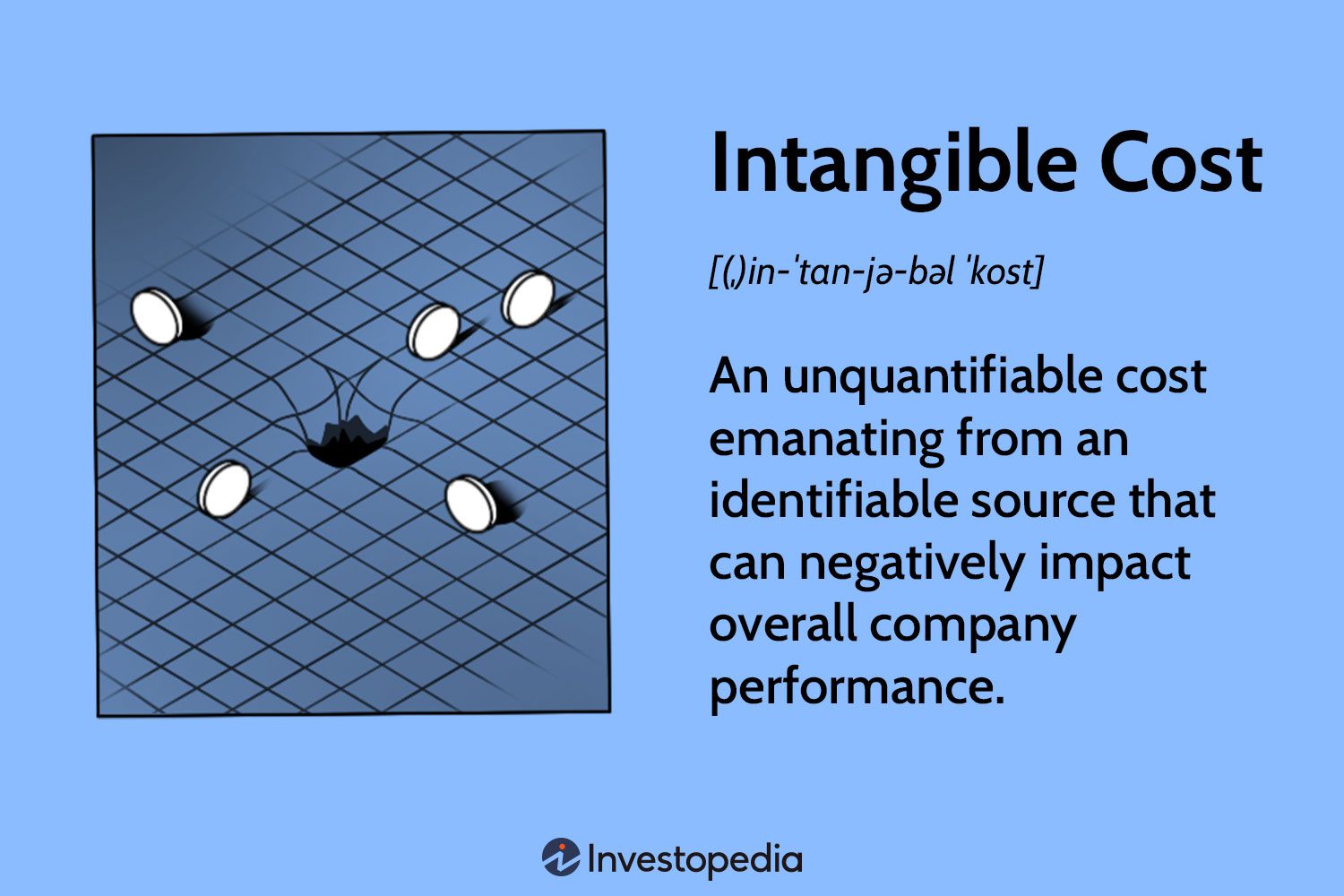
An intangible cost is an unquantifiable cost arising from an identifiable source that can impact, usually negatively, overall company performance.
Unlike tangible costs, which are measurable, intangible costs include factors such as declining employee morale, reputational harm, or loss of customer trust. Understanding both types of costs helps businesses better evaluate true performance and make more informed decisions.
How to Recognize and Assess Intangible Costs
An intangible cost basically consists of placing a subjective value on a circumstance or event in an attempt to quantify its impact. These expenses are triggered by a real, identifiable source, yet putting a number on them is often no easy task.
Intangible costs can be triggered by a variety of occurrences, including losses in productivity, an impairment to goodwill, decline in employee morale, loss of brand value, or damage to brand equity. These types of setbacks do not have a concrete value, although managers will often attempt to estimate the impact of them anyway as they can have a very real effect on productivity and, subsequently, a company’s bottom line.
Important
Intangible costs are difficult to measure but must not be overlooked as they can have a significantly adverse impact on profitability.
Comparing Intangible and Tangible Costs
Tangible costs are often associated with items that also have related intangible costs. A tangible cost is the money paid to a new employee to replace an old one. An intangible cost, on the other hand, is the knowledge the old employee takes with them when they leave.
When conducting a cost-benefit analysis, company executives estimate both the tangible and intangible costs before moving forward with changes or a new direction. The tangible costs factor heavily in making decisions involving large fixed assets, such as production machinery or a new factory. Underestimating these costs can lead to lower profits, while overestimating them might lead to avoiding a potentially lucrative avenue.
Real-world Examples of Intangible Costs
A widget company decides to cut back on $100,000 in employee benefits to maximize profits. When news reaches the employees of the cut-back, worker morale will likely drop, leading to a decline in productivity and lower revenues. The employee’s focus on losing benefits instead of making products represents an intangible cost, which may be larger than the gains realized by reducing employee benefits.
Let’s look at another example. A toy company produces a toy that ends up injuring a portion of the children that play with it. This setback may lead to an increase in tangible costs, such as the expense associated with a recall and money paid to settle lawsuits. However, there are also intangible costs to consider in this scenario, including the likelihood that the company’s reputation will take a notable hit from this mishap.
The Bottom Line
Intangible costs may be difficult to measure, but they can strongly affect profitability and long-term performance, especially when compared alongside tangible, measurable expenses.
Ignoring effects like damaged or brand image or weakened goodwill can distort a cost-benefit analysis and lead to poor outcomes. Even rough estimates of intangible costs help support more informed business decisions.












Leave a comment