
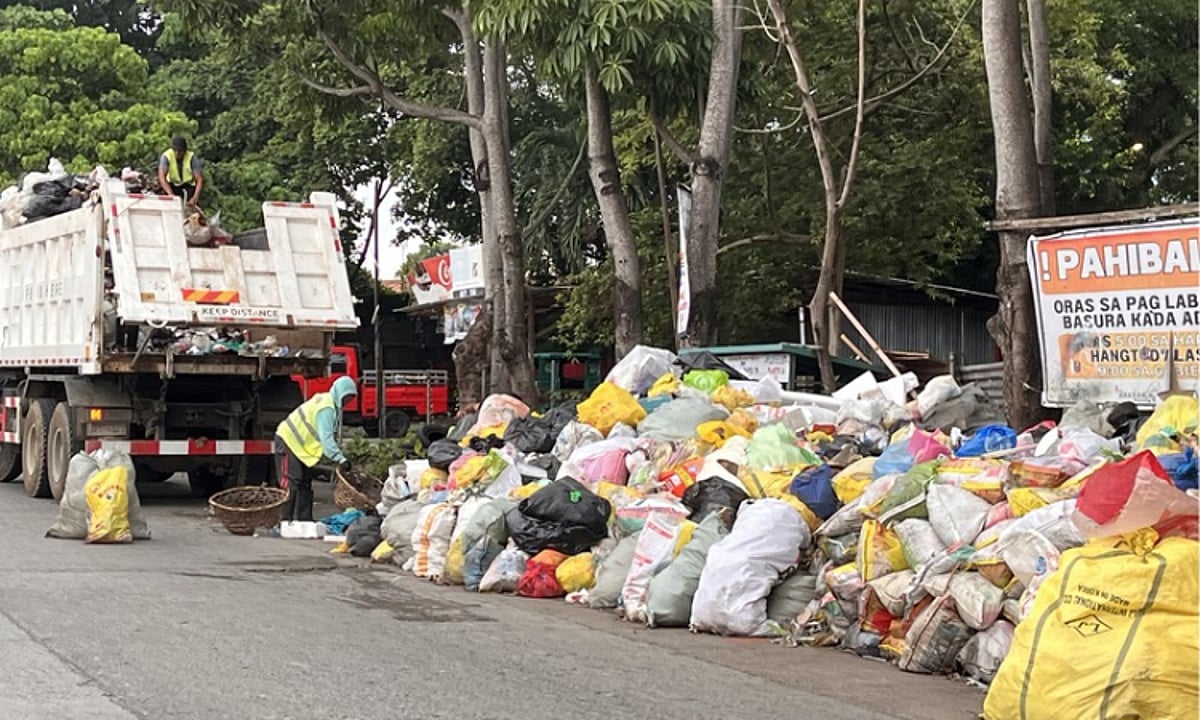
LOCAL chief executives, environmental officers, and community partners gathered at the SM City Davao Annex Event Center on Friday afternoon, September 25, for the culmination of the 8th Environment Summit.
Organized by the Department of Environment and Natural Resources – Environmental Management Bureau Region 11 (DENR-EMB Davao), the annual event serves as a unified platform to advance regional environmental governance, elevate local government unit (LGU) solid waste compliance, and expand public-private sustainability partnerships across Davao Region.
Key leaders present included DENR Assistant Secretary for Field Operations – VisMin Atty. Felix Alicer, Department of the Interior and Local Government Regional Director Abdullah Matalam representing the Davao Regional Ecology Center, Davao City Councilor Temujin “Tek” Ocampo, and senior EMB Davao officers.
Designing action around the ‘e-ECO’ campaign
Opening the session, Environmental Solid Waste Management Section Chief Jay Christoffer Bawi-in outlined the purpose and structural concept of the event under the regional banner “e-ECO,” which stands for Enhanced Environmental Compliance and Outcome.
He explained that the summit was purposefully designed around the number eight to represent an interconnected, multi-faceted environmental strategy.
“This year’s summit was not simply planned—it was designed around the number eight,” Bawi-in stated, tracing the gathering’s evolution from early discussions on municipal waste funding into a multi-sectoral campaign.
“First, the number eight… to emphasize that this is an annual environmental event, continuing a tradition of bringing people together for environmental action.”
Bawi-in detailed how the eight summit activities—ranging from LGU compliance training to coastal cleanups and mobile permitting—work together to guide local leaders toward meaningful outcomes.
“These eight activities were intentionally designed to tell one story,” Bawi-in added. “From educate through EchoEd, to showcase through SusTechs, engage partnership through ENACT and EnviroFest, as well as create through Green Canvas, to recognize through PARTNER, to act through CoastCare, and to comply through PermitOn. Together, they anchor this year’s theme of e-ECO or Enhanced Environmental Compliance and Outcome—a theme that reflects our goal of strengthening environmental compliance while creating meaningful and measurable outcome through collaboration.”
Davao Region exceeds key solid waste targets
A major highlight of the program was a symbolic act uniting five key sectors: national government agencies, local government units, the environmental services sector, the private sector, and regional partners.
Representatives jointly activated an interactive screen display marking 25 years of progress under Republic Act No. 9003 (Ecological Solid Waste Management Act of 2000) and showcasing the Davao Region’s attainment of all Philippine Development Plan (PDP) solid waste management indicators for CY 2026.
The activated presentation highlighted significant regional benchmarks exceeding target goals. Specifically, the proportion of cities with access to sanitary landfills reached 83 percent, well above the 49 percent target.
The proportion of barangays served by Materials Recovery Facilities reached 49 percent, surpassing the 44 percent target, while LGUs across the region registered a complete 100 percent accomplishment rate for approved 10-year solid waste management plans.
Strengthening public-private partnerships
Under the summit’s EnAct (Environmental Partnership INK Action) session, DENR-EMB Region 11 formalized key corporate partnerships through ceremonial signings on stage.
The bureau entered into a Memorandum of Agreement (MOA) with Aboitiz Power Corporation and a Memorandum of Partnership (MOP) with NutriAsia Inc., cementing a shared commitment to public-private synergy aimed at scaling up regional environmental initiatives and improving solid waste management outcomes across Davao.
Underscoring this private sector collaboration, Davao Light and Power Corporation Corporate Reputation Manager Fermin Edillon emphasized during his speech that environmental adherence goes far beyond regulatory obligations.
Speaking on behalf of the Aboitiz Group, Edillon affirmed that compliance is not a mere requirement, but a shared commitment that translates into real, lasting outcomes for the environment.
He highlighted ongoing joint initiatives such as coastal cleanups and mangrove reforestations, noting that even small, concerted actions deliver meaningful progress when public and private stakeholders align their conservation efforts.
Local initiatives and legislative support
Davao City Councilor Temujin “Tek” Ocampo echoed the urgency of local environmental action, emphasizing the importance of creative waste diversion to alleviate the burden on municipal landfills. Representing the city’s legislative initiatives and local environmental advocates, Ocampo pointed to practical upcycling projects—such as converting discarded commercial linens into reusable bags and clothing—and revealed plans for a city ordinance to regulate and institutionalize the collection of used cooking oil for conversion into biofuel.
“This is really a very exciting event, and this is why we also joined this exhibit—to show that there is really hope in protecting the environment,” Ocampo said, urging continuous collaboration between local government units and regulatory bodies to maintain sustainable waste management practices.
Moving compliance to long-term actions
Following the ceremonial features, EMB-Davao Environmental Monitoring and Enforcement Division Chief Miralou Blanco introduced a predictive Sanitary Landfill Risk Registry Framework to assist local governments in preventing structural hazards at disposal sites. Top-performing LGUs and partner organizations were also recognized during the event’s concluding awards ceremony.
In her closing address, Blanco called on delegates to translate the summit’s outputs into concrete practices within their respective localities, stressing that regional environmental governance relies on sustained, multi-sectoral collaboration.
“Let us continue to turn compliance into action, partnerships into solutions, and solutions into meaningful environmental outcomes,” Blanco said. “Because at the end of the day, the success of environmental governance is not measured only by what we accomplished today… but it will be measured by the condition of our environment we leave for the generations that come after us.”
The event follows the 7th Environment Summit held on August 19–20, 2025, which focused on “Closing the Loop: Circular Solutions to End Plastic Pollution in Davao Region” and produced a multi-agency Memorandum of Agreement to enforce Republic Act 9003 and Republic Act 11898. GRS











Leave a comment