
PMMI’s 2026 State of the Industry Report identifies flexibility, automation, workforce constraints and emerging AI applications as major influences on machinery investment. While its market data is North American, the operational pressures it describes have clear relevance for Australian manufacturers.
The US packaging machinery market reached an estimated US$11.7 billion in shipment value in 2025, according to PMMI’s 2026 Packaging State of the Industry Report.
Food remained the largest end market, accounting for approximately 44 per cent of the total. Food machinery shipments were valued at an estimated US$5.1 billion and are projected to reach approximately US$7.1 billion by 2031.
The report also points to growth in Canada, where domestic packaging machinery shipments reached approximately $1.2 billion in 2025, up 3.6 per cent on the previous year, and are expected to approach $1.4 billion by 2027.
While these figures reflect the North American market, many of the factors shaping investment decisions are global. SKU proliferation, workforce shortages, sustainability requirements, changing packaging formats, higher input costs and tighter capital discipline are also influencing Australian manufacturers and equipment suppliers.
One of the clearest trends identified by PMMI is the growing requirement for flexible, adaptable automation. Expanding product ranges, shorter production runs and demand for single-serve and grab-and-go formats are increasing the frequency of changeovers and the variety of materials and pack sizes handled on production lines.
This is shifting investment towards machinery that can accommodate multiple products and formats, with fast changeovers and minimal operator intervention. Modular and upgradeable systems are also attracting interest because they give manufacturers greater scope to respond to future changes in materials, regulations and production requirements.
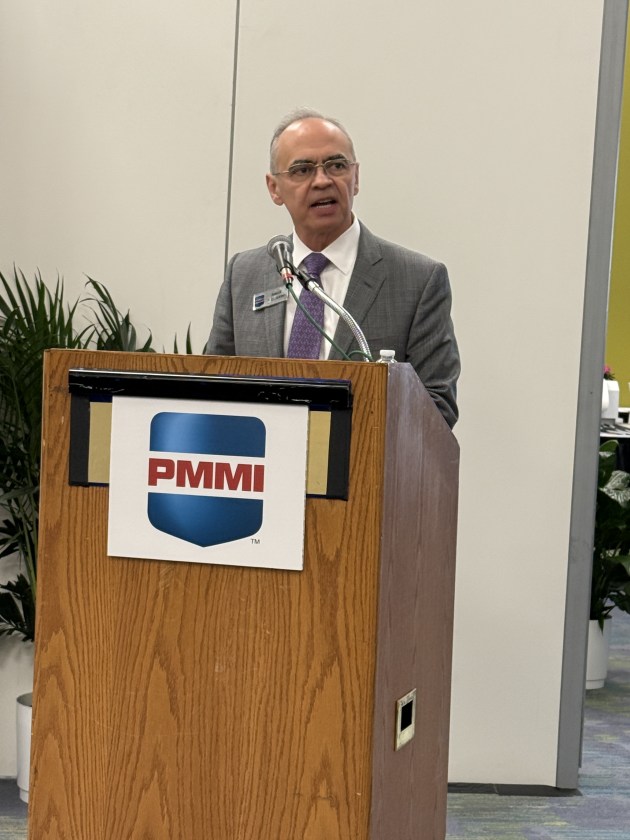
“Packaging and processing companies are being asked to do more SKUs, more formats and more automation; all while maintaining productivity and making every capital investment count,” said Jorge Izquierdo, vice president, market development at PMMI.
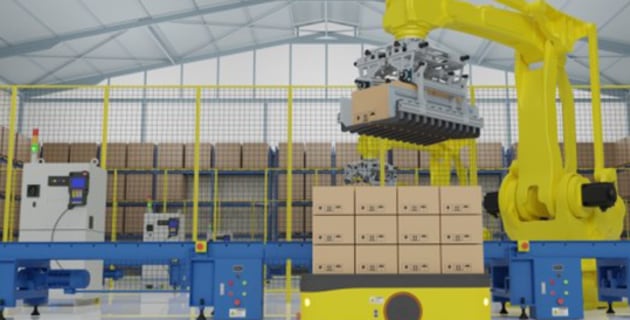
Labour availability remains a strong driver of automation, particularly for repetitive and physically demanding tasks. The report identifies palletising as a priority application, with robotic systems and cobots offering options to improve throughput, ergonomics and workforce utilisation.
End-of-line functions are also converging. Case erecting, packing and sealing are increasingly being incorporated into integrated systems, while robotic palletising is gaining ground in operations handling frequent changes in SKUs, case dimensions and pallet configurations.
Packaging operations are also becoming more closely connected with broader factory and warehouse automation. Autonomous mobile robots and automated guided vehicles are among the technologies linking production lines with materials handling, warehousing and dispatch.
Artificial intelligence is beginning to move into practical packaging and processing applications. Early uses identified in the report include retaining institutional knowledge from retiring employees, developing equipment specifications from previous projects, supporting real-time troubleshooting and assisting with content generation.
These applications are emerging as tools to extend technical capability and support constrained workforces, rather than replace specialist knowledge.
Sustainability and regulation add another dimension to machinery selection. Extended producer responsibility policies, restrictions on single-use plastics and changes in packaging design are creating demand for systems capable of running a wider range of substrates and formats. Material reduction and the ability to adapt equipment as packaging specifications evolve are becoming important considerations in capital planning.
These trends are expected to be strongly evident in the halls at Pack Expo International in Chicago from 18-21 October, where more than 2600 exhibitors will present packaging and processing technologies across 1.3 million square feet of exhibition space. APPMA will attend the show, providing an opportunity to assess how global suppliers are responding to the market forces identified in the PMMI report.
The same themes – flexible machinery, robotics, AI, integrated automation and equipment designed for evolving packaging materials – are also expected to feature strongly at APPEX 2027, where Australian manufacturers will be able to evaluate their application in the local market.











Leave a comment